Languages
Thursday, October 1, 2026



News and Views from the Global South
Southern Africa

Sweden, UK and Germany Top Climate Protectors
Sweden, the United Kingdom and Germany are the top countries to fight climate change, according to the 2012 Climate Change Performance Index, whose results were published at the United Nations climate change summit today.
CLIMATE CHANGE: Kyoto Protocol on Life Support
The United States has become the major stumbling block to progress at the mid point of negotiations over a new international climate regime say civil society and many of the 193 nations attending the United Nations climate change conference here in Durban.
South Africa Moves Towards Low Carbon Footprint Travel
Counting on responsible travellers who increasingly seek environmentally friendly alternatives for their holidays, South Africa's tourism sector wants to conserve its biggest asset – nature – while fighting climate change at the same time.
Growing Calls for Water to be Prioritised
Efforts to establish water as an agenda item in its own right in climate change negotiations are gaining momentum in Durban, South Africa. Water experts say doing this will lead to a greater focus on developing policy, and attract more resources into the water sector through adaptation programmes.
TRADE: Small Steps towards Emission Reduction Deal
Emerging economies China, South Africa and Brazil have indicated their openness to legally-binding carbon emission reduction targets from 2020 during the United Nations climate change summit in Durban, South Africa.
Q&A: Time for a New Agricultural Revolution
Negotiators at the 17th Conference of Parties owe it to the world's more than seven billion people to deliver a deal with a work plan for agriculture, a sector that is expected to be the worst affected by climate change.
Climate Change Killing Womens’ Livelihoods
Talata Nsor, a 54-year-old woman from Bolgatanga community in Northern Ghana, has been weaving the cultural Bolga baskets, which are named after her community, her entire life.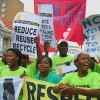
CLIMATE CHANGE: Marching for 100 Percent Change
Chanting loudly, thousands of demonstrators marched through the streets to the venue of the 17th United Nations Climate Change Conference to demand that their voices be heard for "immediate and drastic" carbon emission reductions to save the planet.
A Recipe for Carbon Farming
Civil society has warned of the danger of turning Africa's food-producing lands into "carbon farms" so that rich countries can avoid making cuts in their carbon emissions.
No Agriculture, No Deal
Zambian dairy farmer, Effatah Jele, does not believe in farming luck but in pragmatism because of climate change.
OP-ED: Can Finance Provide the Crown Jewels of a Durban Climate Accord?
As climate talks get underway in Durban, South Africa this week, progress on a Green Climate Fund is one of the hottest, most contentious tickets in town. It is also one of the great prizes to be won.
Kyoto Protocol and Climate Fund on Shaky Ground
Just a few days into the United Nations climate change negotiations, deep divides on the conference’s key issues have arisen. Serious doubts about the adoption of the Green Climate Fund have cropped up, while a second period of the Kyoto- Protocol looks more and more unlikely.Aid Not Enough to Fight AIDS
Billions of people are marking yet another World AIDS Day - this one themed "Getting to Zero", for zero AIDS-related deaths, zero new infections, and zero stigma and discrimination.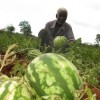
AFRICA: Watermelon Farming in a Drought
On a Sunday evening, a track loaded with 10 tonnes of watermelons leaves Geoffrey Ndung’u’s homestead in Kanyonga village in semi-arid Eastern Kenya. It travels past a village shopping centre were people have formed a queue to receive food aid because of a prolonged drought in the area.
HEALTH-SOUTH AFRICA: Male Circumcision a Route to Gender Equality
Although at first glance male circumcision may not be the most obvious entrée to get people talking about gender equality, activists in the Western Cape in South Africa are attempting to do just that.
Water: A Victim of Climate Change
The Southern Africa Development Community wants water to be tabled as a standalone item on climate change negotiations – describing it as too important to leave on the periphery.
Observing Deforestation from Space
Global climate change can now be observed from space. The United Nations Food and Agriculture Organisation (FAO) launched a new technology that can survey the world’s forests via satellites and provide a more accurate, global picture of common threats to the environment, such as deforestation, degradation or illegal logging.
CLIMATE CHANGE-AFRICA: Farming By Phone
Francis Mburu used to keep indigenous cattle in Entasopia village in the semi- arid Kajiado region, 160 kilometres southwest of Nairobi. However, increasing temperatures and frequent droughts in Kenya have made this difficult in recent years.
Forest-Dependent Communities Lobby for End of REDD+
Organisations working with indigenous peoples living in forests say the United Nations programme on Reducing Emissions from Deforestation and Forest Degradation in Developing Countries (REDD+) is just another way for big corporates to reap huge profits.
“God Wants Us to Live in a Garden, Not a Desert”
The European Union plan to save the Kyoto Protocol may meet its greatest obstacle in the developing world.
Q&A: Why Africa Must Remain United in Durban
African leaders have urged the international community to move the United Nations climate change negotiations, which started in Durban, South Africa on Monday, to a different level, and to prioritise adaptation for the continent.« Previous Page — Next Page »


The Week with IPS

NEXT STOP - SDGs
Tracking global progress towards a sustainable world
Tracking global progress towards a sustainable world
