Languages
Wednesday, October 21, 2026



News and Views from the Global South
UNEP
Big Nature-Based Finance Turnaround Needed to Restore, Protect Ecosystems
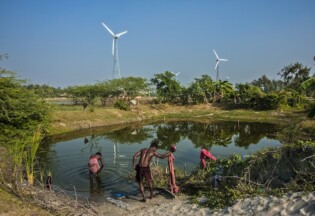
The world is pouring trillions of dollars each year into activities that destroy nature while investing only a fraction of that amount in protecting and restoring the ecosystems on which economies depend, according to a new United Nations report released on January 22.
Reviving Mangroves at the Edge of Mozambique Channel
Just before dawn, a flotilla of wooden canoes drifts silently through mangrove-tangled channels where roots sprout from the black mud of the lagoon. Here, at the edge between sea and forest, lies a story of restoration.
UNOC3: Bringing Ocean Education and Science to the Global Agenda
A greater understanding and appreciation of the world’s oceans is needed to protect them. As the global community prepares to convene for the ocean conference, they must also prepare to invest in scientific efforts and education that will bolster their joint efforts.
Bangladesh Bans Polythene Bags Again, Sparking Hopes for the Eco-Friendly ‘Sonali Bag’
After Bangladesh’s interim government banned polyethene bags, a new sense of hope has emerged for the Sonali bag—a jute-based, eco-friendly alternative developed in 2017 by Bangladeshi scientist Dr. Mubarak Ahmed Khan. Sonali bag, or the golden bag, is named after the golden fiber of jute from which it is made.
UNEP: Nations Must Step Up Adaptation—Starting with Bold Finance Action at COP 29
The United Nations Environment Programme’s (UNEP) 2024 Adaptation Gap Report has warned that adaptation actions are not keeping pace with the surging demands of a warming planet. Released ahead of the COP29 climate conference in Baku, Azerbaijan, the report—titled Come Hell and High Water—projected a bleak future where vulnerable communities bear the brunt of climate-induced hardships.
State of the World’s Migratory Species Report ‘Alarming’ Threats, Global Action Urged
A groundbreaking State of the World’s Migratory Species report is calling for accelerated global conservation measures to counter the threat of extinction faced by 1 in 5 of all migratory species.
Q&A: How Desert Dust Storms Supply Vital Nutrients to the Oceans
When sand and dust storms (SDS) rage in the Sahara Desert, more than 10,000 km away in the Caribbean Sea the very same storms have a range of effects on the 1,360 species of shorefish that populate the waters there.

Opinion: Women in the Face of Climate Change
After surviving the storm surge wreaked by Typhoon Haiyan in the Philippines in November 2013, women in evacuation centres found themselves again fighting for survival … at times from rape. Many became victims of human trafficking while many more did anything they could to feed their families before themselves.
Prepaid Meters Scupper Gains Made in Accessing Water in Africa
While many countries appear to have met the U.N. Millennium Development Goal (MDG) of halving the proportion of people without sustainable access to safe drinking water, rights activists say that African countries which have taken to installing prepaid water meters have rendered a blow to many poor people, making it hard for them to access water.
Kenyan Pastoralists Protest Wanton Destruction of Indigenous Forest
Armed with twigs and placards, enraged residents from a semi-pastoral community 360 km north of Kenya’s capital, Nairobi, protested this week against wanton destruction of indigenous forest – their alternative source of livelihood.
A “Year of Eye-Catching Steps Forward” for Renewable Energy
Driven by solar and wind, world investments in renewable energy reversed a two-year dip last year, brushing aside the challenge from sharply lower oil prices and registering a 17 percent leap over the previous year to stand at 270 billion dollars.
Cyclone Pam Prompts Action for Vanuatu at Sendai Conference
Cyclone Pam has not only caused unprecedented damages to the Pacific island of Vanuatu but also lent urgency to U.N. Secretary-General Ban Ki-moon’s plea that disaster risk reduction is in “everybody’s interest”.
Bamboo – An Answer to Deforestation or Not in Africa?
Deforestation is haunting the African continent as industrial growth paves over public commons and puts more hectares into private hands.
Zimbabwe’s Famed Forests Could Soon Be Desert
There’s a buzz in Zimbabwe’s lush forests, home to many animal species, but it’s not bees, bugs or other wildlife. It’s the sound of a high-speed saw, slicing through the heart of these ancient stands to clear land for tobacco growing, to log wood for commercial export and to supply local area charcoal sellers.
Africa Must Prioritise Water in Its Development Agenda
Although African countries have been lauded for their efforts towards ensuring that people have access to safe drinking water in keeping with Millennium Development Goals (MDGs), they have nonetheless come under scrutiny for failure to prioritise water in their development agendas.
Renewable Energy: The Untold Story of an African Revolution
Africa is experiencing a revolution towards cleaner energy through renewable energy but the story has hardly been told to the world, says Achim Steiner, Executive Director of the United Nations Environment Programme (UNEP).
A Billion Tons of Food Wasted Yearly While Millions Still Go Hungry
In his parody of the Michael Jackson hit “Beat It”, the American satirist and singer Weird Al Yankovic has a parent urging his son to eat the food on his plate, warning that “other kids are starving in Japan”.
Brazil to Monitor Improvement of Water Quality in Latin America
Problems in access to quality drinking water, supply shortages and inadequate sanitation are challenges facing development and the fight against poverty in Latin America. A new regional centre based in Brazil will monitor water to improve its management.
OPINION: Towards a Global Governance Platform
Inter Press Service News Agency has braved severe political assaults and financial tempests since 1964, when Roberto Savio and Pablo Piacentini laid its foundation as a unique and challenging information and communication system.
Bringing “Smart” Building Technology to Jamaica’s Shantytowns
Buildings are among the largest consumers of earth’s natural resources. According to the Sustainable Buildings and Climate Initiative, they use about 40 percent of global energy and 25 percent of global water, while emitting about a third of greenhouse gas emissions.
Will Climate Change Lead to Conflict or Cooperation?
The headline of every article about the relationship between climate change and conflict should be “It’s complicated,” according to Clionadh Raleigh.Next Page »





The Week with IPS

NEXT STOP - SDGs
Tracking global progress towards a sustainable world
Tracking global progress towards a sustainable world
