Languages
Saturday, July 25, 2026



News and Views from the Global South

Closing the Broadband Divide to Connect People in Asia and the Pacific
Advances in Information and Communication Technology (ICT) have been instrumental in shaping and leading socioeconomic transformations across Asia and the Pacific. One key to this transformation is the technology bundled around the “Internet of Things” (IoT), which enables billions of devices and appliances to connect over the Internet for more accurate, real time data collection and analysis in an unparalleled scale. For instance, through Internet-connected sensors attached to equipment, facilities and infrastructure, early-on maintenance alarms can be raised for potential problems, such as defects or wear and tear, thereby potentially saving the lives of those using them. Another example is devices on farms that remotely monitor soil conditions, weather and pesticide use for more rapid and better-informed decision making.UN Unable to Fully Investigate Chemical Weapons Allegations in Sudan
The UN has only limited access to Jebel Marra, the location in Sudan where Amnesty International alleges Sudanese government forces have used chemical weapons, UN Peacekeeping Chief Herve Ladsous said here Tuesday.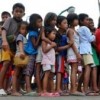
World Bank: Inequality Threatens Fight Against Extreme Poverty
Washington: Extreme poverty has been falling steadily around the world, but eliminating it by 2030 could be stymied by unequal distribution of the gains of economic growth, the World Bank said Sunday.
Amid South Africa’s Drought, Proposed Mine Raises Fears of Wetlands Impact
The dam supplying Johannesburg’s water sits less than 30 percent full. Water restrictions have been in place since November and taxes on high water use since August. Food prices across South Africa have risen about 10 percent from last year, in large part due to water shortages.
‘The Earth Is Not Flat; It Is Urban’
When the United Nations elaborated its latest report on the impact of what it calls “the dramatic shift towards urban life,” it tried to draw a balanced portrait of both the opportunities and the challenges of the fact that 1 in 2 world inhabitant already lives in urban areas and what this implies.
Making Policy out of Scientific Bricks, not Straw
Given the enormity of the challenges confronting humanity, the world’s investment in science, technology and innovation is woefully inadequate.
The UN’s Blind Spot for Conflict Prevention
As the world struggles to respond to conflicts and the people fleeing them, UN insiders are also struggling to advance a ‘shift in mindset’ to help prevent these crises from happening in the first place.
What We Need to Do
The following news (published by a leading Bengali national daily on September 30, the National Day of the Girl Child) has been haunting me since I read it: In the last one and a half years, 24 girls below three years were raped.Beware the Air We Breathe
Health-damaging atmospheric pollutants, which the World Health Organization warned Tuesday affected nine out of every 10 people, originate mainly from industry, heating and transport.
Perez-Guerrero Trust Fund Finances 278 Projects in Developing Nations
The Perez-Guerrero Trust Fund for South-South Cooperation (PGTF), described as one of the most successful ventures of the Group of 77, has provided $13.2 million in “seed money” for 278 small-scale projects in developing countries.
Environmental Crimes Could Warrant International Criminal Court Prosecutions
The International Criminal Court (ICC) will pay more attention to crimes of environmental destruction and land-grabs, according to a new policy paper published by the court.
Pensions for All
October 1st is the International Day of Older Persons. Just another day? Perhaps, but it should remind us that the world’s population is ageing, brought about by the combined effects of declining mortality and fertility rates and longer longevity. By mid-century, one out of five people will be over 65 compared to over one in ten now.
Providing Practical Support for UN Projects
From electrifying hospitals in Somalia to providing waste management services in Sri Lanka, the UN Office for Project Services works in over 80 countries to provide practical support to help meet the UN’s 17 Sustainable Development Goals.
UN Resolution on Journalist Safety Passed, But Long Way to Go
The UN Human Rights Council (UNHRC) advanced its commitment to the safety of journalists after adopting a groundbreaking resolution with measures for states to ensure journalist protection. But this is only the first step, many note.
My Hawai’i Commitment
There are two schools of thought on the current debate regarding the global conservation of natural resources agenda: one is a pessimistic view of our future which thinks that it is already too late to avoid a catastrophe - and therefore, we must now focus on survival and recovery - which puts people in despair. Others feel that humanity has faced and overcome many challenges in the past and will continue to do so. With these views in mind, over ten thousand conservation leaders from government, civil society, indigenous communities, faith and spiritual traditions, the private sector, and academia from about 200 countries gathered in an historically important IUCN World Conservation Congress in Hawai'i, from September 1-10, 2016.
Industrialization for a Sustainable Future
World leaders are recognizing the crucial role of industrialization in eliminating absolute poverty and promoting sustainable development. This was especially evident at the recent G20 Summit in Hangzhou, China, which I attended as a member of the delegation of the United Nations Secretary-General, Ban Ki-moon. The gathering demonstrated the growing consensus on the need for renewed efforts to facilitate inclusive and sustainable industrialization as one of the main drivers of economic growth and structural transformation in Africa, and especially the least developed countries (LDCs).
To Effectively Combat Climate Change, Involve Women
London’s Waterloo Bridge over the River Thames is famously known as the “Ladies Bridge,” for it was built largely by women during the height of World War II. On another continent, women fighting a different war have built an equally remarkable structure: a 3,300-meter anti-salt dyke constructed by a women’s association in Senegal to reclaim land affected by rising levels of salt water.
Wave Energy on the Horizon in the Pacific Islands
Waves are ubiquitous in the more than 20 island states scattered across 165 million square kilometres of the Pacific Ocean. But only this year, following a ground-breaking study by oceanographic experts, are they now seen as an economically viable source of renewable energy in the region.
A New ‘enemy’
THE US elections have stoked excitement and fear among all, in and outside the country. The liberals hate Trump whom they think is dangerous and reckless and backed by uncouth rednecks; they say he would play havoc with civil rights if in power. A white Democrat American said (jokingly) to me that she would seek political asylum in Pakistan if Trump won.
Take a Deep Breath? But 9 in 10 People Worldwide Live with Excessive Air Pollution!
The warning is sharp and the facts, alarming: 92 per cent of the world’s population live in places where levels exceed recommended limits. And 6.5 million people die annually from air pollution.
Murders, Crackdown Create Lingering Climate of Fear in Bangladesh
Like the living room of any proud family, the one in Ajoy Roy’s house boasts photos of the eldest son, Avijit.« Previous Page — Next Page »


The Week with IPS

NEXT STOP - SDGs
Tracking global progress towards a sustainable world
Tracking global progress towards a sustainable world
