Languages
Sunday, November 8, 2026



News and Views from the Global South
Opinion

Aren’t We Missing Food Security Experts in the Incoming President-Elect Biden-Kamala Harris Administration?
Food insecurity across the U.S. continues to be on the rise because of the effects of COVID-19. According to Feeding America, over 50 million Americans will experience food insecurity, including 17 million children.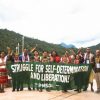
Reclaim Your Rights: Defend Indigenous People’s Lands
Rights are earned through hard-fought struggles. And for Indigenous Peoples (IP), its fulfillment comes from the collective and continuous defense of ancestral land and territory, and assertion of their ways of life and the right to self-determination.
Energy Efficiency for Developing Countries: Pivoting from Fewer Inputs to More Outputs
Energy efficiency (EE) is often marketed as a tool to save energy and money. The oft-repeated mantra is doing “more with less”, namely producing more goods with less energy. But, as set out in a recent World Bank report (which I co-authored), EE can do something that is often much more important for developing countries: it can produce the additional goods and services needed to raise standards of living.
Lockdown in Chains
Long before the Covid-19 pandemic grounded much of the world, lockdown, confinement, violence, and isolation was the daily reality for hundreds of thousands of people with disabilities around the world. Many are locked in sheds, cages, or tethered to trees and are forced to eat, sleep, urinate, and defecate in the same tiny area, sometimes for years. Why? Simply because they have a mental health condition—a psychosocial disability.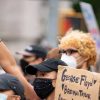
USA Downgraded as Civil Liberties Deteriorate Across the Americas
Few images better illustrate the recent decline in civil liberties in the United States than that of peaceful protesters near the White House being violently dispersed so Donald Trump could stage a photo-op.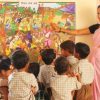
India: National Education Policy 2020 Could Transform Early Childhood Education If Implemented Effectively
It is after almost 34 years that the central government approved the new National Education Policy 2020 on July 29, 2020. This document contains comments on the entire education system and its various recommendations are being heavily debated.
Intellectual Property Monopolies Block Vaccine Access
Just before the World Health Assembly (WHA), an 18 May open letter by world leaders and experts urged governments to ensure that all COVID-19 vaccines, treatments and tests are patent-free, fairly distributed and available to all, free of charge.
Discriminatory Laws Still Holding Women Back in the Middle East
Decades of aggressive efforts to create equal opportunities for women, shatter the glass ceiling and build a more inclusive society only ends up in failure, when the key stake holders refuse to acknowledge discriminatory laws, socio-cultural and religious set ups that continue to threaten progress made by the female work force.
R & D Expenditure: How to Raise It and Why
Economic growth is the time-tested method of raising living standards and, if not accompanied by large increases in inequality, lowering poverty. Since World War II, economic growth has lifted hundreds of millions of people out of poverty, including in South Asia.
We All Deserve Protection From Covid-19
When I contracted Ebola virus disease in August 2014 while working as a medical doctor in a well-known private hospital in Lagos, Nigeria, I was denied access to a potential cure.
The First Global Event in the History of Humankind
The current pandemic is probably the first global event in the history of the human race. By ‘global’ I mean it has affected almost everybody, regardless of country of residence or social class.
Women’s Bodies, COVID-19 and Male Chauvinism
COVID-19 has in some nations been converted into a noxious, political issue. One of many worrying examples is the rhetoric of Brazil´s president. On 10 November, when Brazil´s COVID-19 death toll surpassed 162,000 victims – the numbers have continued to raise and are now 179,032 second only to USA´s 296,745 – Jair Bolsonaro minimized the effects of COVID-19 by stating: ”All of us are going to die one day. There is no point in escaping from that, in escaping from reality. We have to cease being a country of sissies.” Bolsonaro actually said maricas, which like sissies is slang for gay people. Both expressions originally indicated ”small girls” – marica is a diminutive of Maria and sissy of “kid sister”. Bolsonaro thus defined homosexuality as effeminacy by associating gay men with affectation and cowardice. By connecting disease, fear, and femininity the Brazilian president not only ignored the strength and courage women throughout history have demonstrated by enduring childbirths and caring for others, it also shows a strong disregard for gender equality and the rights of women and gay people.
Celebrating Vanuatu’s Path to Sustainable Development
The Pacific Island Developing State of Vanuatu has emerged as one of the region’s great success stories. Vanuatu has joined the ranks of Samoa and the Maldives as one of only six countries to graduate from being a least developed country, since the category was introduced by the United Nations in 1971.
If Your Civic Space is Closed, your Human Rights Dissolve
On Human Rights Day, civil society calls for the protection of civic space as a fundamental freedom, as more than 80% of the world’s population live in countries where civic space is closed, repressed or obstructed.
Reduce Military Spending – the Much-Needed Response to Violence Against Women
The COVID-19 pandemic is NOT the biggest pandemic the world confronts at the moment, despite over 69 million cases and 1.5 million deaths worldwide.1 If it’s not COVID, what is it then? It is violence against women!
Human Rights Must Be at the Heart of the COVID-19 Recovery
On 10 December every year, we celebrate Human Rights Day, marking the anniversary of the adoption of the Universal Declaration of Human Rights. The Universal Declaration guarantees a spectrum of human rights that belong to each of us equally, and unite us as a global community and upholds our humanity.
Escazú: Historic Step Towards Protecting Human Rights Defenders in Latin America and the Caribbean
The global health crisis that has marked 2020 did not put an end to another pandemic that has been plaguing Latin America and the Caribbean: murders and attacks against environmental defenders.
Education Is a Fundamental Human Right and the Priority of the 21st Century
Education is not a privilege. It is a fundamental human right. Yet, education is undervalued even at the best of times. We often fail to connect the dots between the right to education and the realization of all human rights. As noted by the Nobel-winning economist Amartya Sen, we have failed to give ‘this massive potential in transforming human lives’ the attention it deserves.
US Presidential Election Part 4: The Legacy of Slavery and Racism
In a powerful address at the Hungry Club Forum on 10 May 1967, Martin Luther King Jr. spoke about US’s so-called “three original sins”, the evils of slavery, poverty and war or, more generally, racism, materialism and militarism.
Climate Action for Human Rights
Climate change and human rights are two key issues in international development and their interaction is increasingly in need of focus at national, regional and international levels. In the Pacific, where the 22 Pacific Island countries and territories are on the front line of both climate ambition and the ongoing effects of the climate crisis, climate change is recognised as the region’s single greatest threat. Urgent climate action is consistently called upon to protect the interests of youth and the most vulnerable populations, together with preserving the ‘shared needs and interests, potential and survival of our Blue Pacific and this great Blue Planet’.
What Indonesia’s Local Elections Mean for National Politics
In just over a day, on 9 December, Indonesia holds 270 simultaneous local elections for executive office. This involves nine of the republic’s 34 governors, 224 of 416 bupati (district chiefs) and 37 of 98 mayors. The polling was initially scheduled for 23 September but the independent KPU (General Elections Commission) put the date back to 9 December due to the Covid-19 pandemic.« Previous Page — Next Page »





The views expressed in these articles are those of the authors and do not necessarily represent the views of, and should not be attributed to, IPS-Inter Press Service

The Week with IPS

NEXT STOP - SDGs
Tracking global progress towards a sustainable world
Tracking global progress towards a sustainable world
