Languages
Sunday, November 8, 2026



News and Views from the Global South
Opinion

Recovery: What Are We Talking About?
The new year has arrived, but the situation is worse than in the last months of 2020. The pandemic is still unleashed: the end of the year holidays, the official permissiveness, and the slowness of the distribution of vaccines seem to announce that the disease will continue to wreak havoc for several months in most of the world, particularly in America, Europe, and parts of Asia like India. It has therefore been required to redouble preventive measures: a new lockdown and the disruption of almost all economic and school activities. Therefore, the recovery looks still uncertain and distant.
Unhinged with 5,800 Nuclear Warheads at his Fingertips
Between now and January 20,2021, the President of the United States has almost run out of arenas in which to impose his will. His reelection has soured in infamy. His concern for the COVID-19 pandemic faded long ago. There is only one last pursuit available to him to demonstrate that he is the most powerful man on earth, i.e. using the nuclear weapons at his disposal.
Shifting Conversations in Multifaceted Policymaking
As the people of Kiribati, Samoa and Tonga gear up as the first nations to welcome 2021, communities around the Asia-Pacific region and beyond look forward to bidding farewell to the most tumultuous year in recent decades.
If Covid-19 is Primarily a ‘First World’ Virus, Why is the Global South in Lockdown?
The currently available Covid-19 vaccines have been authorized for ‘emergency use ‘in Europe and North America. This is due to an apparent spike in Covid-19 flu cases in the northern hemisphere as winter advances. Highly advertised vaccines are being produced and rolled out at ‘warped speed’ by powerful pharmaceutical and bio-technology companies headquartered in Euro-America although their efficacy including how long their immunity lasts is not clear.
Is High Tech a Danger to Humanity?
My friends all drive Porsches, I must make amends.
Worked hard all my lifetime, no help from my friends.
So, oh Lord, won't you buy me a Mercedes Benz.
Janis Joplin, 1970
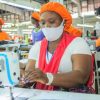
Making African Continental Free Trade Area Work for Women in a Post-COVID-19 World
On 1st January 2021, trading under the African Continental Free Trade Area (AfCFTA) Agreement commenced after months of delays caused by the COVID-19 pandemic.
Stand Tall, UN Humanitarians
Most people around the world were glad to see the back of 2020: From the devastating bushfires in Australia to the plagues of locusts through East Africa stretching across Arabia to Pakistan, extreme weather, melting ice sheets at the poles, and Covid-19 that still engulfs the globe.
2021: Year of Living Dangerously?
Goodbye 2020, but unfortunately, not good riddance, as we all have to live with its legacy. It has been a disastrous year for much of the world for various reasons, Elizabeth II’s annus horribilis. The crisis has exposed previously unacknowledged realities, including frailties and vulnerabilities.
This Is Not a Goodbye, Kenya – Asante na Kwaheri ya Kuonana
Happy New Year, Kenya. Several milestones in my personal and professional life have made Kenya a cherished place for me. I started my UNICEF career in Rumbek, South Sudan in June 2000, and my rest and recuperation breaks were in Nairobi. In fact Kenya was the first African country I had ever visited and, frankly, it was love at first sight.
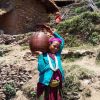
Wanted: Affirmative Legislation in the Job Market in Nepal
In Nepal, a dominating culture traditionally representing the elites, the so-called higher castes of the society according to the Hindu culture, still endures and prevails.
Women Need Support and Understanding after Miscarriage
Recently, Meghan Markle, the Duchess of Sussex, wrote a piece sharing about her miscarriage. I knew, as I clutched my firstborn child, that I was losing my second, she wrote. She is part of a growing list of celebrities who have publicly shared their experiences with miscarriages.
Reflecting Back and Imagining Forward
What a challenging year 2020 has been! A year of living dangerously – “Tahun vivere pericoloso”- perhaps these words of late President Soekarno of Indonesia are the best description. Fortunately, I managed to remain sane, reading and writing op-eds (mostly about the pandemic, here, here).
‘We Might Have a Covid-21 or Covid-22 Coming Our Way’
Cristián Samper is working for the Wildlife Conservation Society, an organization that concerns itself with the health of wildlife all over the globe. And he warned --even before the Covid-19 pandemic – about the dangers of a viral pandemic.
The World in 2021
The year 2020 is ending with the world caught up in an unprecedented human and economic crisis. The pandemic has contaminated 75 million people and killed 1.7 million. With the lockdowns, the global economy has suffered the worst recession in 75 years, causing the loss of income for millions of people. In such a bleak environment, what will the new year bring? Whilst uncertainty is the only certainty, eight points are likely to be key in the year ahead:
Why Transforming Our Food Systems Is a Feminist Issue
In countries where women are most marginalized, discriminated under the law and where gendered norms prevent women from owning property and resources, people are also the hungriest. This is because gender equality and food systems are intertwined.
Empowering Women through Wisdom
During the COVID 19 lockdown in Sri Lanka, seven women from diverse religious and ethnic backgrounds came together to deliver Wisdom and their message that women must be empowered and their voices for national unity must be heard through this movement.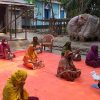
The Impact of COVID-19 on Child Marriage and Other Gender-Based Violence
I recently visited rural areas of Bangladesh amid the COVID-19 pandemic and returned to Dhaka with a new understanding of the impact that COVID-19 is having on child marriage, a harmful practice that is a global challenge. The fundamental shift that I saw was that child marriage, which has typically been encouraged by struggling parents, is now being encouraged by struggling girls. This worrisome trend underscores a new burden of the pandemic on the poor.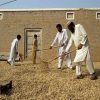
A Pakistani Farmer is Using Technology to Stop Agricultural Exploitation
Anas Shaikh is a Pakistani farmer on a mission to bring solutions to the many difficulties small and medium-scale farmer’s face in making a sustainable living.
How Africa can Lead the World in the COVID-19 Recovery
Africa, compared to Asia, Europe and the US, has largely escaped the devastating death toll of COVID-19, accounting for a fraction of the world’s 63 million cases.
Latin American Electric Utilities COVID-accelerated Evolution
The COVID-19 pandemic has accelerated an evolution across Latin American electric utilities. The need for utilities to manage structural issues derived from increased deployment of Renewable Sources of Energy (RSE) such as wind and solar and Distributed Energy Resources (DER) has rapidly increased. Technology is unleashing major disruptions and challenges. In many ways, Latin America’s traditional electric utilities are in crisis.
America has a Chequered Past in International Environmental Diplomacy
When it comes to international environmental diplomacy, America has a chequered past. It stood at the forefront of the international battle to fix the ozone hole and has shaped many key international agreements. Sadly, US positions are not always built on solid political ground at home. Twice, in the climate change process, this has led to the United States forging an agreement, only to then walk away. This happened with the 1997 Kyoto Protocol which then Vice-President Gore flew to Japan to sign in the full knowledge that a Republican dominated Senate would never ratify the deal. It happened again five years ago, with former President Obama closing that landmark deal (and John Kerry signing at the UN), only for President Trump to tear it up a few weeks later.« Previous Page — Next Page »





The views expressed in these articles are those of the authors and do not necessarily represent the views of, and should not be attributed to, IPS-Inter Press Service

The Week with IPS

NEXT STOP - SDGs
Tracking global progress towards a sustainable world
Tracking global progress towards a sustainable world
