Languages
Tuesday, November 17, 2026



News and Views from the Global South
Civil Society

‘Ambassadors of Freedom’ – Palestine’s Resistance Babies
Thirteen-year-old Hula Khadoura sits on a large sofa in her grandfather’s home in the neighbourhood of Tuffah, Gaza City, her one-year-old twin brothers Karam and Adam on her lap. “I am so happy they arrived,” she beams, holding the babies’ feeding bottles in her hands.
Women, Peace and Security Agenda Still Hitting Glass Ceiling
This October will mark the 15th anniversary of the adoption of U.N. Security Council Resolution 1325. The landmark resolution on Women, Peace and Security (WPS) recognises not only the disproportionate impact armed conflict has on women, but also the lack of women’s involvement in conflict resolution and peace-making.
U.N.’s Post-2015 Development Agenda Under Fire
The U.N.’s highly ambitious post-2015 development agenda, which is expected to be finalised shortly, has come fire even before it could get off the ground.
Opinion: Uneven MDG Progress Must Inspire Resolve to Do Much Better
The world received an important report card last month, in the form of the latest annual Millennium Development Goals Report. The report highlights a number of important achievements, but omits mention that some targets of the Millennium Development Goals (MDGs) were lower than those agreed to at the relevant U.N. international conferences of the 1990s.
Central America Fails to Take Advantage of Energy from Sun, Wind and Earth
Central America, a place of abundant wind and sunshine, is still chained to thermal power and large-scale hydroelectricity and has failed to include local communities in clean, environmentally-friendly and less invasive projects.
One Tune, Different Hymns – Tackling Climate Change in South Africa
Anti-nuclear energy activists are up in arms, and have taken to vigils outside South Africa’s parliament in Cape Town to protest against President Jacob Zuma’s push for nuclear development.
Key Constituencies Call for Inclusion in Nepal’s Draft Constitution
Ending a years-long political deadlock, Nepal’s major political parties inked a 16-point agreement last June to pave the way for the Constituent Assembly (CA) to write a new constitution.
Opinion: Developing Nations Set to Challenge Rich Ahead of SDG Summit
The final round of negotiations on the Sustainable Development Goals – the successor to the Millennium Development Goals, due to be inaugurated in September at the U.N. General Assembly – is now underway in New York.
U.N. Leads Youth Battling Intolerance, Racism and Extremism
When the 21-year-old Crown Prince of Jordan, Al Hussein bin Abdullah II, presided over a Security Council meeting last April, he was described as the youngest ever to chair one of the U.N.’s most powerful political bodies armed with powers to wage wars and declare peace.
Obama Walks Fine Line in Kenya on LGBTI Rights
U.S. President Barack Obama spoke in Nairobi at the end of a two-day visit Saturday, focusing on Kenya's economy and the fight against terrorism, but also briefly touching on gay rights and discrimination.
Multilingualism Opens Doors to the World
On Friday, 67 student essay winners from 42 different countries convened at the United Nations General Assembly to present their essays at the Many Languages, One World Global Youth Forum.
Faith Leaders Issue Global “Call to Conscience” on Climate
“We received a garden as our home, and we must not turn it into a wilderness for our children.”
Governments Playing Political Ping-Pong with China’s Uyghurs
Two reports released in quick succession by the international rights group Human Rights Watch have highlighted the plight of China’s minority Uyghur population and shed light on their continuing struggle to find a safe haven elsewhere in the region.
Opinion: Addis Outcome Will Impact Heavily on Post-2015 Agenda – Part 2
The United Nations is the only universal forum that connects systemic issues to the global partnership for development. The latter recognises North-South cooperation based on historical responsibility and varying levels of development and capacity among member states of the U.N.
U.N. Remains Barred from Visiting U.S. Prisons Amid Abuse Charges
When U.S. President Barack Obama visited the El Reno Correctional Facility in Oklahoma last week to check on living conditions of prisoners incarcerated there, no one in authority could prevent him from visiting the prison.
Tribal Priestesses Become Guardians of Seeds in Eastern India
As the rhythmic thumping of dancing feet reaches a crescendo, the women offer a song to their forest god for a bountiful harvest.
Opinion: Third FfD Conference Fails to Finance Development – Part One
The third Financing for Development (FfD) conference in Addis Ababa concluded last Thursday, July 16, in bad faith as developed countries rejected a proposal for a global tax body and dismissed developing countries’ compromise proposal to strengthen the existing U.N. committee of tax experts.
Calls Mount for “Bold” Climate Deal in Paris
A diverse coalition of 24 leading British scientific institutions has issued a communique urging strong and immediate government action at the U.N. climate change conference set for Paris in December.
Museums Taking Stand for Human Rights, Rejecting ‘Neutrality’
An exhibition on modern-day slavery at the International Slavery Museum in this northern English town is just one example of a museum choosing to focus on human rights, and being “upfront” about it.
Young Hondurans Lead Unprecedented Anti-Corruption Movement
A Honduran spring is happening, led by young people mobilising over the social networks, who are flooding the streets with weekly torch marches against corruption and impunity.
Papua New Guinea’s Unemployed Youth Say the Future They Want Begins With Them
Zibie Wari, a former teacher and founder of the Tropical Gems grassroots youth group in the town of Madang on the north coast of Papua New Guinea, has seen the hopes of many young people for a decent future quashed by the impacts of corruption and unfulfilled promises of development.« Previous Page — Next Page »


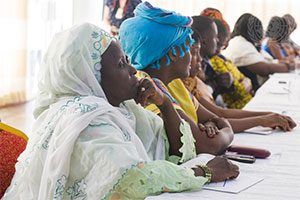 Representatives of Civil Society, Sierra Leone. Credit: UN Photo/Eskinder Debebe
Civil society faces mounting threats worldwide, even as it remains essential for democratic accountability, especially in countries struggling with economic instability and social inequality. However, at the same time, nations with weak democratic governance structures also systemically suppress the power of civil society. Human rights activists across the Global South frequently challenge issues such as political persecution and gender oppression, but in return face state-sanctioned punishment for their advocacy. Imprisonment and exile are common mechanisms of punishment that seek to erode the strength of civil society. The 2026 World Press Freedom Index has reached its lowest level in 25 years, with more than half of the world’s countries now falling into the "difficult" or “very serious” category for press freedom. IPS seeks to highlight the work of civil society across the Global South as well as the challenges that they face.
Updated by Yilan Batista and Shuli Wong August 2026

The Week with IPS

NEXT STOP - SDGs
Tracking global progress towards a sustainable world
Tracking global progress towards a sustainable world
