Languages
Wednesday, November 18, 2026



News and Views from the Global South
Civil Society

NGOs Urge Post-2015 Declaration Include Water, Sanitation as Basic Human Rights
Virtually every major international conference concludes with a “programme of action” (PoA) – described in U.N. jargon as “an outcome document” – preceded by a political declaration where 193 member states religiously pledge to honour their commitments.
U.S. Failings Exposed in U.N. Human Rights Review
Without the emperor’s clothes, like in the Hans Christian Andersen story, the United States was forced to submit its human rights record to the scrutiny of the other 192 members of the United Nations on Monday.
Popular Nigerian Author Calls on Americans to ‘Reject Silence’
Nigerian author Chimamanda Ngozi Adichie, co-curator of a spectacular World Voices week with over 100 African writers, closed the May 4-10 event with an admonition.
Press Freedom Groups Denounce NSA Spying on AJ Bureau Chief
Ahmad Muaffaq Zaidan doesn’t deny that he’s had contact with terrorist groups. In fact, it would have been rather difficult to do his job otherwise.
The Definition of ‘Rape’ Cannot Change with a Marriage Certificate
"I was brutally raped thrice by my husband. He kept me under surveillance in his Dubai house while I suffered from severe malnutrition and depression. When I tried to flee from this hellhole, he confiscated my passport, deprived me of money and beat me up," recalls Anna Marie Lopes, 28, a rape survivor who after six years of torture, finally managed to board a flight to New Delhi from the United Arab Emirates in 2012.
NGOs Urge Commission of Inquiry to Probe Sexual Abuse in U.N. Peacekeeping
A rising tide of sexual abuse in U.N. peacekeeping operations has triggered the launch of a high-level campaign to end the continued attacks on women and children and an urgent call for the creation of an independent commission of inquiry.
IACHR Tackles Violence Against Native Peoples in Costa Rica
After years of violence against two indigenous groups in Costa Rica, the Inter-American Commission on Human Rights (IACHR) demanded that the government adopt measures by May 15 to protect the life and physical integrity of the members of the two communities.
Q&A: Nuclear Disarmament a Non-Starter, “But I Would Love to Be Proven Wrong”
Albert Einstein, the internationally-renowned physicist who developed the theory of relativity, once famously remarked: “I know not with what weapons World War III will be fought, but World War IV will be fought with sticks and stones.”
Opinion: Don’t Leave Indigenous Peoples Behind in SDGs
U.N. member states are meeting throughout the year to finalize the Sustainable Development Goals (SDGs), which will set the global development agenda for the next 15 years. The goals are supposed to be universal and aspire to “leave no one behind.”
Farmers Fight Real Estate Developers for Kenya’s Most Prized Asset: Land
 Vegetables grown in the lush soil of this quiet agricultural community in central Kenya’s fertile wetlands not only feed the farmers who tend the crops, but also make their way into the marketplaces of Nairobi, the country’s capital, some 150 km south.

Opinion: Renewable Energy – How to Make It More Bird-Friendly
Climate change is one of the greatest risks to human societies, but also to biodiversity, often creating a “snowball effect” exacerbating existing pressures such as habitat fragmentation.
‘Je Suis Favela’ – Bringing Brazilian Books to the French
Long before the attack in Paris that inspired the slogan “Je Suis Charlie”, a young French publisher had released a collection of stories titled je suis favela about life in Brazilian slums.
Latin America’s Social Policies Have Given Women a Boost
Although they do not specifically target women, social policies like family allowances and pensions have improved the lives of women in Latin America, the region that has made the biggest strides so far this century in terms of gender equality, although there is still a long way to go.
Prepaid Meters Scupper Gains Made in Accessing Water in Africa
While many countries appear to have met the U.N. Millennium Development Goal (MDG) of halving the proportion of people without sustainable access to safe drinking water, rights activists say that African countries which have taken to installing prepaid water meters have rendered a blow to many poor people, making it hard for them to access water.
The Biggest Lessons Nepal Will Take Away From This Tragedy
There has never been any doubt that Nepal is sitting on one of the most seismically active areas in South Asia. The fact that, when the big one struck, damages and deaths would be catastrophic has been known for years.
Faith-Based Organisations Warn of Impending Nuclear Disaster
As the month-long review conference on the Nuclear Non-Proliferation Treaty (NPT) continued into its second week, a coalition of some 50 faith-based organisations (FBOs), anti-nuclear peace activists and civil society organisations (CSOs) was assigned an unenviable task: a brief three-minute presentation warning the world of the disastrous humanitarian consequences of a nuclear attack.
Police Killings Challenge U.S. “Exceptionalism”
Since being roundly chastised last fall by the U.N. Committee Against Torture for excessive use of force by its law enforcement agencies, the United States hasn't exactly managed to repair its international reputation.
Falling Oil Prices Trigger Initial Economic Gains for Pacific Islanders
The recent dramatic fall in world oil prices, with Brent crude plummeting from a high of 115 dollars per barrel in June last year to around 47 dollars in January 2015, is beginning to benefit Pacific Islanders who are seeing lower prices for fuel and energy.
Urban Slums a Death Trap for Poor Children
It’s called the urban survival gap – fuelled by the growing inequality between rich and poor in both developing and developed countries – and it literally determines whether millions of infants will live or die before their fifth birthday.
Families in Quake-Hit Nepal Desperate to Get on With Their Lives
Just over a week after a dreadful 7.8 magnitude earthquake rocked Nepal, displaced families are gradually – but cautiously – resuming their normal lives, though most are still badly shaken by the disaster and the proceeding aftershocks that devastated the country.Popular Nigerian Writer Headlines at Blockbuster World Voices Fest
Prize-winning writer Chimamanda Ngozi Adichie is hoping to break down some stereotypes at the upcoming World Voices Festival sponsored by the PEN America free expression group.« Previous Page — Next Page »


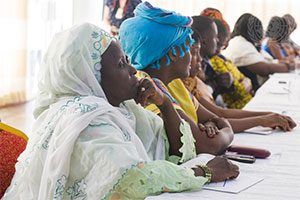 Representatives of Civil Society, Sierra Leone. Credit: UN Photo/Eskinder Debebe
Civil society faces mounting threats worldwide, even as it remains essential for democratic accountability, especially in countries struggling with economic instability and social inequality. However, at the same time, nations with weak democratic governance structures also systemically suppress the power of civil society. Human rights activists across the Global South frequently challenge issues such as political persecution and gender oppression, but in return face state-sanctioned punishment for their advocacy. Imprisonment and exile are common mechanisms of punishment that seek to erode the strength of civil society. The 2026 World Press Freedom Index has reached its lowest level in 25 years, with more than half of the world’s countries now falling into the "difficult" or “very serious” category for press freedom. IPS seeks to highlight the work of civil society across the Global South as well as the challenges that they face.
Updated by Yilan Batista and Shuli Wong August 2026

The Week with IPS

NEXT STOP - SDGs
Tracking global progress towards a sustainable world
Tracking global progress towards a sustainable world
