Languages
Saturday, September 26, 2026



News and Views from the Global South
Aid

World Risks Losing Entire Generation of Children, Nobel Laureates Warn
The COVID-19 pandemic has upended the lives of millions of people worldwide, accounted for over 869,000 deaths, destabilised the global economy and triggered a marked rise in poverty and hunger in the developing world. But the fallout from one of the most devastating consequences of the spreading virus is on the lives of a growing new generation: children.
Nobel Laureates and Global Leaders Call for Urgent Action to Prevent COVID-19 Child Rights Disaster
Regina Njagi’s four children, aged between 11 and 17, have not benefitted from online learning since the COVID-19 led to the closure of all schools in Kenya, earlier in March. With the closure, Njagi lost her job as a teacher at a local private school.
Q&A: Ageing Africa Left out of COVID-19 Policies
Nearly three quarters of respondents in a survey across 18 African countries have claimed that their countries’ COVID-19 responses are gravely lacking in addressing the ageing population.
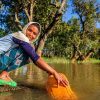
How Women & Girls are Forced to Trade Sex for Water
There is an intimate connection between corruption and COVID-19. This pandemic is making everyday life more desperate, especially in poorer communities, and that means more opportunities for those preying on vulnerable people.
Q&A: Family Farming in Latin America & the Caribbean Hard Hit by COVID-19 Restrictions
With limited transport options to carry their goods to the market, lack of protective gear, and limited financial resources, family farmers across Latin America are facing grave consequences as a result of the COVID-19 pandemic.
No More Lost Generations: Global Fund Provides Education for Children in Crisis
15-year-old Humaira* sits on the mud floor of her hut in Ukhiya camp, Cox's Bazar, listening as the rain beats down on the tarpaulin roof.
Keeping Education within the Grasp of Refugee Children
“Not being able to go to school is not something I’d wish on any child in this world,” said 21-year-old Nujeen Mustafa, a young advocate for refugees who fled the Syrian war with her sister. Mustafa, who now lives in Germany, is also the United Nations Human Rights Council (UNHCR) high profile supporter.
Impending Food Crisis in Lebanon will Largely Affect Migrant Workers
Migrant workers and refugees in Lebanon will “inevitably” suffer the most as food insecurity threatens the nation following last week’s blast.
Bangladesh Deals with Triple Disasters of Flooding, Coronavirus and Lost Livelihoods
With nearly 5.5 million people people across Bangladesh affected by severe flooding -- the worst in two decades -- humanitarian experts are concerned that millions of people, already badly impacted by COVID-19, will be pushed further into poverty.
Southeast Asia Has a Chance to Build Back Better Post-Pandemic
Southeast Asia’s response to the coronavirus pandemic has been efficient, but some areas such as data privacy, measures to go back to normalcy after lockdown is lifted, and resources for migrant or transient populations will need addressing.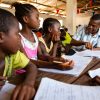
Last Mile Teachers
“It has gotten really tough for us,” says James, a father in rural Liberia, of COVID-19 lockdown and school closures. “My son is trying but he is missing his friends and teachers. Children want to be in school.”
COVID-19 Means Development Setbacks for Mongolia
Mongolia has recorded very few cases of COVID-19, less than 300 as on date, despite its more than 4,000 kilometre porous border with China. However, the country faces a major economic impact from the pandemic.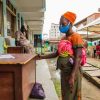
COVID-19: Smarter Response & Recovery Measures Can Help Preserve Human Rights in Africa
As COVID-19 cases continue to rise in Africa, countries are simultaneously dealing with the health and socio-economic impacts of the pandemic, and how and when to ease lockdowns and curfews imposed to stop the disease spreading and get onto the path of recovery.
As COVID-19 Cases Rise, African Countries Grapple with Safely Easing Lockdowns
Re-opening economies is a tough balancing act between keeping people safe from the virus while ensuring they can still make a living. Some four months after the first COVID-19 case in Africa was reported in Egypt, countries on the continent are beginning to ease public health and social measures, such as lockdowns and curfews, imposed to curb the spread of the pandemic.
Inadequate Water & Sanitation Threatens Women’s & Girls’ Development in Senegal
With Tabaski (Eid al-Adha) around the corner, 11-year-old Fatoumata Binta from Terrou Mballing district in M'Bour, western Senegal, wakes up early and joins her brothers Iphrahima Tall and Ismaila to fetch water from a river several miles from home.
Are Women-led Startups Key to Sustainability in Senegal?
Growing up in the Senegalese capital of Dakar, Siny Samba (28) watched with fascination as her grandmother made snacks for her family, using the fresh fruit from their garden. She would often help her grandma make these snacks to feed the neighbourhood children.
World Poverty: We Have Come So Far… But So Much Further To Go
The United Nations’ first Sustainable Development Goal (SDG) is “No poverty,” the most important because almost half the world, 46%, lives on less than $5.50 a day according to the World Bank. But world attention has turned away from poverty. Why?
With Poverty & Hunger Skyrocketing, is a Global Economic Rescue Package the Answer?
The United Nations has been relentlessly pursuing a highly-ambitious blueprint for the sustainable future of humanity –harking back to the adoption of a new global economic agenda by the General Assembly back in 2015.
IPS Webinar: Gender Equality Crucial in ‘Building Back Better’ Post-COVID-19
While men are more likely to die from COVID-19, women are facing the full blow of the socio-economic fallout from the ongoing pandemic as well as seeing a reversal in equality gains made over the last two decades, says an all-women panel of international thought leaders, who met virtually during a discussion convened by IPS.
Q&A: How Kazakhstan’s Transgender and Lesbian Women are Being Impacted by COVID-19
The coronavirus lockdown in Kazakhstan, and the resultant limited public oversight and limited publication engagement, has paved the way for the government to propose amendments to the country's laws around gender that could see the exclusion of the rights of the Lesbian, Gay, Bisexual, Transgender, and Queer (LGBTQ) community.
COVID-19 & Why We Care
Among the many compelling points made by Dr. Anthony Fauci in our “Rethinking Health” webinar this week was the absolute essentiality of global collaboration and transparency to contain the pandemic with which we are faced.« Previous Page — Next Page »


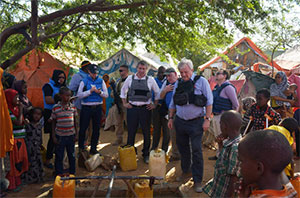 UN Emergency Relief Coordinator Visits Somalia. Credit: UN Photo/Tobin Jones
In recent years, conflicts have broken out across the world with no sign of slowing down or stopping. In times like this, millions of people globally are in dire need of humanitarian aid. Famine, warfare, natural disasters, and economic decline plague a host of nations, including Palestine, Sudan, Chad, Lebanon, and Haiti, to name a few. Humanitarian aid provides millions of people with critical services including healthcare, food, clean drinking water, psychosocial support, housing, and access to education. UN agencies such as the UNDP, UNICEF, the World Food Programme (WFP), UNHCR, UNRWA, and UNEP work with the UN Office for the Coordination of Humanitarian Aid (OCHA) and local organizations to come up with the best possible strategies to support affected communities. At the same time, humanitarian aid and those working on the frontlines are consistently threatened by both actors directly involved in conflict as well as those who are meant to contribute to the international humanitarian regime at large. The near-collapse of United States international aid structures in 2025, including the termination of 83% of USAID’s 6,300 global initiatives, has left millions of people without access to vital humanitarian assistance. 98 million people in 2025, only 65% of people targeted for humanitarian assistance, received the help they needed. In contrast, 123 million people received some form of humanitarian assistance in 2024, and OCHA’s 2026 Global Humanitarian Overview estimates that 239 million people are in need of assistance in 2026. IPS is well-positioned to discuss current initiatives to provide aid and relief through in-depth reporting and opinion content.

The Week with IPS

NEXT STOP - SDGs
Tracking global progress towards a sustainable world
Tracking global progress towards a sustainable world
