Languages
Friday, September 25, 2026



News and Views from the Global South
Aid

It’s Time for Results as Sudan Enters Second Year of NDC Partnership
Earlier this year, when heavy rains caused massive flooding in Sudan, a three-month state of emergency was declared in September. The floods which began in July, were the worst the country experienced in the last three decades and affected some 830,000 people, including 125,000 refugees and internally displaced people.
Japan Should Lead Charge for Equitable Access to COVID-19 Vaccines
Japan should step up and play a role as a global facilitator for equitable access to COVID-19 vaccines, Dr Daisaku Higashi said at a recent Japan Parliamentarians Federation for Population (JPFP) study meeting.
Youth Demand a ‘Fair Share’ from World Leaders Ahead of G20 Summit
Heads of youth movements and student unions are challenging the world’s richest nations to correct an ‘incredibly unequal’ global response to COVID-19, by considering the plight of the world’s most vulnerable children and young people.
Bringing Clean Water On Tap To Rural Villages In Polynesian Island Nation Of Tuvalu
Rural communities on one of the nine islands that make up the Polynesian nation of Tuvalu are anticipating how life will change when they are connected to piped clean water for the first time.
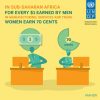
African Employers for Gender Equality
Africa has over 700 companies with an annual revenue of more than $500 million, including 400 with revenue above $1 billion. The ability of these companies to thrive rests on building and retaining talented women and men.
Solving the Challenge of Food Security Key to Peacebuilding in the Sahel
In 2013, when Jamila Ben Baba started her company, the first privately owned slaughterhouse in Mali, she did so in the midst of a civil war as Tuareg rebels grouped together in an attempt to administer a new northern state called Azawad. Ben Baba, who is originally from Timbuktu, in northern Mali — where much of the civil war conflict took place — based the business in the country’s western region of Kayes and grew it into what is considered the largest private slaughter house in the West African nation.
Using Traditional and Indigenous Food Resources to Combat Years of Successive Drought
For Zimbabwean farmer Sinikiwe Sibanda, planting more sorghum and millet than maize has paid off. As the coronavirus pandemic has led to decreased incomes and increased food prices across the southern African nation -- it is estimated that more than 8 million Zimbabweans will need food aid until the next harvest season in March -- Sibanda's utilisation of traditional and indigenous food resources could provide a solution to food security here.
‘The Sahel – a Microcosm of Cascading Global Risks Converging in One Region’
The European Commission this week pledged $27.8 million in humanitarian support to the Sahel region as floods and the coronavirus pandemic exacerbate the stability in a region deeply in conflict. While the figure is less than 2 percent of the $2.4 billion that the United Nations has appealed for, Amnesty International researcher Ousmane Diallo told IPS that despite past donations from international development partners to Sahelian countries, the situation hasn’t improved over the years.
Low-cost Technology can Have Life-changing Impacts for Rural Women
Access to technology which is relatively inexpensive to deploy can have a life-changing impact for rural women, social scientist Valentina Rotondi told IPS.
Nobel Peace Prize to World Food Programme Delivering Life-Saving Sustenance to Millions Worldwide
With the 2020 Nobel Peace Prize bestowed on the Rome-based World Food Programme (WFP), the United Nations and its affiliated agencies continue to hold a monopoly of one of the world’s most prestigious annual awards.
To Achieve Progress on Gender Equality, Gender Data Must Be at the Forefront
In 1995, world leaders gathered in Beijing for the Fourth World Conference on Women and adopted the Beijing Declaration and Platform for Action. This marked a significant turning point for the global agenda for gender equality. This week, a high-level event will take place as part of the United Nations General Assembly to celebrate the meeting’s 25th anniversary. However, despite ambitious commitments to gender equality, nearly 25 years later, progress still lags far behind.
Judgment Free Online Platform Key to Helping Suicidal People, Says Survivor
Romana Hoque had it all, a comfortable life, a happy family. Despite this, the 43-year-old second-generation immigrant from Indonesia living in the United States was depressed enough to contemplate suicide.
Scientists Draw up Guidelines to Help Agri-food Companies Align with 2030 Agenda
In Amuru district, 47 kilometres from Gulu town in northwestern Uganda, the Omer Farming Company has proven that it is possible to farm on thousands of acres of land using methods that conserve the environment and its biodiversity.
COVID-19 – Possible Human Rights Crisis in Asia as Disparities Expected to Widen
The negative impact of the coronavirus pandemic is likely to be felt long after the COVID-19 health risk is resolved, a high-level meeting under the auspices of the Asian Population and Development Association (APDA), heard.
Accessibility of Vaccines & Commitment to Ceasefire – Priority Focuses for 75th UNGA
Key focuses of the upcoming 75th session of the United Nations General Assembly (UNGA) High Level Week will be the accessibility of vaccines and a renewed plea for a global ceasefire. “I will make a strong appeal to the international community to mobilise all efforts for the global ceasefire to become a reality by the end of the year,” U.N. Secretary-General António Guterres said on Wednesday.
COVID-19 Worsens Mozambique’s Hunger
Like many Mozambicans in the agricultural sector, 39-year-old Fatima Matavele, a commercial farmer in the district of Chokwe, some 213 kilometres north of the capital, Maputo, has had a tough year. Although the last few years have been hard, 2020 has proven to be the most difficult of all.
No ‘Business as Usual’ for Children Post-COVID-19, say Laureates & Leaders
Addressing delegates at the end of the virtual 3rd Fair Share for Children Summit, 2014 Nobel Peace Laureate Kailash Satyarthi told global citizens that “business as usual” in dealing with COVID-19 is not going to be tolerated. “We’re not going to accept the miseries of child labour and trafficking to continue to be normal,” he said.
COVID-19 Pandemic an Opportunity to Re-evaluate How we Treat World’s Starving Children
While COVID-19 pandemic has affected the entire world, Nobel Laureates and world leaders have today expressed concern that ongoing crisis is far from being an equaliser. The pandemic has revealed that the most vulnerable and marginalised populations, including and especially children, remain largely unprotected against the virus and its impacts.
Hopes and Challenges for the First-Ever Food Systems Summit
Building inclusive and healthier food systems, and safeguarding the health of the planet will be some of the key priorities at the first-ever Food Systems Summit next year.

Caring for Poorest and Most Underserved Children Vital for Creating a Better World
Kerry Kennedy has a clear mission – along with Nobel laureates and leading international figures – she wishes to ensure that hard-won gains in children’s rights are not destroyed by the economic fallout from the COVID-19 pandemic.
Nobel Laureate Kailash Satyarthi on Where to Find the $1 trillion Needed for Marginalised Children
 Nobel Laureate Kailash Satyarthi says that $1 trillion can solve many of the problems the world's most marginalised communities are facing.
 « Previous Page — Next Page »


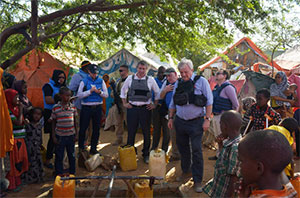 UN Emergency Relief Coordinator Visits Somalia. Credit: UN Photo/Tobin Jones
In recent years, conflicts have broken out across the world with no sign of slowing down or stopping. In times like this, millions of people globally are in dire need of humanitarian aid. Famine, warfare, natural disasters, and economic decline plague a host of nations, including Palestine, Sudan, Chad, Lebanon, and Haiti, to name a few. Humanitarian aid provides millions of people with critical services including healthcare, food, clean drinking water, psychosocial support, housing, and access to education. UN agencies such as the UNDP, UNICEF, the World Food Programme (WFP), UNHCR, UNRWA, and UNEP work with the UN Office for the Coordination of Humanitarian Aid (OCHA) and local organizations to come up with the best possible strategies to support affected communities. At the same time, humanitarian aid and those working on the frontlines are consistently threatened by both actors directly involved in conflict as well as those who are meant to contribute to the international humanitarian regime at large. The near-collapse of United States international aid structures in 2025, including the termination of 83% of USAID’s 6,300 global initiatives, has left millions of people without access to vital humanitarian assistance. 98 million people in 2025, only 65% of people targeted for humanitarian assistance, received the help they needed. In contrast, 123 million people received some form of humanitarian assistance in 2024, and OCHA’s 2026 Global Humanitarian Overview estimates that 239 million people are in need of assistance in 2026. IPS is well-positioned to discuss current initiatives to provide aid and relief through in-depth reporting and opinion content.

The Week with IPS

NEXT STOP - SDGs
Tracking global progress towards a sustainable world
Tracking global progress towards a sustainable world
