Languages
Saturday, October 17, 2026



News and Views from the Global South
Energy

A Posthumous Message from Hurricane Sandy*
Hi, this is Sandy. By the time you read this, I’ll be gone, after dissipating into increasingly weaker remnants of strong winds, heavy rains and snowfall in the Great Lakes region of North America.**
Southern U.S. States Inch Towards Renewable Energy
With the U.S. East Coast virtually shutting down Monday with the arrival of Hurricane Sandy, the broader debate over transitioning to cleaner energy sources and slowing, if not halting, climate change is taking on ever greater urgency.
Pacific Island Sets Renewable Energy Record
Tokelau, a small Polynesian territory in the central Pacific, has surpassed the rest of the world in replacing fossil fuels and raised the benchmark of achievement on sustainable development.
Regional Trade Key to African Food Security, World Bank Says
The World Bank is urging African countries to strengthen regional food trade, suggesting that food security could be greatly enhanced simply by allowing farmers to trade more easily across the continent.
Japan Struggling to Store Nuclear Water*
Japan's crippled nuclear power plant is struggling to find space to store tens of thousands of tonnes of highly contaminated water used to cool the broken reactors, the manager of the water treatment team has said.
U.S. Outlier in New Push to Reduce Gas Flaring
An international coalition led by the World Bank is calling for state-backed and private oil producers to reduce “gas flaring” by an additional 30 percent over the next five years, saying that doing so would be equivalent to taking 60 million cars off of the roads.
Nile Powers Uganda Slowly
Uganda is facing the unwelcome possibility of increased costs for building a projected 600-megawatt hydropower plant at the Karuma Falls, on the Victoria Nile, owing to construction delays.
Climate Change, the Taboo Phrase in U.S. Electoral Politics
The United States endured its hottest summer in history this year, with droughts and wildfires ravaging the country. And according to a new report from the global reinsurance giant Munich Re, insurance losses related to extreme weather have nearly quadrupled in the U.S. since 1980.Shale Gas Extraction Brings Local Health Impacts
Shale gas extraction is putting some U.S. communities at risk of health issues, new research released here Thursday warns.AZERBAIJAN: Baku Mulls “Green Tax” on Corporate Polluters
Azerbaijani officials appear to buy into the idea that taxation policy can be an effective way of managing the environment.
Agricultural Waste Boosts Energy Production in Argentina
A joint project by the energy and agriculture authorities in Argentina is seeking to boost electricity generation from forestry waste and other rural products which have enormous potential, according to experts.
Some Caribbean Hotels Back Away from Battered Coastlines
The postcards portray sand, sea and sun. But key players in the Caribbean tourism industry are warning that it's time to shift gears away from the region's threatened coastlines and instead promote inland attractions like biodiversity.Obama Aides Launch Preemptive Attack on New Iran Plan
Although the place and time of the next round of talks on Iran’s nuclear programme have not yet been announced, the manoeuvring by Iran and the United States to influence the outcome has already begun.
Most EU Nuclear Power Plants ‘Unsafe’
The so-called ‘stress tests’ on nuclear power plants in the European Union (EU) have confirmed environmental and energy activists’ worst fears: most European nuclear facilities do not meet minimum security standards.
Hour Grows Late to Act on Climate Change, Caribbean Warns
Their speeches did not grab international headlines like that delivered by U.S. President Barack Obama, nor did other delegates walk out as they spoke, as was the case for Iran’s Mahmoud Ahmadinejad.
Cuba’s Fragile Power Grid Needs Renewable Energy
Only 3.8 percent of the electric power generated in 2011 in Cuba came from renewable sources, compared to 18 percent in 1979 – a retreat that alarms experts, who fear for the system’s sustainability.
U.N. Chief Fires Up Private Investment for Global Energy Solutions
Following a lukewarm outcome of the Rio+20 sustainable development negotiations in June, U.N. Secretary-General Ban Ki-moon is moving full-steam ahead on a new initiative aimed at leveraging public-private partnerships to bring modern energy to over one billion people by 2030.
Easing Air Pollution Would Cool the Planet
The planet can be cooled a whopping 0.5 degrees C with fast action to reduce air pollution from coal-fired power plants, gas fracking, diesel trucks and biomass burning, recent studies show.Iranian Diplomat Says Iran Offered Deal to Halt 20-Percent Enrichment
Iran has again offered to halt its enrichment of uranium to 20 percent, which the United States has identified as its highest priority in the nuclear talks, in return for easing sanctions against Iran, according to Iran’s permanent representative to the International Atomic Energy Agency (IAEA).
A Lake of Hope and Conflict
Parvez Ahmad Dar climbs three hours to reach the hilltop, generator-equipped tourist centre in Ajaf village, 35 kilometres from Srinagar, to recharge his mobile phone.
Ice-Free Arctic Is “Uncharted Territory”
The melt of Arctic sea ice has reached its lowest point this year, shrinking 18 percent from last year's near-record low.« Previous Page — Next Page »





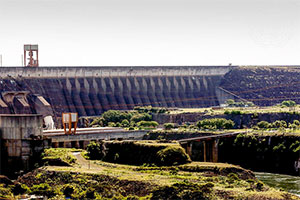 UN Power Plant, Paraguay. Credit: UN Photo/Evan Schneider
Energy has posed a great challenge for economies around the world. As global energy consumption skyrockets throughout the years, so does the need for sustainable solutions. The Sustainable Development Goals are essential in providing people with access to safe, affordable, and sustainable energy sources that minimize harm on the planet. Progress towards these goals opens the door for an advancement in modernization for communities on a global level and allows for a potential mitigation of tensions between nations.
The UN’s Summit of the Future in 2024 offered new initiatives that are being taken to achieve these goals, including a decreased reliance on fossil fuels, a switch to renewable energy sources, and improved climate financing.
IPS is well positioned to provide relevant, insightful, and compelling analysis of recent updates and measures being taken around the world to achieve a cleaner future.

The Week with IPS

NEXT STOP - SDGs
Tracking global progress towards a sustainable world
Tracking global progress towards a sustainable world
