Languages
Monday, October 19, 2026



News and Views from the Global South
Energy

Ice-Free Arctic Is “Uncharted Territory”
The melt of Arctic sea ice has reached its lowest point this year, shrinking 18 percent from last year's near-record low.
Palestinian Authority Faces Fiscal Crisis, As World Bank Blames Israelis
With a shortfall of some 400 million dollars this year, the Palestinian Authority (PA) faces a “deepening fiscal crisis", according to new reports released here Wednesday on the eve of a critical donors’ conference by the World Bank and the International Monetary Fund (IMF).EU Cap ‘Only Boosts Biofuels’
The European Commission has announced it will limit the amount of crop-based biofuels used in transport, but its newly proposed measures are not nearly enough to curb the disastrous impact of the EU's biofuel policy around the world. Its effects will only worsen, activists say.
Deeper CO2 Cuts Needed to Save Corals
Limiting climate change to two degrees C won't save most coral reefs, according to new, state-of-the-art research.Carbon Trading Scheme Close to Collapse
By 2020, countries that are signatory to the Kyoto protocol will have accumulated more than 17 billion tonnes of surplus emission reduction permits, a new study shows. This enormous surplus not only drives the carbon price close to zero, but also jeapordises the chances of reaching a new global climate deal.Small Islands Push for New Energy
Most islands are well endowed with one or more renewable energy source – rivers, waterfalls, wind, sunshine, biomass, wave power, geothermal deposits - yet virtually all remain heavily or entirely reliant on imported fossil fuels to produce electricity and power transport.
Rio Summit’s Legacy Still a Question Mark
Academics gathered in Washington on Wednesday suggested that the mixed experience at the U.N. Conference on Sustainable Development, held in Rio de Janeiro in June, has increased the importance of citizen engagement and consumer accountability in issues of environment, renewable energy and sustainability.
Laissez-Faire Failing World’s Dwindling Water Resources
Growing water shortages in many countries are a major threat to global security and development and should be a top priority at the U.N. Security Council, a panel of experts said in a new report.
Auto Production Roars to New Records
Following a plunge in output triggered by the global economic crisis, world auto production is roaring back to new peaks.
Palestinians Now Face Killing Prices
Thousands of Palestinians took to the streets across the West Bank over the past week in protest against increasingly high living costs, and demanding major changes from the Palestinian Authority (PA) leadership.
Small Dams – from Heroes to Villains in Brazil
A recent Brazilian court decision to suspend construction of small hydroelectric dams along the Paraguay River has highlighted the doubts raised about a growing alternative source of energy that until recently was considered one of the most environmentally-friendly sources.
Indigenous Consultations in Peru to Debut in Amazon Oil Region
Peru will debut a new mechanism for prior consultation with indigenous peoples by seeking their approval for a new stage of oil drilling operations in the infamous Lot 1AB in the northeastern Amazon region of Loreto.
Ruling Against Thermoelectric Plant Sparks Debate
A Chilean Supreme Court decision ordering a halt to the construction of the Castilla thermoelectric power plant has sparked a debate over the country’s energy security.
U.S.: Government and Industry Partner to Promote Electric Cars
A 120-million-dollar grant from the U.S. Department of Energy to the nationwide Electric Vehicle (EV) Project aims to promote and expand the use of electric vehicles in the United States.
Shifting to Renewables in Japan – An Uphill Task
Renewable energy is emerging as the “clinch deal” in Japan`s painful power crisis that pits the government and business against public demand for zero nuclear power. But experts say the going is easier said than done.
In Uruguay, the Answer Is Blowing in the Wind
Uruguay needs to reinforce and expand its electric power grid to absorb the 1,200 megawatts of wind energy that it plans to generate by 2015.In Israel, Opposition to Attacking Iran Gains Upper Hand
The ambitions of a unilateral Israeli strike on Iran, as harboured by Israeli Prime Minister Benjamin Netanyahu and Defence Minister Ehud Barak, have been defeated by internal opposition, a growing number of observers have come to believe in the wake of dramatic opposing statements by prominent Israeli leaders, including President Shimon Peres.
Activists Protest Shell’s Arctic Oil-Drilling Plans
By mid-September, the Royal Dutch Shell Oil (Shell) group hopes to begin exploratory oil drilling in the Arctic Ocean off the coast of northern Alaska, provided it can secure federal permission from the U.S. government and overcome other logistical obstacles. But a prominent environmental group warns that drilling will do "irreparable damage" to the area.
Argentine Locals Want Power Transformers Out of Neighborhoods
Scientific uncertainty about the health impacts of electromagnetic fields is fueling worries among people in the Argentine capital who are demanding that energy power transformers be located far from their neighborhoods.
Hydropower Dam to Flood Sacred Amazon Indigenous Site
The Sete Quedas or “seven waterfalls” on the Teles Pires River, which runs through the Amazon rainforest states of Mato Grosso and Pará in central Brazil, are a spiritual oasis venerated by several indigenous groups.
Cambodia’s Hydro Plans Carry Steep Costs
The Cambodian government has committed to the construction of two dams along the Mekong River in order to meet a huge demand for electricity, but environmental groups warn that severe repercussions loom for this strategy.« Previous Page — Next Page »





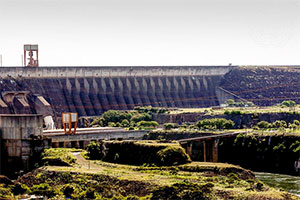 UN Power Plant, Paraguay. Credit: UN Photo/Evan Schneider
Energy has posed a great challenge for economies around the world. As global energy consumption skyrockets throughout the years, so does the need for sustainable solutions. The Sustainable Development Goals are essential in providing people with access to safe, affordable, and sustainable energy sources that minimize harm on the planet. Progress towards these goals opens the door for an advancement in modernization for communities on a global level and allows for a potential mitigation of tensions between nations.
The UN’s Summit of the Future in 2024 offered new initiatives that are being taken to achieve these goals, including a decreased reliance on fossil fuels, a switch to renewable energy sources, and improved climate financing.
IPS is well positioned to provide relevant, insightful, and compelling analysis of recent updates and measures being taken around the world to achieve a cleaner future.

The Week with IPS

NEXT STOP - SDGs
Tracking global progress towards a sustainable world
Tracking global progress towards a sustainable world
