Languages
Tuesday, October 20, 2026



News and Views from the Global South
Energy
Belo Monte Dam Can No Longer Ignore Native Communities
A judicial order to halt construction of the Belo Monte dam in Brazil’s Amazon rainforest may be just one more battle in a long-drawn-out war in the courts over the controversial hydroelectric project.
Biopolymers and the Dream of a Green Petrochemical Industry
Brazil leads global production of biopolymers, an industry that generates fewer greenhouse gas emissions than fossil fuel-based plastic manufacture. But "green plastics" made from sugarcane have a sour aftertaste.Families of ‘Little Boy’ and ‘Fat Man’ Victims Still Struggling
Sachiko Masumura (79) was standing just two kilometres away from the hypocentre of Little Boy, the atomic bomb that was dropped on Hiroshima, Japan over six and a half decades ago.
It’s Either Orangutans Or Cheap Palm Oil
When four men were sentenced to eight months in jail in March for the ‘murder’ of orangutans, it was the first time that people associated with Indonesia’s booming palm oil industry were convicted for killing man’s close relations in the primate family.
Waste Issue Halts U.S. Nuclear Reactor Licensing
The U.S. Nuclear Regulatory Commission, which oversees commercial nuclear power enterprises, has halted the issuance of all new nuclear reactor licensing decisions after a court ruling citing the failure of industry and government to identify an acceptable solution for the long-term storage of nuclear waste.
Activists Score in Fight Against Nuclear Power
A new wave of anti-nuclear protests in Japan this summer, sparked by the disastrous meltdown at a power plant last year, suggests that civil society is no longer willing to allow the government to take the lead in deciding the nation’s energy policy.
Mexican Communities Fight Mini-Dams
Small-scale hydroelectric dams with a capacity of under 30 MW are seen by the authorities in Mexico as an important alternative for generating energy. But local communities reject them on the argument that they would cause social, economic and environmental damages.
Treaty That Saved the Ozone May Worsen Climate Change
The Montreal Protocol, a climate treaty that gathers all U.N. member countries behind the goal of protecting the ozone layer, may not be the "most successful international agreement" anymore, as former U.N. secretary general Kofi Annan used to put it.Mainstream Rhetoric on Nuclear Power Far From Reality
The catastrophe following the meltdown of the Fukushima Daiichi nuclear power reactor in March 2011 has turned the old debate on nuclear power into a war of words between international agencies and independent experts with diametrically opposed views.
Trash Collectors Become Zimbabwe’s Unlikely Climate Change Ambassadors
Tomson Chikowero was ashamed of his job. He did not want anyone finding out what he did to earn a living, so he used to wake up early every morning and leave his home in Hatfield, a residential suburb in Zimbabwe’s capital city Harare, under the cover of darkness.
Groups Vow to Fight Arctic Drilling
Many environmental groups are concerned over a possible extension of drilling expeditions in the Arctic, as oil companies, including Royal Dutch Shell, are set to begin drilling in the region as early as this week.
When the Rains Don’t Fall
For many Sri Lankans, the effects of climate change can be summed up in one word: rainfall.
Great Barrier Reef at a Crossroads
The world's largest and best protected coral reef will be doomed by Australia's unprecedented scale of planned coal and gas development, experts say.
The Bicycle Revolution in Paris, Five Years Later
In July 2007, many Parisians laughed at their mayor, Bertrand Delanoë, when he announced the creation of a public bicycle sharing system aimed at reducing traffic in the French capital.
New Waste-to-Energy Facility Helps Barbados Toward Greener Economy
When it comes to pursuing a greener path to economic development, the tiny Caribbean island of Barbados is not about to allow its small size and limited resources to get in its way.World Bank Approves Contentious Ethiopia-Kenya Electric Line
The World Bank has voted to approve funding credit for a major transmission line that would link Kenya to the controversial Gilgel Gibe III dam site in southern Ethiopia, pushing back against months of calls by local and international rights and environmental groups to keep out of the project.Iowa Firm Accused of Displacing Tanzanians for Profit
A major U.S. energy company, AgriSol Energy, is accused of engaging in land grabs in Tanzania that would displace more than 160,000 Burundian refugees who have lived there for decades, according to a report by the Oakland Institute, an organisation focused on environmental issues.
Q&A: Changing Argentina’s Energy Mix Will Take Intelligence and Time
The recovery of state control over the oil company YPF was a strategic move for Argentina, which is highly dependent on fossil fuels. But the country needs to incorporate cleaner sources of energy, and this will take time, says energy expert Mariana Matranga in this interview.Youth-Friendly Apps Visualise Carbon Footprint
Following what many regard as a disappointment at the recent Rio+20 Earth Summit, the World Bank and several groups have begun implementing new initiatives to "personalise" climate change, in hopes of revitalising the issue among the younger generation.Poland Clings On to Coal
Coal has brought its own compulsions for Poland, as it has for many other countries in the call to move to more renewable and cleaner sources of energy.U.S. Sees Greatest Reduction in CO2 Emissions
According to a recent report by the International Energy Agency, the U.S. has seen the greatest reduction in carbon dioxide pollution within the past six years in comparison to any other country, even as global carbon dioxide pollution has reached record highs.« Previous Page — Next Page »





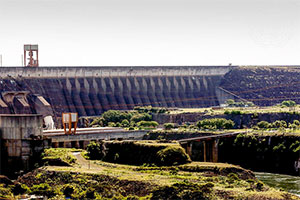 UN Power Plant, Paraguay. Credit: UN Photo/Evan Schneider
Energy has posed a great challenge for economies around the world. As global energy consumption skyrockets throughout the years, so does the need for sustainable solutions. The Sustainable Development Goals are essential in providing people with access to safe, affordable, and sustainable energy sources that minimize harm on the planet. Progress towards these goals opens the door for an advancement in modernization for communities on a global level and allows for a potential mitigation of tensions between nations.
The UN’s Summit of the Future in 2024 offered new initiatives that are being taken to achieve these goals, including a decreased reliance on fossil fuels, a switch to renewable energy sources, and improved climate financing.
IPS is well positioned to provide relevant, insightful, and compelling analysis of recent updates and measures being taken around the world to achieve a cleaner future.

The Week with IPS

NEXT STOP - SDGs
Tracking global progress towards a sustainable world
Tracking global progress towards a sustainable world
