Languages
Friday, November 20, 2026



News and Views from the Global South
Food and Agriculture
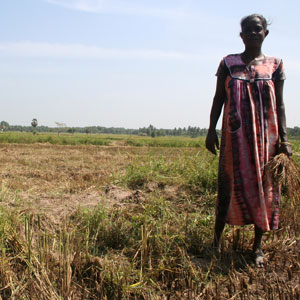
TRADE-SOUTHERN AFRICA: The End of EPA Acrimony May Be in Sight
Southern African trade ministers have pledged to sign a significantly scaled down economic partnership agreement (EPA) with the European Union (EU) before the end of 2010. Could this be the conclusion to years of divisive negotiations?
Produce More Food, Naturally
With the world's population predicted to reach 9 billion by mid-century, the notion that a form of agriculture aimed at producing more from less can put food in everyone's mouth may appear Utopian. Olivier De Schutter, the United Nations' special rapporteur on the right to food, begs to differ. The Belgian professor is a champion of agro-ecology, a science that stresses the need to work with nature, rather than to try and conquer and replace them with technology developed in laboratories.Not Everyone in Peru Is Winning “Championship” Against Poverty
The Peruvian government is taking advantage of the broadcasts of the World Cup football games in South Africa to air an ad touting a reduction in the poverty rate from 48 to 34 percent between 2005 and 2009 as an achievement of the administration of President Alan García.Raising Water Productivity to Increase Food Security
With water shortages constraining food production growth, the world needs an effort to raise water productivity similar to the one that nearly tripled land productivity over the last half-century.
AFRICA: Cautionary Notes Sounded as South-South Trade Booms
An Indian textile engineer and entrepreneur called Raj Rajendran visited Rwanda in 1999. He was tasked to close down an unviable textile factory following the civil war. But he discovered propitious agro-climatic conditions, particularly volcanic soil -- ideal for the rearing of silk worms to produce raw silk.
Haitian Farmers Leery of Monsanto’s Largesse
Haitian farmers are worried that giant transnational corporations like Monsanto are attempting to gain a larger foothold in the local economy under the guise of earthquake relief and rebuilding.ARGENTINA: Turning Wasteland into Woodland
In Santiago del Estero, one of the Argentine provinces hit hardest by deforestation and desertification, an oasis of native tree species is being created to restore the soil and entice back farmers who were forced to leave their land.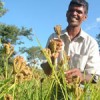
INDIA: Farmers Push Comeback of ‘Cereal of the Poor’
Eshwarappa Banakar has been a farmer most of his adult life, but these days he has also turned banker – banker of seeds, that is, and especially of millet strains.UNDP Unveils Agenda to Spur Anti-Poverty Goals
After an economic assessment of some 50 countries, the U.N. Development Programme (UNDP) has come up with a "concrete action agenda" to accelerate progress towards the achievement of the Millennium Development Goals (MDGs).
PARAGUAY: “Pause” Farming Expansion in Gran Chaco, Say Activists
Extensive cattle farming in northwestern Paraguay is the leading cause of deforestation in the Gran Chaco, one of the world's leading regions in biodiversity and South America's second largest forested area, after the Amazon.CENTRAL AMERICA: Food Security Further Undermined by Climate Disasters
Adverse climatic conditions and weather-related disasters are damaging crops in El Salvador and neighbouring countries in Central America, aggravating the food vulnerability that the region already faces.LATIN AMERICA: Predatory Harvests
Industrial-scale monoculture farming is violating the human rights to adequate food and housing, as well as labour, territorial and environmental rights in Latin America, according to a report released Monday in the Mexican capital.TRADE: “Cotton Dossier” Will Make or Break WTO’s Doha Round
The "cotton dossier" has become a litmus test for the "development dimension" of the languishing Doha Round trade negotiations, World Trade Organisation (WTO) director general Pascal Lamy admitted.FOOD: Something Smells Rotten in Venezuela
Tens of thousands of tonnes of basic foods rotted in the last year in shipping containers belonging to the Venezuelan government. Fully two-thirds of the food consumed by Venezuela's 27 million inhabitants is imported.
Argentine Hake On the Brink of Collapse
The Argentine hake fisheries of the southern Atlantic Ocean, among the world's leaders in the white fish market, are on the verge of collapse due in part to the indifference of the Argentine people, who are apparently more interested in beef, a staple of their diet.
Rewriting 195 Million Stories of Childhood Malnutrition
In a vast field, a sinewy, dark-skinned man bends at the waist, slicing stalks of wheat with a small machete. In a village, a mother gently places her infant son, slung in a piece of blue fabric, onto a vegetable scale housed in a makeshift clinic.ASIA: Green Revolution Has Little to Offer New Hungry Mouths
As it took root in the rice fields across Asia, it was hailed as the solution to the hunger afflicting millions of people in the region. But four decades on, the much vaunted Green Revolution appears to have reached its limits, unable to meet new demands, to feed new mouths.TRADE: Resistance Persists Against Early Harvest in Doha Round
Although the issue of an early harvest for least developed countries (LDCs) has been raised time and again, there remains "a certain reluctance" to prioritise it in the World Trade Organisation’s Doha Round of trade talks, according to South African trade minister Dr Rob Davies.
EAST AFRICA: New Arsenal Against Armyworms
Farmers across Eastern and Southern Africa will soon have a new organic insecticide effective enough to kill one of their most deadly foes – the armyworm.
Windfall for Botswana Farmers
Two of Botswana's biggest breweries are putting smiles on the faces of farmers. No, they are not giving beer away: the breweries are planning to buy sorghum from small-scale farmers at prices far higher than the Botswana Agricultural Marketing Board (BAMB) is offering.
AFRICA: Climate Change Assistance so Near and Yet so Far
Technology transfer and aid for trade could assist least developed countries (LDCs) suffering the effects of climate change. But negotiations in the World Trade Organisation (WTO) are not helping to make this a reality, while aid for trade lands up at the wrong institutions, such as the World Bank.« Previous Page — Next Page »


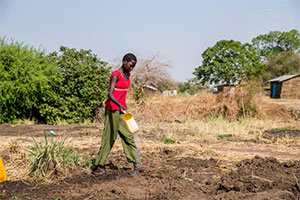 Farming on the Outskirts of Juba. Credit: UN Photo/JC McIlwaine
Promoting human and planetary health is a central focus of the United Nations, as laid out in the 2030 Sustainable Development Goals (SDGs). World hunger and unsustainable farming practices continue to be pressing concerns for the world. According to the 2025 State of Food Security and Nutrition in the World report by the Food and Agriculture Organization (FAO), 673 million people faced hunger in 2024. There are stark regional disparities, with the FAO projecting that 60% of the world population facing hunger will reside in Africa by 2030. Globally, the prevalence of food insecurity has remained consistently higher for women than men.
Sustainable and efficient national food systems are essential in preserving health, education, environmental well-being, peace, economy, and security. However, creating sustainable food systems can be a challenging endeavor, as food production takes a heavy toll on the environment. The agricultural sector accounts for a significant portion of greenhouse gases. Finding safe, sustainable, and ethical strategies to feed the world is crucial in ensuring planetary longevity. A recent initiative from 2023, the EU Regulation on Deforestation-free Products (EUDR), seeks to advocate for sustainable food systems. The main driver of deforestation is the expansion of agricultural land used to produce commodities like cattle, wood, cocoa, coffee, etc. The EUDR is part of the 2020 European Green New Deal and the EU Biodiversity Strategy for 2030 and aims to limit Europe’s consumption of products linked with deforestation by requiring that companies prove that their products are deforestation-free. Despite aiming to achieve major strides in sustainability, policies such as EUDR also raise socioeconomic concerns for targeted countries. Many emerging Latin American economies are impacted by the policy, and have raised the question of how developing countries can grapple with the tensions between economic development and advancing sustainability.
IPS has been at the forefront of providing compelling and insightful stories on communities facing hunger as well as the cost of food production. IPS uses statistics from FAO, the World Food Programme (WFP) and the International Fund for Agricultural Development (IFAD) to bring relevant and hard-hitting facts to readers. This gathering of information and data from such organizations helps bring the best stories from IPS journalists working in the different regions in consultation with experts on the ground.

The Week with IPS

NEXT STOP - SDGs
Tracking global progress towards a sustainable world
Tracking global progress towards a sustainable world