Languages
Saturday, November 21, 2026



News and Views from the Global South
Food and Agriculture

NICARAGUA: Giving Women Farmers a Boost
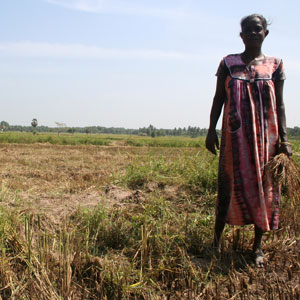
Josefina Rodríguez very nearly lost her life trying to protect the small plot of farmland in rural Nicaragua that allows her to support her family. Twelve years ago her husband wanted to sell the land, and when she stood up to him, he attacked her with a machete, almost killing her.INDONESIA: Natural Fertiliser from Microbes Boosts Crop Yields
Ten years after an Indonesian agriculturist discovered microbes capable of producing natural fertilisers, farmers attest that they have boosted agricultural production.
Q&A: Diversity the Best Option for Cuban Farmers
Cuban biodiversity scientist Humberto Ríos, one of the six recipients of the 2010 Goldman Environmental Prize, probably won't be able to collect the 150,000 dollars in prize money, though that setback is unlikely to cause him to lose any sleep -- or keep him from singing.ITALY: Daring to Put Mafia Assets to Social Utility
In the small town of Corleone in central Sicily, 13 people, five of whom suffer from psychiatric distress, run a farm on lands confiscated from the Cosa Nostra, the Sicilian mafia.
AFRICA: Small Scale Farmers Vulnerable to New Wheat Fungus
Smallholder wheat farmers are at risk as new mutations of a wheat-killing fungus have recently been discovered.
Banning Junk Foods in Mexico’s Schools to Fight Obesity
Consumer organisations and experts say the Mexican government's plan to remove junk food from schools is a step in the right direction in the fight against obesity in this country, which has the highest rate of childhood obesity in the world, and the second highest rate for adults, after the United States.U.N. Biodiversity Plan Demands Voice for Women
Women provide up to 90 percent of the rural poor's food and produce up to 80 percent of food in most developing countries, and yet they are almost completely ignored when policy decisions are made about agriculture and biodiversity.Agro-Tech Alone No Panacea for Food Insecurity
Providing technology to communities to ensure food security doesn't work if local traditions and social dynamics are not taken into account, concluded the participants in a forum here at the Fourth Assembly of the Global Environment Facility.
Q&A: “Agrarian Reform Is Indispensible for Haiti”
In the wake of unimaginable death and destruction, Haitian farmers continue to work hard to wring food for their country out of a depleted land. But now they have company.AGRICULTURE: Africa Should Take Lessons from China — IFPRI
The model of agriculture applied by the People’s Republic of China during the last 30 years is an example that the poorest countries in sub-Saharan Africa should follow in their quest for development and growth and to eradicate poverty, according to agricultural experts.
BIODIVERSITY: Watching Over the Future
Her husband died last year, but "he will be forever a guardian of biodiversity."
BIODIVERSITY: Saving the Planet Can Be Fun
Saving the planet from environmental catastrophe is undoubtedly very important, but one of the reasons many people are not doing their bit could be that being green does not seem much fun.Seeds of Hope Take Root in Kenya
Countries have paid too little attention to the importance of biodiversity, and as result, species and ecosystems are in sharp decline and the public does not understand the concept.
BIODIVERSITY: Not Just About Tigers and Pandas
When people talk about biodiversity loss, discussion often centres on the tragedy of animals like the tiger and the panda being in danger of extinction.
Agrobiodiversity Key to Adaptation
Mechanisation, increased use of fertilisers, and the planting of hybrid seeds have underpinned huge increases in the world's agricultural output over the past 40 years.
BIODIVERSITY: ‘Culture Integral to Agriculture’
Biodiversity in agriculture is about culture. Traditional knowledge and culture are as important as research and investment, say farmers, researchers and academics gathered in Rome for the International Day for Biodiversity on Saturday.MALAYSIA: Encroaching Forest, Oil Palm Plantations Alarm Villagers
A increasing number of natives in Sarawak state in north Borneo are alarmed at encroaching forest and oil palm plantations, which are taking over their native customary land and destroying their traditional lifestyles and biodiversity.
Can Amaranth Fix Mexico’s Dual Dietary Disasters?
Supporters of amaranth have been trying for decades to bring this millennia-old grain back from oblivion. Known for its high nutritional content, it is now being promoted as a way to help modern-day Mexico confront two of its dietary ills: malnutrition and obesity.AFRICA: Better Data Key to Supporting Women Farmers
An accomplished farmer who won the coveted Woman Farmer of the Year Award in 2008, Thabile Dlamini-Gooday wants to uplift the standard of other women in agriculture. She believes that if women farmers were to work together they could fight hunger and significantly reduce poverty among themselves.CUBA: New Agricultural Plan, But Few Real Reforms
Cuba's strategy to boost production and reduce imports of food is intended to untangle the bureaucratic knots that hinder privately-run farms, responsible for 70 percent of the food on the country's dinner tables.
ARGENTINA: Two Centuries of Environmental Destruction
In the 1830s, the sheer abundance and diversity of plants and animals in Argentina -- whether on land or in the water -- astounded British naturalist Charles Darwin during his famed tours of South America.« Previous Page — Next Page »


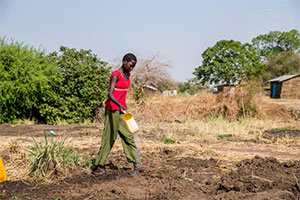 Farming on the Outskirts of Juba. Credit: UN Photo/JC McIlwaine
Promoting human and planetary health is a central focus of the United Nations, as laid out in the 2030 Sustainable Development Goals (SDGs). World hunger and unsustainable farming practices continue to be pressing concerns for the world. According to the 2025 State of Food Security and Nutrition in the World report by the Food and Agriculture Organization (FAO), 673 million people faced hunger in 2024. There are stark regional disparities, with the FAO projecting that 60% of the world population facing hunger will reside in Africa by 2030. Globally, the prevalence of food insecurity has remained consistently higher for women than men.
Sustainable and efficient national food systems are essential in preserving health, education, environmental well-being, peace, economy, and security. However, creating sustainable food systems can be a challenging endeavor, as food production takes a heavy toll on the environment. The agricultural sector accounts for a significant portion of greenhouse gases. Finding safe, sustainable, and ethical strategies to feed the world is crucial in ensuring planetary longevity. A recent initiative from 2023, the EU Regulation on Deforestation-free Products (EUDR), seeks to advocate for sustainable food systems. The main driver of deforestation is the expansion of agricultural land used to produce commodities like cattle, wood, cocoa, coffee, etc. The EUDR is part of the 2020 European Green New Deal and the EU Biodiversity Strategy for 2030 and aims to limit Europe’s consumption of products linked with deforestation by requiring that companies prove that their products are deforestation-free. Despite aiming to achieve major strides in sustainability, policies such as EUDR also raise socioeconomic concerns for targeted countries. Many emerging Latin American economies are impacted by the policy, and have raised the question of how developing countries can grapple with the tensions between economic development and advancing sustainability.
IPS has been at the forefront of providing compelling and insightful stories on communities facing hunger as well as the cost of food production. IPS uses statistics from FAO, the World Food Programme (WFP) and the International Fund for Agricultural Development (IFAD) to bring relevant and hard-hitting facts to readers. This gathering of information and data from such organizations helps bring the best stories from IPS journalists working in the different regions in consultation with experts on the ground.

The Week with IPS

NEXT STOP - SDGs
Tracking global progress towards a sustainable world
Tracking global progress towards a sustainable world