Languages
Wednesday, September 23, 2026



News and Views from the Global South
Food and Agriculture

Developing countries and the Perfect Storm
Part II: What Developing Countries Need to Do
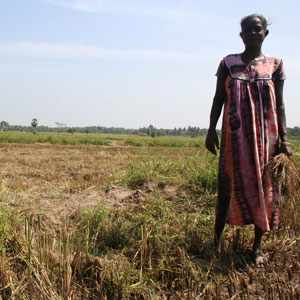
Developing countries are facing a combination of crises that are unprecedented in recent times. Over the last three years they have had to face the COVID-19 crisis, the food crisis, the energy crisis, the climate change crisis, the debt crisis and, on top of all this, a global recession. The crises have overlapped, and each has added to the problems created by the previous ones.

Complex Emergencies: In Kenya’s Arid North, Locals Face Impact of Climate Change, Hunger and Poverty
Darkuale Parsanti and his wife Mary Rampe are counting their losses: One by one, they have seen their livestock wiped out. “I had 45 cattle heads and 50 goats, but they all died due to worsening drought. I currently remain with only one cow and five goats,” says Parsanti, supporting himself on a walking stick.
World Environment Day: Burden of Environmental Decline Falls Heavily on Poor and Vulnerable
Barnabas Kamau’s home sits on a wetland in Rumuruti Laikipia County in the Rift Valley region - considered Kenya’s breadbasket. He settled in the area 15 years ago, attracted by the wetlands’ fertile grounds as they provide favourable farming and livestock activities conditions.
Developing Countries and the Perfect Storm
Part I: What Should Developed Countries Do?
Developing countries – in Africa, in Asia, in Latin America and in the Middle East - are facing a combination of crises that are unprecedented in recent times. Over the last three years they have had to face the COVID-19 crisis, the food crisis, the energy crisis, the climate change crisis, the debt crisis and, on top of all this, a global recession. The crises have overlapped, and each has added to the problems created by the previous ones.

Sanctions Now Weapons of Mass Starvation
US and allied economic sanctions against Russia for its illegal invasion of Ukraine have not achieved their declared objectives. Instead, they are worsening economic stagnation and inflation worldwide. Worse, they are exacerbating hunger, especially in Africa.
How the Russia-Ukraine Conflict Impacts Africa
While Africa is yet to fully recover from the socio-economic repercussions of the COVID-19 pandemic, the Russia-Ukraine conflict poses another major threat to the global economy with many African countries being directly affected.
A Global Food Crisis: Shortage Amidst Plenty
India is being asked by the US government and the IMF to reconsider its decision to suspend wheat exports. Their cited concern is that export restrictions will exacerbate food shortages amidst Russia's invasion of Ukraine. But the argument does not stand ground technically or morally.
Child Labour Survivor Has a Dream of Freeing Others
Selimatha Dziedzorm Salifu was just seven years old when she went to work for the first time to support her family. Born in the fishing village, Kpando-Torkor, in Ghana, Salifu, was forced to go out and work in the local fishing industry when her father Seidu died, leaving her mother, Mary, with six children to feed, clothe and shelter. The industry is well documented for child slavery and trafficking.
Food Banks are Early Warning Systems for Emerging Food Crises, but also a Key Solution
For months, the specter of a global hunger crisis has been looming. The war in Ukraine is a compounding factor, blocking key value chains for food and fertilizer just as the world reckons with the impacts of the COVID-19 pandemic on global hunger.
Without Peace, Hunger Will Continue to Increase
If the war in Ukraine, that was initiated three months ago, does not end, and without a reduction in the growing number of conflicts in other parts of the world, hunger will only continue to increase.
The Risks of Turning Planet Earth into a Giant Desert
The message is clear: three-quarters of the world’s population will be affected by drought by 2050. Does it sound too far in time? Well, your kids might be among the billions of humans living on a desertified planet.
Cuban Farmers Fight Land Degradation with Sustainable Management
Thorny bushes and barren soil made it look like a bad bet, but Cuban farmer José Antonio Sosa ignored other people’s objections about the land and gave life to what is now the thriving La Villa farm on the outskirts of Havana.
Youth Survivors, Activists Will Hold Governments Accountable to Call to Action on Ending Child Labour
Governments of the world must focus on providing quality free education and prosecuting corrupt officials and people who siphon state and donor funds as crucial steps towards taking decisive action to fight child labour across the globe.
Alarm Bells for Africa, Child Labour in Agriculture Requires Urgent Action
The Global Estimate on Child Labour estimates 160 million children are in child labour worldwide – an increase of 8.4 million children in the last four years – with millions more at risk due to the impacts of COVID-19.
Inequality Tightens Its Grip on the Most Vulnerable
Please do not say you were not aware that the world produces enough food to feed all human beings on Earth, while nearly double the combined European Union’s population go to bed hungry… every single night.
Russian Invasion Blamed for 44 Million People Marching Towards Hunger & Starvation
The Russian invasion of Ukraine last February has triggered multiple crises in several fronts: the deaths of thousands of civilians, the destruction of heavily populated cities, the rise in military spending in Europe, a projected decline in development assistance to the world’s poorer nations; the demolition of schools and health-care facilities — and now the threat of hunger and starvation.
War and Famines – Warnings of Potential Outcomes of the War in Ukraine
An entirely unnecessary and all too tangible nightmare continues to scourge Ukraine. Without doubt, one catastrophe after another still awaits. Much of Ukraine’s harvest, of paramount importance to global food supply, is at risk of being lost due to Vladimir Putin’s and the Russian army’s belligerent actions. Last year, Ukraine harvested a record of 106 million tonnes of grain – 25, or even 50 percent of this amount is currently feared to be lost during this year while most experts add that “this is an optimistic forecast.”
Plants: Up to 80% of Food and 98% of Oxygen, Endangered
It is as simple –and as horrifying– as that: both human health and the health of Planet Earth depend on plants. However, plants that make up 80% of the food and 98% of the oxygen, are under growing dangerous threats.
Rural India Has a Diabetes Problem – What Is Causing it?
At a healthcare clinic in Thodathara, a village in the Thavanampalle mandal near Chittoor, Andhra Pradesh, Dr Vijay Kumar calls in his next patient. “He is the most disciplined man I know,” Dr Kumar says with a hint of pride.
Soil Microbes Derived Products Could Be an Alternative to Expensive Agricultural Fertilizers
Around the world, commercial fertilizer prices are soaring, pushing farmers and countries into a frenzy. In addition, soaring fertilizer prices are sparking fears of inflation, food supply shortages and food insecurity. There are several reasons that have contributed to the rising fertilizer prices including the Russian-Ukrainian war and the global pandemic.
Food and People
People require food, with more people requiring more food and less people requiring less food. Despite that self-evident relationship, most governments appear reluctant to accept the intimate link between the supplies of food and the numbers of people and continue calling for the further growth of their populations.« Previous Page — Next Page »


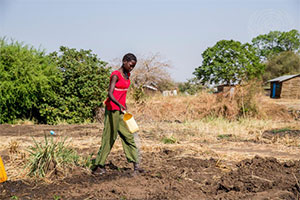 Farming on the Outskirts of Juba. Credit: UN Photo/JC McIlwaine
Promoting human and planetary health is a central focus of the United Nations, as laid out in the 2030 Sustainable Development Goals (SDGs). World hunger and unsustainable farming practices continue to be pressing concerns for the world. According to the 2025 State of Food Security and Nutrition in the World report by the Food and Agriculture Organization (FAO), 673 million people faced hunger in 2024. There are stark regional disparities, with the FAO projecting that 60% of the world population facing hunger will reside in Africa by 2030. Globally, the prevalence of food insecurity has remained consistently higher for women than men.
Sustainable and efficient national food systems are essential in preserving health, education, environmental well-being, peace, economy, and security. However, creating sustainable food systems can be a challenging endeavor, as food production takes a heavy toll on the environment. The agricultural sector accounts for a significant portion of greenhouse gases. Finding safe, sustainable, and ethical strategies to feed the world is crucial in ensuring planetary longevity. A recent initiative from 2023, the EU Regulation on Deforestation-free Products (EUDR), seeks to advocate for sustainable food systems. The main driver of deforestation is the expansion of agricultural land used to produce commodities like cattle, wood, cocoa, coffee, etc. The EUDR is part of the 2020 European Green New Deal and the EU Biodiversity Strategy for 2030 and aims to limit Europe’s consumption of products linked with deforestation by requiring that companies prove that their products are deforestation-free. Despite aiming to achieve major strides in sustainability, policies such as EUDR also raise socioeconomic concerns for targeted countries. Many emerging Latin American economies are impacted by the policy, and have raised the question of how developing countries can grapple with the tensions between economic development and advancing sustainability.
IPS has been at the forefront of providing compelling and insightful stories on communities facing hunger as well as the cost of food production. IPS uses statistics from FAO, the World Food Programme (WFP) and the International Fund for Agricultural Development (IFAD) to bring relevant and hard-hitting facts to readers. This gathering of information and data from such organizations helps bring the best stories from IPS journalists working in the different regions in consultation with experts on the ground.

The Week with IPS

NEXT STOP - SDGs
Tracking global progress towards a sustainable world
Tracking global progress towards a sustainable world