Languages
Sunday, October 25, 2026



News and Views from the Global South
COVID-19

Meaningful Dialogue Amplifies Youth Issues, Leads to Change
Young people are often the first to rebuild their communities. However, youths' diverse challenges cannot be addressed without meaningful dialogue, says Klaus Beck, Regional Director of UNFPA APRO ai.
Developing countries and the Perfect Storm
Part II: What Developing Countries Need to Do
Developing countries are facing a combination of crises that are unprecedented in recent times. Over the last three years they have had to face the COVID-19 crisis, the food crisis, the energy crisis, the climate change crisis, the debt crisis and, on top of all this, a global recession. The crises have overlapped, and each has added to the problems created by the previous ones.
Developing Countries and the Perfect Storm
Part I: What Should Developed Countries Do?
Developing countries – in Africa, in Asia, in Latin America and in the Middle East - are facing a combination of crises that are unprecedented in recent times. Over the last three years they have had to face the COVID-19 crisis, the food crisis, the energy crisis, the climate change crisis, the debt crisis and, on top of all this, a global recession. The crises have overlapped, and each has added to the problems created by the previous ones.

Davos Fails on Financial Transparency – And Everything Else
At this year’s World Economic Forum (WEF) at Davos which ended last week, the attention of the world’s financial and economic elite was captured by the war in Ukraine whose president Volodimir Zelensky used his address to call to “complete withdrawal of foreign businesses from the Russian market”, despite 380 of the largest multinational companies still operating in Russia.
COVID and Discrimination Aggravated Maternal Mortality in Latin America
Brazil had the dubious distinction of champion of maternal mortality in Latin America during the COVID-19 pandemic, with a 77 percent increase in such deaths between 2019 and 2021.
Fighting Inflation Excuse for Class Warfare
A class war is being waged in the name of fighting inflation. All too many central bankers are raising interest rates at the expense of working people’s families, supposedly to check price increases.
Reclaiming Our Future
The Asia-Pacific region is at a crossroads today – to further breakdown or breakthrough to a greener, better, safer future. Since the Economic and Social Commission for Asia and the Pacific (ESCAP) was established in 1947, the region has made extraordinary progress, emerging as a pacesetter of global economic growth that has lifted millions out of poverty.
Despite a New Wave of Infections, No Mask or Vaccine Mandates
A fifth wave of a new Covid 19 variant BA.2, followed by a surge in infections, is threatening to undermine the safety of New York city (NYC) which was gradually returning to normal after a prolonged pandemic shutdown. As a result, the City went on “high Covid alert.”
Youth Demand a Voice in Call-To-Action on Child Labour
Ashley has vast work experience. She has laboured by the sweat of her brow in the blistering sun on the streets of Guatemala, in the open fields on farmlands and indoors, toiling for long hours to the hum of a sewing machine. Her work resume might be impressive to some – street trader, farmworker and tailor – but she, like 160 million children around the world, is trapped in child labour, working desperately to support her impoverished family and provide for her education.
Call to Invest ‘Serious Resources’ in Education, to Stem Tide of Child Labour
"Education is the most powerful weapon you can use to eliminate child labour." So said Dennis Sinyolo, Director of Education International's African Regional Office in Accra, Ghana adapting liberation icon and late South African president Nelson Mandela's famous quote about how education can change the world.
Projections for a Pandemic Future: in Whose Interest?
In what has been defined a historic consensus decision aimed at protecting the world from future infectious diseases crises, on 1st December 2021, the special session of the World Health Assembly agreed to kickstart a global process to draft and negotiate a convention, agreement or other international instrument to strengthen pandemic prevention, preparedness and response.
Finance Drives World to Stagflation
The world is being pressed by financial interests to raise interest rates, ostensibly to check inflation. After the US Federal Reserve started raising interest rates, more central banks have been doing likewise. Considering inflation’s contemporary causes, such ‘follow the leader’ central bank mimicry cannot check it except by slowing economies. Worse, this has meant taking on huge new risks, seriously damaging world economic prospects in the medium and long-term.
Pacific Community-Led Health Missions Arrive with Critical Support to Tonga and Kiribati Grappling with COVID-19 Surges
Before the pandemic emerged in 2020, health services in many Pacific Island countries were under-resourced, under-funded and under-staffed. Now following recent outbreaks of COVID-19, advancing the capacity and development of health and medical services in vulnerable nations, such as Tonga and Kiribati, is increasingly urgent.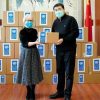
Omicron-led Surge Tests China’s Zero Covid Policy
When the Covid- 19 pandemic first broke out in Wuhan in 2020, no one imagined that it would wreak havoc on such a large scale. With over 6.2 million lives lost, countless infected and new variants emerging, the pandemic is still raging all around the world.
Bringing Seeds of Hope to Farmers
Amidst a backdrop of rising food insecurity worldwide and a global food supply chain crisis, many countries are attempting to increase the level of food self-production. One improved input for farming which is receiving renewed attention is improved seed. The two most populous countries in the world, China and India, have recently made ground-breaking moves to improve their competitive position by developing new seeds which will improve their food production and increase resilience to climate change. So far, in 2022, new regulations on using biotechnology (genetic modification and gene editing) have been put in place by both countries to ultimately allow smallholder farmers to benefit from these new seeds.
INDIA: Healthcare Inequities Exposed by COVID-19 Pandemic
Public health specialists say that an ongoing wrangle between the Indian government and the World Health Organization (WHO) over the COVID-19 death toll in this country is symptomatic of a long-ailing public health delivery system.
UN Aims at People-Centered Governance in a Post-Pandemic World
The recently disseminated Zero Draft Ministerial Declaration of the High-Level Political Forum on Sustainable Development (HLPF)-- the main UN event to track the member states’ progress to achieve the Agenda 2030 slated to be held in the first half of July-- is a disappointment.
World Press Freedom Faces a Perfect Storm
Empowered by a global pandemic and the drum beats of war, the strongest despots are growing more despotic, and criminal cartels even more brazen in their violence. Extremists of various hues are also stepping out of the shadows. Just when the world most needs press freedom to thrive, the liberties that societies only really treasure when they are emasculated are coming under more pressure from different directions, old and new.
With Violence on the Rise, Asian Americans Establish Support Groups for Help
Dr Boyung Lee, a widow and the Senior Vice President for Academic Affairs and Dean of the Faculty at Iliff School of Theology, would use a short break in her working day to walk around her neighborhood. The fresh air helped her deal with her grief and work-related stress.
Addressing Gender-Related Barriers to COVID-19 Vaccinations to Ensure Vaccinations for All
As a global pandemic, COVID-19 and its continued impacts are unprecedented. Yet many of the challenges that emerged in public health responses to COVID-19 not only had precedence, but were predictable.
Migrants and Health Workers Play Complex ‘Game’ on Europe’s Fringes
Responding to several shouts Viraj emerges from the ruins of his shelter in northwest Bosnia. He is originally from India but is now squatting near Bihać in what remains of a house abandoned since the 1990s Balkans war.« Previous Page — Next Page »





The Week with IPS

NEXT STOP - SDGs
Tracking global progress towards a sustainable world
Tracking global progress towards a sustainable world
