Languages
Sunday, November 8, 2026



News and Views from the Global South
Humanitarian Emergencies
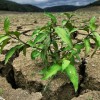
Mideast: Drought to Turn People into Eternal Migrants, Prey to Extremism?
Worldwide, land degradation, severe droughts and advancing desertification are set to force populations to flee their homes and migrate. In the specific case of the Middle East and North of Africa (MENA), such an obliged choice implies the additional risk to turn peoples into easy prey to extremist, terrorist groups.
Child Labor in the Arab Region Does Not Belong to the 21st Century
Today marks the 2017 World Day against Child Labor to reaffirm the goal to eliminate all forms of child labor. This year’s annual theme highlights a subject that is often neglected, namely the importance of addressing child labor in conflict areas and in disaster settings.
Heavy Toll of Disrupted Farming, Higher Prices and Displaced Livelihoods
Large agricultural harvests in some regions of the world are buoying global food supply conditions, but protracted fighting and unrest are increasing the ranks of the displaced and hungry elsewhere, according to a United Nations new report.
This Is the Nation of 170 Million Enslaved Children
Globally over 1.5 billion people live in countries that are affected by conflict, violence and fragility. Meantime, around 200 million people are affected by disasters every year—a third of them are children. And a significant proportion of the 168 million children engaged in child labour live in areas affected by conflict and disaster. These are the facts. Up to you to reflect on the immediate future of humankind.
The Relentless March of Drought – That ‘Horseman of the Apocalypse’
By 2025 –that’s in less than 8 years from today-- 1.8 billion people will experience absolute water scarcity, and two thirds of the world will be living under water-stressed conditions. Now it is feared that advancing drought and deserts, growing water scarcity and decreasing food security may provoke a huge ‘tsunami” of climate refugees and migrants.
Charting a Course to a Blue Commonwealth
The United Nations Ocean Conference offers an historic opportunity to safeguard the ocean environment and support small island and vulnerable developing coastal states, who depend on the seas for national economic growth and sustainable development.
Re-Connect with Nature Now… Before It Is Too Late!
Now that president Donald Trump has announced the withdrawal of the world’s largest polluter in history—the United States, from the Paris Accord, perhaps one of the most specific warnings is what a United Nations independent expert on rights and the environment has just said: “We should be fully aware that we cannot enjoy our basic human rights without a healthy environment.”
Aggression against children in the Arab region needs to come to an end
On 20 February 1997, the United Nations General Assembly adopted Resolution 51/77 to promote the rights of children. This Resolution was considered a milestone in promoting and advancing the right of children in conflict and wars.
A UN of the Future to Effectively Serve all Member States
Through a series of recent global agreements on sustainable development, climate change, sustaining peace, disaster risk reduction, and financing for development, Member States have provided a broad vision of the future they want. I am committed to advancing meaningful reforms to adapt the United Nations to this complex world, so that it can effectively serve all of its Member States in achieving that future and managing shared challenges and opportunities along the way.
The Worsening Humanitarian Crisis in Syria
The cruel conflict in Syria continues to tear families apart, inflicts brutal suffering on the innocent, and leaves them pleading for protection and justice. I readily acknowledge that there have been reports of a significant drop in violence in some areas of the country, but such steps forward continue to be counter-weighted by the reality of a conflict that continues to devastate the civilian population.
In a “World of Plenty,” G7 Must Fight Famine
World leaders must step up and take action in fighting famine to prevent further catastrophic levels of hunger and deaths, said Oxfam.
Mideast: Growing Urbanisation Worsens Water Scarcity, Food Imports
Conflict and insecurity remain the key barriers to development progress in the Middle East and North Africa. In Iraq, Libya, Syria, and Yemen, about half the population—around 40 million people—require humanitarian assistance. Across the region, countries depend heavily on food imports. As their populations urbanise and grow, the need for imports will increase.
“Horrific” Increase in Worldwide Displacement
Over 30 million people were newly internally displaced in 2016 by conflict and disasters, according to a new report.
Norwegian Trade Union Boycott Israel
The Norwegian Confederation of Trade Unions (LO) has voted in favour of a boycott against Israel, which is expected to affect cultural, economical and academic ties. Condemnation has come from Isreali politicians, diplomats and unions.
An Untold Economic Success Story in Syria
Hidden almost literally under the rubble of the civil war in Syria is an economic success story that is rarely told. Hanan Odah is a thirty-year-old Palestine refugee living in Jaramana refugee camp in Damascus. She supports her multiply displaced family of three from a thriving micro-enterprise venture. Her husband was killed in the conflict, but she refused to submit to despair and dependency on her parents.
Mapping and Responding to Climate-Induced Migration
As the world focuses on conflict-related migration and displacement, with an unprecedented 60 million fleeing from war and persecution, others are pointing to a less discussed trigger of population movements: climate change.
Kenya’s Drought: Response Must Be Sustainable, Not Piecemeal
A malnutrition emergency Food security in Kenya has deteriorated significantly since the end of 2016. UNICEF reports a significant increase in severe acute malnutrition. Nearly 110,000 children under-five need treatment, up from 75,300 in August 2016.

Who Are the Best ‘Eaters’ and How to Use Eggplants as a Toothbrush
The news is this: Japan is a global model for healthy diets and it currently has the lowest rate of obesity among developed countries--below four per cent. This is on the one hand. On the other, African eggplant gorongo is often used as toothbrush.
SLIDESHOW: Drought Highlights Ethiopia’s IDP Dilemma
 Displaced pastoralists gather around newly arrived drums of brown water as a water truck speeds off to make further deliveries to settlements that have sprung up along the main road running out of Gode, one of the major urban centers in Ethiopia’s Somali region.

Gender Equality Can Save Women’s Lives in Disasters – We must not miss the opportunity to set this right
Later this month, the Global Platform for Disaster Risk Reduction (DRR) will take place in Mexico. This meeting provides an important opportunity to reboot global progress on embedding gender equality in disaster risk management and redress deadly exclusion.
Falling Between the Sun-Scorched Gaps: Drought Highlights Ethiopia’s IDP Dilemma
Displaced pastoralists gather around newly arrived drums of brown water as a water truck speeds off to make further deliveries to settlements that have sprung up along the main road running out of Gode, one of the major urban centers in Ethiopia’s Somali region.« Previous Page — Next Page »





 MONUSCO Peacekeepers and FARDC Soldiers Patrol Fataki Area. Credit: UN Photo/Jorkim Jotham Pituwa
Conflict, human rights violations, natural disasters, and famine have been at the forefront of concerns for humanitarian organizations. The escalation of humanitarian crises has led to over 239 million people in need of humanitarian assistance at the start of 2026, as estimated by OCHA’s Global Humanitarian Overview. The 2025 humanitarian appeal received only $12 billion, the lowest funding in over a decade, which has left 24 million fewer people reached in comparison to 2024. Conflict has remained the primary driver of crisis.
Humanitarian emergencies massively impact progress towards the Sustainable Development Goals (SDGs), adversely affecting economic development, inequality, education, planetary well-being, and poverty. Millions of people are faced with reduced access to essential services, including shelter, food, healthcare, and access to clean drinking water. UN Organizations such as UNHCR and the United Nations Children’s Fund (UNICEF) are committed to providing direct relief to affected communities when state governments cannot.
The United Nations 2024 Summit of the Future discussed measures that will be taken to reduce global inequality and promote peacekeeping efforts around the world. The recent UN Climate Change Conference (COP30) in Belém, Brazil, agreed to mobilize $1.3 trillion annually for climate action by 2035, operationalize the loss and damage fund, and triple adaptation finance. However, a fossil fuel transition commitment was not secured, despite climate change and the greenhouse effect being major contributors to humanitarian crises worldwide.
Countries across the world have also rallied to end humanitarian crises, as witnessed in conflicts such as Palestine and Ukraine. IPS is committed to providing relevant and in-depth reports of humanitarian emergencies around the world and their implications.

The Week with IPS

NEXT STOP - SDGs
Tracking global progress towards a sustainable world
Tracking global progress towards a sustainable world

