Languages
Wednesday, November 11, 2026



News and Views from the Global South
Development & Aid
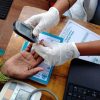
Rural India Has a Diabetes Problem – What Is Causing it?
At a healthcare clinic in Thodathara, a village in the Thavanampalle mandal near Chittoor, Andhra Pradesh, Dr Vijay Kumar calls in his next patient. “He is the most disciplined man I know,” Dr Kumar says with a hint of pride.
Finance Drives World to Stagflation
The world is being pressed by financial interests to raise interest rates, ostensibly to check inflation. After the US Federal Reserve started raising interest rates, more central banks have been doing likewise. Considering inflation’s contemporary causes, such ‘follow the leader’ central bank mimicry cannot check it except by slowing economies. Worse, this has meant taking on huge new risks, seriously damaging world economic prospects in the medium and long-term.
Opacity Surrounds Fossil Fuels in Mexico
In the northern Mexican state of Coahuila the current situation of coal, used mainly to generate electricity, is opaque.
Soil Microbes Derived Products Could Be an Alternative to Expensive Agricultural Fertilizers
Around the world, commercial fertilizer prices are soaring, pushing farmers and countries into a frenzy. In addition, soaring fertilizer prices are sparking fears of inflation, food supply shortages and food insecurity. There are several reasons that have contributed to the rising fertilizer prices including the Russian-Ukrainian war and the global pandemic.
Food and People
People require food, with more people requiring more food and less people requiring less food. Despite that self-evident relationship, most governments appear reluctant to accept the intimate link between the supplies of food and the numbers of people and continue calling for the further growth of their populations.
Education Cannot Wait Expands First Emergency Response in Northern Ethiopia with Additional US$2 Million Grant, Bringing ECW Ongoing Investments in Ethiopia to over $30 Million
Conflicts in Northern Ethiopia’s regions of Afar, Amhara and Tigray, have pushed children and adolescents out of school and are fueling humanitarian needs in the region. In response to this crisis, Education Cannot Wait (ECW) announced today a US$2 million First Emergency Response Grant that will reach more than 20,000 refugee and displaced, as well as host community children and adolescents. This brings ECW ongoing investments in Ethiopia to over $30 million.
Today is the Time for Transformation
“I first think about my children. They are why we were forced to leave - because our children are always our first concern.” These are the moving words of Victoria, who fled the brutal war in Ukraine with her two daughters. Her eyes welling up with tears, she recalled their dangerous journey from Ukraine. She and her two school-aged daughters were forced to leave behind everything they have ever known.
Revealed: The Shocking Extent of Exploitative Baby Formula Milk Marketing
The world's leading health and children specialised organisations have once again sounded the alarm bell about what they classify as “shocking, insidious, exploitative, aggressive, misleading and pervasive” marketing tricks used by the baby formula milk business with the sole aim of increasing, even more, their already high profits.
Give Edible Insects a Chance as an Alternative High-Quality Protein Source, say Scientists
Growing up in Samoya Village of Bungoma County in the Western part of Kenya, Elvis Wanjala has fond childhood memories of the rainy season, chasing and catching black-bellied winged termites in the rain.
Civil Society Responds — as Health-Care Facilities in Ukraine Come Under Attack
Alongside the devastation caused by bombs and bullets, the war in Ukraine has wrought another danger that can be as deadly as the violence itself: the disruption of access to health services for people who will not survive if cut off from health care.
The Sun Illuminates the Nights of Rural Families in El Salvador
After working on the family farm, Carlos Salama comes home and plugs his cell phone into a socket via a solar-powered electrical system, a rarity in this rural village in southern El Salvador.
Education Cannot Wait Interviews Leonardo Garnier, Special Adviser of the UN Secretary-General for the Transforming Education Summit
ECW: Congratulations on your appointment by United Nations Secretary-General António Guterres as the Special Adviser for the Transforming Education Summit. What do you hope to achieve through the Summit and why is it so critical that the world comes together to address the global education crisis around this September’s UN General Assembly?

More Students on the Move in an Increasingly Complex World: Podcast
 This is our third episode on the ongoing movements of people around the world. You can listen to the previous ones, the first about climate migrants and the second on remittances, on any podcast app.
Ukraine’s EU Membership Ambition
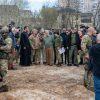
Before the war, Ukraine's dream to become part of the EU was exactly that – a dream. But the new political reality could make it come true. Russia’s invasion of Ukraine changed and to some extent even destroyed the familiar international political reality. Up until 24 February, Russia had been integrated into the global economy, had excellent growth prospects, and the construction of the Nord Stream 2 gas pipeline was almost finished.
Breaking Menstruation Taboos and Leaving No Girl Behind
Fourteen-year-old Hadiza smiles as she clutches a purple bag in her hands. Inside the cloth bag is a Menstrual Hygiene Management kit, an essential item that gives her dignity and enables her to continue with school even when menstruating.
Six Ways Rwanda Is Building Resilient and Sustainable Transport Systems
Over the last decade, Rwanda has invested in building efficient and resilient transport systems. Guided by the country’s Green Growth and Climate Resilience Strategy (GGCRS), the Government of Rwanda has carried out numerous initiatives to promote sustainable mobility and the green economy at large.
In Sri Lanka, Things Fall Apart
When I ended last month’s column hoping that April would not prove to be hapless Sri Lanka’s ‘cruellest month’ (in the words TS Eliot), I hardly anticipated the current turn of events.
Pacific Community-Led Health Missions Arrive with Critical Support to Tonga and Kiribati Grappling with COVID-19 Surges
Before the pandemic emerged in 2020, health services in many Pacific Island countries were under-resourced, under-funded and under-staffed. Now following recent outbreaks of COVID-19, advancing the capacity and development of health and medical services in vulnerable nations, such as Tonga and Kiribati, is increasingly urgent.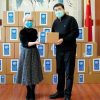
Omicron-led Surge Tests China’s Zero Covid Policy
When the Covid- 19 pandemic first broke out in Wuhan in 2020, no one imagined that it would wreak havoc on such a large scale. With over 6.2 million lives lost, countless infected and new variants emerging, the pandemic is still raging all around the world.
Out of Africa: Rich Continent, Poor People
Capital flight from the global South is immense, with widespread adverse effects. A new book proposes measures to curb, even reverse capital flight from Africa. It also offers pragmatic lessons for many developing countries.
Bringing Seeds of Hope to Farmers
Amidst a backdrop of rising food insecurity worldwide and a global food supply chain crisis, many countries are attempting to increase the level of food self-production. One improved input for farming which is receiving renewed attention is improved seed. The two most populous countries in the world, China and India, have recently made ground-breaking moves to improve their competitive position by developing new seeds which will improve their food production and increase resilience to climate change. So far, in 2022, new regulations on using biotechnology (genetic modification and gene editing) have been put in place by both countries to ultimately allow smallholder farmers to benefit from these new seeds.« Previous Page — Next Page »





 2026 High-level Political Forum on Sustainable Development. Credit: UN Photo/Eskinder Debebe
In 2015, the United Nations and its Member States adopted the Sustainable Development Goals (SDGs) in an effort to make the world a more sustainable and peaceful place for future generations. Progress on the 17 SDGs has been uneven, and inequality persists across the globe. 10 years after adoption, the 2025 UN SDGs Report revealed that only 35% of the SDG targets are on track, with more than half moving too slowly, and 18% moving backwards from the 2015 baseline. Poverty remains one of the world’s most pressing issues, with hunger, violence, and inequality impeding the opportunities for all people to achieve success. In September 2024, the United Nations Summit of the Future introduced a new goal: to eradicate global poverty by 2030, ensure universal rights to basic services, and increase the overall standard of living in terms of industrialization, economic well-being, citizen health, and literacy. Furthermore, recent shifts in United States foreign aid policy – notably, major budget cuts to USAID and the termination of thousands of development programmes– have severely threatened vital lifelines of financial aid to impoverished communities around the world. Additionally, the United States’ withdrawal from the Paris Climate Agreement has undercut international efforts at sustainable development. With the upcoming 2030 deadline, the UN Secretary-General has called for urgent multilateralism across six priority areas: food systems, energy, digital connectivity, education, jobs and social protection, and climate and biodiversity. IPS sheds light on marginalized communities that struggle on a daily basis to survive and have their stories heard and respected.
Updated by Yilan Batista and Shuli Wong August 2026

The Week with IPS

NEXT STOP - SDGs
Tracking global progress towards a sustainable world
Tracking global progress towards a sustainable world
