Languages
Thursday, November 12, 2026



News and Views from the Global South
Development & Aid
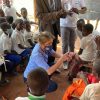
Q&A: Reflecting on Five Years of Educating Children in the Throes of Crises, Emergencies and Displacement
Education Cannot Wait (ECW), the global fund that brings teaching and learning to children in emergencies and protracted crises, is observing five years of reaching boys and girls in some of the world’s hardest-hit conflict and disaster zones.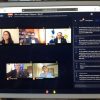
Energy Transition Evolves in Central America and the Caribbean
The situation of the energy transition in Central America and the Caribbean was the main issue debated this Friday 21st in the sessions at the XXX La Jolla Energy Conference, which is attended virtually by high officials, business delegates and analysts from the region.
Tired with Tokenism, Youth Launch ‘Stronger Campaign’ for UN Biodiversity Day
The Global Youth Biodiversity Network (GYBN) has put leaders and policymakers on notice that they are not willing to listen to the same conversations, suggestions and unmet promises, as the world faces a biodiversity crisis.

– The Global Insecurity of Climate Change –
On the occasion of World Environment Day, 5 June 2021, drawing from IPS’s bank of features and opinion editorials published this year, we are re-publishing one article a day, for the next two weeks. The original article was published on February 24 2021

Wanted: Transparency & Accountability in Pandemic-Related Spending
Governments around the world are playing a crucial role in providing lifelines to people and firms to help combat the pandemic and its economic fallout. To support the effectiveness of these efforts, it is important that such spending be subject to adequate transparency and accountability.
Nepal is the New COVID-19 Hotspot: The Cure is Citizen Engagement
If you live in Nepal, a quick survey of friends and family will quickly prove how rapidly Covid-19 infection rates have spiked. For instance, out of 50 people we called last week, more than half had been infected, with the rest reporting that their extended families or colleagues had tested positive.
– UN Blueprint that Could Urgently Solve Earth’s Triple Climate Emergencies –
On the occasion of World Environment Day, 5 June 2021, drawing from IPS’s bank of features and opinion editorials published this year, we are re-publishing one article a day, for the next two weeks. The original article was published on February 19 2021

Jerusalem: A Flashpoint For Conflict Or Microcosm Of Peace?
Regardless of how the current and future violent conflicts between Israel and the Palestinians in Jerusalem will end, there will be no Israeli-Palestinian peace unless East Jerusalem becomes the capital of a Palestinian state while the city remains united.
China’s Firms Gain a Foothold in South America as Energy Providers
Over the past decade, state-owned enterprises (SOEs) from China have carved out a niche as owners and operators of electric utilities in South American countries through acquisitions of energy grids. As SOEs shift from their previous role as mostly builders to investors in large energy assets, policymakers in South America and in Washington should consider the implications of having these companies at the helm of such services.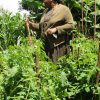
County Climate Risk Profiles Critical and Timely for Kenya’s Struggling Smallholders
Peris Wanjiku, a smallholder farmer in Othaya, Nyeri County, which lies approximately 152 kilometres from Kenya's capital, Nairobi, has watched as her fellow farmers have slowly started to sell off their land in the face of increasingly erratic weather patterns.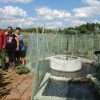
International Cooperation Gives Biogas a Boost in Rural Cuba
Yunia Cancio cooked with firewood until a few years ago, when a biodigester was built on her family’s El Renacer farm in Cabaiguán, a municipality in the central Cuban province of Sancti Spíritus, under the Biomass Cuba project. That change meant a lot for her family’s quality of life, but it was not the only one.
– Successful Crop Innovation Is Mitigating Climate Crisis Impact in Africa –
On the occasion of World Environment Day, 5 June 2021, drawing from IPS’s bank of features and opinion editorials published this year, we are re-publishing one article a day, for the next two weeks. The original article was published on February 17 2021

When Battling Covid-19 Becomes a National Policy Disaster
We went to the Kanatte cemetery, Sri Lanka’s largest, where most of us, residents of the capital city, would end up sooner or later. But it was deserted, and so we had time for a leisurely chat with some of the helpful staff there, albeit after admiring some of the grave sites and remaining beautiful trees.
Large Corporations Cash in on COVID-19 Relief Funds
Poverty and income inequality are being deepened as COVID-19 relief funds are handed out to large corporations instead of social protection programmes in developing countries, groups involved in a new study of COVID-19 bailouts have said.
– Jamaica Failing to Cope with Plastic Waste –
On the occasion of World Environment Day, 5 June 2021, drawing from IPS’s bank of features and opinion editorials published this year, we are re-publishing one article a day, for the next two weeks. The original article was published on January 20 2021

Put People Before Profits for Progress
Millions of people are expected to die due to delayed and unaffordable access to COVID-19 tests, treatment, personal protective equipment and vaccines. Urgent cooperation is desperately needed to save lives and livelihoods for all.
Women Leading Somalia’s Health System
Somalia is one of the most complex regions of the world, with threats and political instability, extreme weather conditions, movement of internally displaced people (IDPs), decades of conflict, poverty-related deprivation, poor health and communicable diseases that are killing people. There is a constant risk of gender violence making women, children and members of minority groups particularly vulnerable, and more so during displacement or while seeking work. Three decades of civil war and instability have weakened Somalia’s health system and contributed to it having some of the lowest health indicators in the world. The COVID-19 pandemic has added yet another strain on its tremendously fragile infrastructure presenting unexpected challenges and dilemmas.
Africa’s Worsening Climate: Here’s How the United States can Help Africa
Recently, I participated in a Congressional hearing on the “Effects of climate change in Africa”, before the House Foreign Affairs Subcommittee on Africa, Global Health, Global Human Rights, and Internal Organizations, chaired by Congresswoman, Karen Bass.
– Mining giant Rio Tinto Face Environmental, Human Rights Complaint in Papua New Guinea –
On the occasion of World Environment Day, 5 June 2021, drawing from IPS’s bank of features and opinion editorials published this year, we are re-publishing one article a day, for the next two weeks. The original article was published on January 4 2021

COVID-19 Vaccination: The Barriers to Achieving Global Herd Immunity
The global community is conducting a rapid vaccination program against the SARS.Cov-2 virus, using several vaccines, authorised for emergency use. To date, the percentages of adults vaccinated vary between less than 2% to over 90% in different countries.
The Devastating Gun Battle in Gaza is Being Fought in an Uneven Killing Field
In most civil wars and military conflicts across the politically-volatile Middle East, including in Syria, Yemen and Palestine, the ongoing battles are being fought not on a level playing field but on an uneven killing field.« Previous Page — Next Page »





 2026 High-level Political Forum on Sustainable Development. Credit: UN Photo/Eskinder Debebe
In 2015, the United Nations and its Member States adopted the Sustainable Development Goals (SDGs) in an effort to make the world a more sustainable and peaceful place for future generations. Progress on the 17 SDGs has been uneven, and inequality persists across the globe. 10 years after adoption, the 2025 UN SDGs Report revealed that only 35% of the SDG targets are on track, with more than half moving too slowly, and 18% moving backwards from the 2015 baseline. Poverty remains one of the world’s most pressing issues, with hunger, violence, and inequality impeding the opportunities for all people to achieve success. In September 2024, the United Nations Summit of the Future introduced a new goal: to eradicate global poverty by 2030, ensure universal rights to basic services, and increase the overall standard of living in terms of industrialization, economic well-being, citizen health, and literacy. Furthermore, recent shifts in United States foreign aid policy – notably, major budget cuts to USAID and the termination of thousands of development programmes– have severely threatened vital lifelines of financial aid to impoverished communities around the world. Additionally, the United States’ withdrawal from the Paris Climate Agreement has undercut international efforts at sustainable development. With the upcoming 2030 deadline, the UN Secretary-General has called for urgent multilateralism across six priority areas: food systems, energy, digital connectivity, education, jobs and social protection, and climate and biodiversity. IPS sheds light on marginalized communities that struggle on a daily basis to survive and have their stories heard and respected.
Updated by Yilan Batista and Shuli Wong August 2026

The Week with IPS

NEXT STOP - SDGs
Tracking global progress towards a sustainable world
Tracking global progress towards a sustainable world
