Languages
Sunday, November 22, 2026



News and Views from the Global South
Development & Aid

Bolivia Passes Controversial New Bill Expanding Legal Coca Production
A new bill in Bolivia, which will allow the amount of land allocated to producing coca to be increased from 12,000 to 22,000 hectares, modifying a nearly three-decade coca production policy, has led to warnings from independent voices and the opposition that the measure could fuel drug trafficking.
Women’s Progress Uneven, Facing Backlash – UN Rights Chief
“The women’s movement has brought about tremendous change but we must also recognise that progress has been slow and extremely uneven and that it also brought its own challenges,” warned the UN High Commissioner for Human Rights Zeid Ra’ad Al Hussein.
Another Somalian Famine
Last month, the United Nations declared another famine threat in Somalia due to yet another drought in the Horn of Africa. Important lessons must be drawn from the Somalia famine of 2010-2012, which probably killed about 258,000 people, half of whom were under-five. This was the greatest tragedy in terms of famine deaths in the 21st century, and in recent decades since the Ethiopian famine of the late 1980s.
Gender Disparity at UN: Three Out of 71, Zero out of Nine
The United Nations has frequently been accused of vociferously preaching gender empowerment and women’s rights to the outside world -- but failing miserably to practice what it preaches in its own political backyard.
Women in the Changing World of Work: Planet 50-50 by 2030
This year as the world commemorates International Women’s Day it is a time for all of us to celebrate and reflect on the progress made on Women’s rights globally. But more importantly, a day to call for an end to gender inequality in all its forms especially in the work spaces. Appropriately themed “Women in the Changing World of Work: Planet 50-50 by 2030” the commemoration comes against a backdrop of a world that is undergoing major changes with significant implications for women.
Women and Girls, One Third of World’s Drug Users
Women and girls comprise one-third of global drug users yet are only one-fifth of those receiving treatment, a UN-Backed independent expert body warned.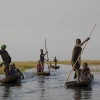
Global Harvests Robust, Yet 37 Countries Need Food Aid
Global food supply conditions are robust, but access to food has been dramatically reduced in areas suffering from civil conflicts, while drought conditions are worsening food security across swathes of East Africa, according to the United Nations.
Let Women Speak and Give Them a Hearing
Basic rights always need champions, and that’s truer today than it ought to be as around the world we see an unwelcome pattern of reaction to modern complexities ranging from globalization and automation to austerity and dwindling wages. One alarming example is how the agenda of promoting women’s rights, so far from completion, is being pushed back rather than forward.
Time to Champion Women’s Empowerment: Implementation of SDGs in Bangladesh
The year 2015 was highly significant in relation to global convergence on ways forward towards achieving sustainable development at local, national, regional, and global levels.
Why a Feminist Foreign Policy Is Needed More than Ever
Lately, the world has tended to present itself in increasingly darker shades. In many places, democracy is questioned, women’s rights are threatened, and the multilateral system that has taken decades to build is undermined.
Barefoot Solar Warriors Take On Gender Injustice and Climate Change
On a summer morning in 2008, Magan Kawar decided to leave her village for a job. The very next day, her parents-in-law excommunicated her.
16-Hour Days for Zimbabwe’s Women
As the cock crows, Tambudzai Zimbudzana, 32, is suddenly awakened from sleep. She quickly folds her blankets and strides outside her three-room, sheet iron-roofed house in rural Masvingo.
Be Bold for Change–Empower Women, Empower Humanity
The world of work is changing for women across the globe and Bangladesh is no exception. Factors such as globalization, advancement in technology, and the digital revolution have ushered in new ways for women to enter into work. The theme for the International Women’s Day, 8 March, 2017, focuses on “Women in the Changing World of Work: Planet 50-50 by 2030” under which gender parity in the workforce is the critical prerequisite for inclusive and sustainable economic growth.
For Societies to Thrive, We Must Ensure Gender Equality
Consider this: gender inequality is costing sub Saharan Africa US$ 95 billion annually in lost revenue. In a corporate setting, that extent of losses would call for a serious reset of the business’s operational approach.
Unemployment and the Informal Economy – Key Challenges for Women in Latin America
The participation of women in the labour market in Latin America and the Caribbean has steadily grown over the last few decades. But in 2017, as unemployment and informal work are on the rise, there is a continued need to push hard for gender equality in order to create more and better employment for the 255 million women of working age in this region.
New Maternity Legislation in Cuba Ignores Fathers
A new set of regulations to strengthen the maternity rights of working women and encourage people to have children in Cuba were seen as a positive step but not enough, because they do not include measures to encourage more active participation in child-rearing by men.
New land rights are changing women’s world of work
International Women’s Day this year focuses on economic empowerment in the changing world of work. The vision is to achieve gender equality and empowerment of women and girls by 2030. Girls’ aged three will become adults with a legal right to work in 2030. Together, with those aged up to 10, these girls are the prime target for gender equality by 2030.
Time to Close the Gender Gap in Africa with Bold Actions
International Women's Day (IWD) is an important opportunity to celebrate the achievements of women and to be bold in promoting gender parity.
Breaking Barriers for Women Is a Short Cut to Economic Growth and Development
In South Asian societies, as elsewhere, it is all too common for women to be held back, time and again Women's potential remains largely untapped - which is not only morally wrong, but also economically unwise. According to recent projections, harnessing women's full potential throughout South Asia would increase GNP by more than half by 2025. In absolute terms, women could earn countries in South Asia an additional 400 billion dollars in the next ten years! clearly, women hold the key to economic success for South Asia: their empowerment can fuel further development. The Netherlands has invested substantially in the economic empowerment of women in this region. Our successes, achieved in collaboration with many stakeholders, show what can be achieved if we keep up these efforts.
Unhealthy Environment Causes 1 in 4 Child Deaths: WHO
Unhealthy environments - both inside and outside the home - cause the deaths of more than 1.7 million child under the age of five every year, according to two new reports released by the World Health Organization (WHO) Monday.
Caribbean Awaits Trump Moves on Climate Funding, Paris Deal
Caribbean leaders worry that with climate change sceptic Donald Trump in the White House, it will be more difficult for small island developing states facing the brunt of climate change to secure the financing necessary to adapt to and mitigate against it.« Previous Page — Next Page »


 2026 High-level Political Forum on Sustainable Development. Credit: UN Photo/Eskinder Debebe
In 2015, the United Nations and its Member States adopted the Sustainable Development Goals (SDGs) in an effort to make the world a more sustainable and peaceful place for future generations. Progress on the 17 SDGs has been uneven, and inequality persists across the globe. 10 years after adoption, the 2025 UN SDGs Report revealed that only 35% of the SDG targets are on track, with more than half moving too slowly, and 18% moving backwards from the 2015 baseline. Poverty remains one of the world’s most pressing issues, with hunger, violence, and inequality impeding the opportunities for all people to achieve success. In September 2024, the United Nations Summit of the Future introduced a new goal: to eradicate global poverty by 2030, ensure universal rights to basic services, and increase the overall standard of living in terms of industrialization, economic well-being, citizen health, and literacy. Furthermore, recent shifts in United States foreign aid policy – notably, major budget cuts to USAID and the termination of thousands of development programmes– have severely threatened vital lifelines of financial aid to impoverished communities around the world. Additionally, the United States’ withdrawal from the Paris Climate Agreement has undercut international efforts at sustainable development. With the upcoming 2030 deadline, the UN Secretary-General has called for urgent multilateralism across six priority areas: food systems, energy, digital connectivity, education, jobs and social protection, and climate and biodiversity. IPS sheds light on marginalized communities that struggle on a daily basis to survive and have their stories heard and respected.
Updated by Yilan Batista and Shuli Wong August 2026

The Week with IPS

NEXT STOP - SDGs
Tracking global progress towards a sustainable world
Tracking global progress towards a sustainable world
