Languages
Sunday, November 22, 2026



News and Views from the Global South
Development & Aid

Opinion: Unnoticed, We Are Close to Destruction of Our Planet
On the 17th of April, Italians were called to vote in a national referendum, on the extension of licenses to extract petrol and gas from the seas. The government, the media and those in the economic circles, all took a position against the referendum, claiming that 2000 jobs were at a stake. The proponents of the referendum (among them five regions), lost. Italy is following a consistent trend, after the Summit on Climate Change (Paris December 2015), in which all countries (Italy included) took a solemn engagement to reduce emissions.
HIV Time Bomb Ticks On
Radhika Banarjee, a 24 year-old CSW, listened carefully at an advocacy gathering in the heart of Dhaka, Bangladesh’s capital.
Latin America to Redouble Its Climate Efforts in New York
The countries of Latin America will flock to sign the Paris Agreement, in what will be a simple act of protocol with huge political implications: it is the spark that will ignite actions to curb global warming.
OPINION: Breaking the Grip of Rimbunan Hijau over Papua New Guinea
James Sze Yuan Lau and Ivan Su Chiu Lu must be extremely busy men. Together, they are listed as directors of some 30 companies involved in various activities and services related to logging or agribusiness in Papua New Guinea (PNG). The former is the managing director of Rimbunan Hijau (RH) PNG and son-in-law of RH’s founder Tiong Hiew King; the latter is executive director of RH PNG Ltd.. All but two of these 30 companies have the same registered address at 479 Kennedy Road, in the national capital, Port Moresby–the headquarter of the RH group in the country.
Deep Discord at United Nations over Global Drug Policy
International drug conventions ultimately aim to ensure the health and welfare of humankind, UN Deputy Secretary-General Jan Eliasson said here Tuesday at the opening of a special three-day session on drugs known as UNGASS.
Arsenic Threat Looms Large in India: Well Switching Provides the Way Forward
An Indian Govt. Parliamentary Committee on Estimates on “Occurrence of High Arsenic (As) content in Groundwater” in December, 2014 stated that more than 70 million people in 96 districts in India is under threat due to As occurrence in groundwater.
Champions of Hygiene
Lydia Abuya, a tenant living in the Kaptembwa informal settlement west of Nakuru town, leaves one of the six on-plot toilets. She returns with a pail of water to splash away the waste.
UN Chief Seeks Fast-Paced Ratifications for Climate Change Treaty
Over 150 countries are expected to sign the Paris climate change agreement on April 22 but the historic treaty will not come into force until it has been ratified by 55 countries.
Developing countries left out of global tax decisions
Over one hundred developing countries continue to be left out of global tax cooperation negotiations despite leaks such as the Panama papers showing the high cost of tax avoidance.
Climate Change and the Middle East (II)
No Water in the Kingdom of the Two Seas—Nor Elsewhere
There is an oil producing country situated in the Gulf region, made of a cluster of islands. It is small, surface and population wise. But it holds the dubious privilege of ranking top of the list out of the 33 countries most likely to be water-stressed in the year 2040.

A World Drowning in Oil
Thanks to tensions between Saudi Arabia and Iran, major oil producers couldn’t come to an agreement in Doha to freeze their output to January levels to raise oil prices. The current low oil prices have a lot to do with the grim outlook for global economic growth while supply is growing. China, the second largest economy in the world, is slowing down. Not surprisingly, global oil demand is much lower at 94.8 million barrels a day vis-à-vis supply of 96.3 million barrels a day in the first quarter of 2016 according to the International Energy Agency.
Climate Change (I)
Will the Middle East Become ‘Uninhabitable’?
This is not about any alarming header—it is the dramatic conclusion of several scientific studies about the on-going climate change impact on the Middle East region, particularly in the Gulf area. The examples are stark.
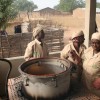
Innovations Boost Income for Women Rice Farmers
Salabanya Tabaitou no longer squints from the irritating wood smoke each time she has to parboil her rice paddy. Now Tabaitou feeds logs into a chute of a specially designed brick stove with a chimney that draws away the smoke. The stove with a stainless steel parboiling vessel cooks her rice in 20 minutes - something she would have spent two hours doing using the traditional method.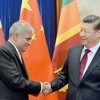
No Free Chinese Takeaway but Chinese Takeover on the Menu
There is no such thing as a free Chinese takeaway; and, if the visiting Lankan high powered delegation led by Prime Minister Ranil Wickremesinghe fancied otherwise, the Chinese hosts made pretty certain the guests got the message crystal clear when the fortune cookie, opened after the diplomatic feast of niceties was over, revealed the thumping bill of fare.
Maquilas Help Drive Industrialisation in Paraguay
“There were cases of people who stopped coming to work after receiving their first wages and then came back a few days later to ask if there was more work,” because they were used to casual work in the informal economy, said Ivonne Ginard.Home is School
The paradox of education in Pakistan is that the children of the poor are not getting enough of it, while the offspring of the rich get a surfeit. Neither is good for the child.
The Unknown Fate of Thousands of Abducted Women and Girls in Nigeria
The plight of 219 Chibok schoolgirls abducted two years ago is all too common in Nigeria's conflict-affected north-eastern communities, and up to 7,000 women and girls might be living in abduction and sex slavery, senior United Nations officials on 14 April 2016 warned.
Can an Animal Heist Fable Help Solve the Middle East Crisis?
Make no mistake-the Middle East is the longest and perhaps the most complex crisis in recent History, this explaining the innumerable, successive –and frustrating- attempts to solve it.
OPINION: Wake Up! We Need Statesman and Values but We Get Selfish Politicians and Cynicism…
A total indifference has accompanied the number of refugees injured by Macedonian police in Idomeni, where more than 12 000 people, including 4 000 children have been trapped, since Austria asked Macedonia, Serbia, Croatia and Slovenia, to prevent the continuing passage of refugees. Austria has now informed the Italian government that it will send several hundred troops to its border with Italy.
Genetic Resources to Fight Climate Change
With Kenya’s meteorological records over the last 50 years indicating increased irregularity and variability in precipitation, the effects of changing climate are hitting hard. Rising temperatures as well other forms of extreme weather events in form of droughts and floods are a common feature.
Will the UN’s new leader stand for the powerful or the powerless?
After hundreds of questions were posed to nine candidates vying for the role of United Nations Secretary-General this week, a lasting question remains; will the UN’s new leader stand for the powerful or the powerless?« Previous Page — Next Page »


 2026 High-level Political Forum on Sustainable Development. Credit: UN Photo/Eskinder Debebe
In 2015, the United Nations and its Member States adopted the Sustainable Development Goals (SDGs) in an effort to make the world a more sustainable and peaceful place for future generations. Progress on the 17 SDGs has been uneven, and inequality persists across the globe. 10 years after adoption, the 2025 UN SDGs Report revealed that only 35% of the SDG targets are on track, with more than half moving too slowly, and 18% moving backwards from the 2015 baseline. Poverty remains one of the world’s most pressing issues, with hunger, violence, and inequality impeding the opportunities for all people to achieve success. In September 2024, the United Nations Summit of the Future introduced a new goal: to eradicate global poverty by 2030, ensure universal rights to basic services, and increase the overall standard of living in terms of industrialization, economic well-being, citizen health, and literacy. Furthermore, recent shifts in United States foreign aid policy – notably, major budget cuts to USAID and the termination of thousands of development programmes– have severely threatened vital lifelines of financial aid to impoverished communities around the world. Additionally, the United States’ withdrawal from the Paris Climate Agreement has undercut international efforts at sustainable development. With the upcoming 2030 deadline, the UN Secretary-General has called for urgent multilateralism across six priority areas: food systems, energy, digital connectivity, education, jobs and social protection, and climate and biodiversity. IPS sheds light on marginalized communities that struggle on a daily basis to survive and have their stories heard and respected.
Updated by Yilan Batista and Shuli Wong August 2026

The Week with IPS

NEXT STOP - SDGs
Tracking global progress towards a sustainable world
Tracking global progress towards a sustainable world
