Languages
Sunday, November 29, 2026



News and Views from the Global South
Development & Aid

Q&A: How Sex Education Programs Can Shape a Better Future
In Latin American countries and in the Caribbean, where income disparities are among the greatest in the world, too many people often lack access to comprehensive health services and information needed to live healthy lives.
Brazil Drives Energy Integration in South America
Energy integration in South America will be a reality "in the medium to long term," driven by hydropower and drawing on Brazil’s experience, predicts Altino Ventura Filho, secretary of planning in this country’s Ministry of Mines and Energy.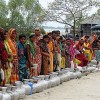
Caught Between Diarrhoea Bugs and Arsenic
Achieving the Millennium Development Goal of providing access to safe drinking water for its 160 million people by 2015 is a tough call for Bangladesh, which is caught between arsenic contaminated groundwater and diarrhoea-causing microbes in its ponds and rivers.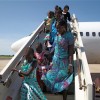
SOUTH SUDAN: Bracing for a Massive Influx of Returnees
In the wake of border tensions, the United Nations is airlifting 12,000 southerners from a Sudanese frontier town into South Sudan. But they are returning home in the midst of an economic crisis that has the U.N. warning it may appeal for more funding to scale up humanitarian operations.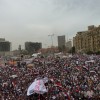
From Mubarak To Worse
More than 15 months after Egypt's Tahrir Square uprising and four months after free parliamentary polls, many Egyptians say that daily living conditions are worse now than they were in the Mubarak era.
Hopes To Heal Economy Through Devaluation, Which Has Hit Poor Hard
As Malawi’s poor struggle to afford food and other staple items since the 48 percent devaluation of the local currency against the dollar, economic commentators are optimistic that the move will provide an opportunity to boost the country’s export market.
Protection for Salvadoran Migrants En Route to U.S.
A law to protect Salvadoran migrants, who are frequently victims of attacks and abuses on their way to the United States, is nearing entry into force after having been approved over a year ago. All that remains is for a body made up of civil society organisations to be created to implement it.
World Bank Accused of Ignoring Lessons on Mega Infrastructure
In a renewed funding focus on large-scale infrastructure, the World Bank, Group of 20 (G20) countries and other multilateral groups are wilfully overlooking lessons learned decades ago, a new report by International Rivers warns.Rio+20: European Parliament Absent in Sustainability Summit
The decision by the European Parliament (EP) to renounce its participation in the Rio+20 United Nations Conference on Sustainable Development next month on the grounds that hotel costs are exorbitant has provoked sharp criticism from civil society organisations.
Q&A: The Future of Agriculture May Well Be in Cities
In the coming decades, the world's population is expected to grow by at least another two billion people, 80 percent of whom will live in cities by the year 2050.
Maternal Deaths Drop By Nearly Half
The statistics have remained staggering: every two minutes, a woman dies of pregnancy and child birth-related complications caused primarily by severe bleeding, infections, high blood pressure and unsafe abortions.
Colombian River Basin Passes the Test of El Niño and La Niña
Patricia Gómez, an engineer, is leading a training workshop for a group of 11 men at the fire station in Neiva, the capital of the department of Huila in southwest Colombia.EU Feels Force of Israeli Demolitions
All 27 foreign ministers of the European Union have strongly spoken out against Israeli demolitions in Area C of the West Bank. Since the beginning of 2011 not less than 60 EU-funded projects have been demolished while 110 others are currently at risk. Several analysts claim the Israeli authorities are specifically targeting EU-funded projects.
Adding Rice Farmers to the Rio+20 Agenda
The year 2011 was one of extremes for the small Sri Lankan village of Verugal.Public Funds Could Help Provide Water and Electricity, Researchers Say
For several decades, governments around the globe have turned to privatisation as the best option to help relieve the world's destitute by providing them with health care services, water and electricity. By and large, however, this effort has failed.
Post-Quake Haiti Severely Dependent on Private Sector
More than two years after the January 2010 earthquake in Haiti, NGOs and private contractors are continuing to provide 80 percent of the country's social services.
Brazilian Government Sets Guidelines for Success at Rio+20
As the host of Rio+20, the Brazilian government has defined guidelines for achieving success at the upcoming world summit, whose aim is to assess and strengthen what has been done since the 1992 Earth Summit, the first global meeting on sustainable development.
Despite Economic Growth, Food Insecurity Lingers in Africa
Everlyne Wanjiku, a single mother of five, has earned a living selling vegetables in the sprawling Kibera slum in Nairobi, Kenya, for over three decades. And even though her earnings were meagre, she was able to provide all her children with a tertiary education.
Argentina Faces the Dilemma of Unconventional Oil and Gas
Vast reserves of natural gas and oil trapped underground, whose exploitation would signify major environmental impacts, will be the greatest challenge facing YPF, the Argentine oil company that recently returned to state control.
Q&A: Less Politics, More Economic Development
Economic and social growth have become the heart of the development agenda of the bloc of leading emerging economies known as IBSA (India, Brazil and South Africa) since it began focusing less on politics.
Guatemalan Coffee Growers Get Creative
Overwhelmed by climate change, worried about speculation in international prices and still hurting from the effects of the crisis in 2000, coffee growers in Guatemala are trying in various ways to recover the production levels they achieved 12 years ago.« Previous Page — Next Page »


 2026 High-level Political Forum on Sustainable Development. Credit: UN Photo/Eskinder Debebe
In 2015, the United Nations and its Member States adopted the Sustainable Development Goals (SDGs) in an effort to make the world a more sustainable and peaceful place for future generations. Progress on the 17 SDGs has been uneven, and inequality persists across the globe. 10 years after adoption, the 2025 UN SDGs Report revealed that only 35% of the SDG targets are on track, with more than half moving too slowly, and 18% moving backwards from the 2015 baseline. Poverty remains one of the world’s most pressing issues, with hunger, violence, and inequality impeding the opportunities for all people to achieve success. In September 2024, the United Nations Summit of the Future introduced a new goal: to eradicate global poverty by 2030, ensure universal rights to basic services, and increase the overall standard of living in terms of industrialization, economic well-being, citizen health, and literacy. Furthermore, recent shifts in United States foreign aid policy – notably, major budget cuts to USAID and the termination of thousands of development programmes– have severely threatened vital lifelines of financial aid to impoverished communities around the world. Additionally, the United States’ withdrawal from the Paris Climate Agreement has undercut international efforts at sustainable development. With the upcoming 2030 deadline, the UN Secretary-General has called for urgent multilateralism across six priority areas: food systems, energy, digital connectivity, education, jobs and social protection, and climate and biodiversity. IPS sheds light on marginalized communities that struggle on a daily basis to survive and have their stories heard and respected.
Updated by Yilan Batista and Shuli Wong August 2026

The Week with IPS

NEXT STOP - SDGs
Tracking global progress towards a sustainable world
