Languages
Sunday, November 29, 2026



News and Views from the Global South
Development & Aid

Could Coffee Eliminate Borders?
A diverse blend of coffee is going to pervade the city of Milan in 2015. World producers will come together to show, exchange and market their coffee in a global alliance without geographical-based membership.
The Downside of China’s Lifeline to Brazil
Over the last decade, China has become Brazil’s main trading partner and source of foreign investment. But this apparent lifeline at a time of global crisis could actually aggravate longstanding problems faced by Latin America’s biggest economy.Memories of Osh Violence Continue to Haunt Kyrgyz Children
The physical damage done to Osh, the city in southern Kyrgyzstan that was engulfed in interethnic violence almost two years ago, is steadily being repaired. The psychological scars, on the other hand, may take generations to heal.Could Mining Threaten Mongolia’s Tourism Potential?
Twenty years ago, when a Dutch cyclist named Rik Idema first passed through Mongolia on a round-the-world biking trip, the country struck him as the most pristine place he'd ever seen.
Brazil and South Africa Hit Hard by Exchange Rate Complications
Brazil and South Africa have experienced a widespread contraction of their manufacturing industries, with the latter suffering massive unemployment as well, thanks to the rampant volatility and misalignment of dominant global currencies like the dollar, trade experts from the two countries say.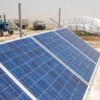
A Little Power to Some Palestinian People, For Now
A handful of makeshift homes built from small boulders and plastic tarps and secured with thick ropes sit in the isolated community of She’b El- Buttum in the South Hebron Hills. A few metres away, several rows of solar panels and two wind turbines are affixed to the rocky hilltop, providing electricity to the village’s 150 residents.
Native People in Argentina Demand a Say in Lithium Mining
Native communities in northwest Argentina turned to the Supreme Court to claim their right to be consulted about projects for prospecting and mining of lithium, regarded as the mineral of the future, located under an enormous salt flat.
BRICS Tighten United Front
At their summit in the Indian capital on Thursday, leaders of the coalition known as BRICS – Brazil, Russia, India, China and South Africa – made several noteworthy decisions that experts say hint at the converging of economic and political interests of a disparate regional bloc.
Spanish Officials Turn Deaf Ear to General Strike
Spain’s centre-right government stood firm and announced that it would not modify the labour reforms that tens of thousands of people protested Thursday in a 24-hour general strike.ARGENTINA: Lack of Information Raises Risk of Cervical Cancer
A novel research study in Argentina explored women's knowledge and beliefs about cervical cancer, in the provinces with the highest mortality from this highly preventable form of cancer, to design more effective policies.Careless Handling of Benin’s Medical Waste Could Cost Lives
Fifteen-year-old Aicha is one of the many spice vendors hawking their wares in the Dantokpa market, in Benin's economic capital, Cotonou. But a closer look at her tidy stall reveals a disturbing detail: the powdered spices are packaged in recycled medicine vials.
Chad Famine – Mothers Breaking Apart Anthills in Search of Food
"Only God knows what will happen to me and my children - for two months there's been nothing to eat. We're living like beggars," Henriette Sanglar, a mother of four in the Moursal quarter of the Chadian capital, N'Djamena, told IPS.
South Africa No Longer the Gateway to the Continent
South Africa’s membership of the bloc of leading emerging economies and its unique position in Africa heralded the country’s role as a gateway into the African continent. However, trade experts question whether it can live up to this position as investors begin to increasingly look towards other African markets.Scientists Claim Their Place in Struggle for Food Security
Weather events such as extreme temperatures and drought caused global agricultural losses of 11.4 billion dollars in 2011, while 12 million hectares of farmland are lost to land degradation every year, and unsustainable agricultural practices contribute to the emission of greenhouse gases.New Alternative in Senegal After Wade Defeat
Analysts say that Senegal’s outgoing President Abdoulaye Wade was made to pay for his failure to respond to popular demands, particularly arising from the high cost of basic commodities, a lengthy strike by teachers, and high youth unemployment, by losing his bid for a third term of office.OP-ED: Narcotics Watchdog Turns Blind Eye to Rights Abuses
In a world where drug offences are punishable with the death penalty, torture or arbitrary detention, we must ask how far States can go to enforce the global prohibition on drugs.
Petrol Guzzlers Send Venezuela’s Carbon Emissions Soaring
China may be the country that emits the most carbon dioxide (CO2), but oil-rich Venezuela and some of its Caribbean neighbours produce more of this greenhouse gas responsible for global warming on a per capita basis.
Women Lead Poverty Reduction in Bangladesh
Kalpana Rani Pal’s pottery business is modest by any yardstick but it is small enterprises like these that are helping reduce poverty levels in Bangladesh.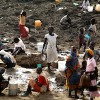
The Forgotten Emergency in Sudan’s Blue Nile State
Hamid Yussef Bashir said he walked for 17 days with his wife and five children to get to a refugee camp in South Sudan. Here in Jamam, they joined about 37,000 other people who fled from the war across the border in Sudan’s Blue Nile state.
Former War Zone Produces Plenty
Most things in Sri Lanka are becoming expensive these days. In early February fuel prices were increased by margins ranging from eight to 49 percent, with the all-important diesel, used widely in commercial transport and power generation, going up by 36 percent. The Sri Lankan rupee that was trading at 107 rupees to the dollar in January surpassed 130 rupees per dollar last week.
Rio+ 20 Suffers Leadership Void Weeks Ahead of Summit
When a landmark U.N conference on sustainable development kicks off in Brazil mid-June, more than 120 world leaders are expected to participate in the much-ballyhooed talkfest on the future of the global environment.« Previous Page — Next Page »


 2026 High-level Political Forum on Sustainable Development. Credit: UN Photo/Eskinder Debebe
In 2015, the United Nations and its Member States adopted the Sustainable Development Goals (SDGs) in an effort to make the world a more sustainable and peaceful place for future generations. Progress on the 17 SDGs has been uneven, and inequality persists across the globe. 10 years after adoption, the 2025 UN SDGs Report revealed that only 35% of the SDG targets are on track, with more than half moving too slowly, and 18% moving backwards from the 2015 baseline. Poverty remains one of the world’s most pressing issues, with hunger, violence, and inequality impeding the opportunities for all people to achieve success. In September 2024, the United Nations Summit of the Future introduced a new goal: to eradicate global poverty by 2030, ensure universal rights to basic services, and increase the overall standard of living in terms of industrialization, economic well-being, citizen health, and literacy. Furthermore, recent shifts in United States foreign aid policy – notably, major budget cuts to USAID and the termination of thousands of development programmes– have severely threatened vital lifelines of financial aid to impoverished communities around the world. Additionally, the United States’ withdrawal from the Paris Climate Agreement has undercut international efforts at sustainable development. With the upcoming 2030 deadline, the UN Secretary-General has called for urgent multilateralism across six priority areas: food systems, energy, digital connectivity, education, jobs and social protection, and climate and biodiversity. IPS sheds light on marginalized communities that struggle on a daily basis to survive and have their stories heard and respected.
Updated by Yilan Batista and Shuli Wong August 2026

The Week with IPS

NEXT STOP - SDGs
Tracking global progress towards a sustainable world
