Languages
Thursday, October 8, 2026



News and Views from the Global South
Population

With Planning Aging Population Could Result in a Silver Dividend
An aging population needn’t be a burden, experts told Parliamentarians at a conference co-hosted by UNFPA Asia Pacific Regional Office and the Asian Population and Development Association (APDA).
Demography of the Israeli-Palestinian Conflict
Demography is at the heart of the Israeli-Palestinian conflict as well as the fundamental obstacle to achieving to what each side has long desired: “שָׁלוֹם”, “سلام”, or “peace”.
Population Growth Diversity Continuing in the 21st Century
While the world’s population of 8 billion is continuing to increase and projected to reach 9 billion by 2037 and 10 billion by 2058, considerable diversity in the population growth of countries is continuing in the 21st century.
We Need Urgent Commitment, Resources & Action to Tackle Hunger Crisis
Last week, as world leaders gathered in New York for the 77th United Nations General Assembly, one topic came up more than most: looming famine. That’s because despite a global commitment to make famine a relic of the past, it is once again knocking at our door.
Zambian Parliamentarians Tackle Population Issues to Improve Quality of Life for Citizens
Parliamentarians play a decisive role in addressing population issues, as was demonstrated when the majority voted against a private member motion to end the teaching of comprehensive sexuality education (CSE) in Zambia in 2020.
The Dying Children Divide
The chances of a child dying before reaching age five years have dropped substantially worldwide during the recent past. However, a significant divide remains among countries as well as within regions in the chances of children dying.
Celebrating 30 Years of Shared Water
We tend to associate rivers and lakes with the countries in which they are located. Yet a little-known fact is that more than half of the world’s freshwater bodies are shared.
The Challenges of High Fertility, Rapidly Growing Populations
While most countries in the world have made the transition from high to low rates of deaths and births, many countries, largely in Africa, face the challenges of high fertility rates that are resulting in rapidly growing populations.
Why Electoral Malpractices are the Leading Form of Governance in Africa
Once again, Kenya finds itself at a crossroads. The current events in Kenya illustrate how and why electoral malpractices and not democracy and human rights are the leading form of governance in Africa.
Of Aristotle, Orwell, and the Young Heirs
A couple of decades ago in Athens, a conversation over a ‘souvlaki’ and wine dinner with a young Greek economist led to talking about democracy. Asked for his opinion, he said “By then, when philosophers like Aristotle formulated their theories about democracy, the society was dominated by the rich.”
Global Public Investment: Time to Build the Movement Now
Global Public Investment. A short and simple phrase. But one that means so much. At its most basic, GPI means public money being used to invest in goods and services that are of global benefit. There is no shortage of goods and services that need GPI, whether they be used to prevent or respond to environmental catastrophe, international war and conflict, or the next pandemic.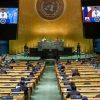
A Demographic Snapshot of the Philippines: One Step Forward, a Half Step Back
With the national election and transfer of power in the Philippines from outgoing President Duterte to incoming President Marcos Jr. in July 2022, it seems an appropriate time to briefly take stock of the country’s current demographic situation, as well as recent related developments.
Climate Change is Putting Women & Girls in Malawi at Greater Risk of Sexual Violence
It is often those least responsible for causing climate change that suffer the most from the impacts. And such is the case with women and girls in Malawi - one of the world’s poorest and lowest carbon-emitting countries but ranked fifth in the Global Climate Index 2021 list of nations worst affected by climate-related extreme weather.
Pandemic and Poverty Fuel Child Labor in Peru
In the afternoons he draws with chalk on the sidewalk of a downtown street in the Peruvian capital. Passersby drop coins into a small blue jar he has set out. He remains silent in response to questions from IPS, but a nearby ice cream vendor says his name is Pedro, he is 11 years old, and he draws every day on the ground for about four hours.
Not a World for Young People
Many of us assume that an identification with a certain gender, race, nation or even age makes us particularly knowledgeable. When it comes to age, it is in most cultures of the world assumed that age and experience favour wisdom. I am not entirely sure about that, though I am convinced that as we grow older we tend to overestimate our own knowledge and importance. An arrogance that might burden and even marginalize the youth.
U.S.-Latin America Immigration Agreement Raises more Questions than Answers
The immigration agreement reached in Los Angeles, California at the end of the Summit of the Americas, hosted by U.S. President Joe Biden, raises more questions than answers and the likelihood that once again there will be more noise than actual benefits for migrants, especially Central Americans.
Abortion in Canada—Legal for Decades But Hindered by Stigma
Toronto resident Miranda Knight describes her abortion experience as relatively simple. After finding out she was pregnant on a Wednesday in 2017, she booked an appointment at an available clinic and got one for the following Monday. She had the procedure that day and left the clinic by noon.
Recalling Shinzo Abe with Respect
Shinzo Abe, the longest-serving Prime Minister of Japan, has died. It was a murder caused by a personal grudge rather than political terrorism. And it was not a direct grudge against Mr. Abe. A religious group had supported Mr. Abe, and a murderer with a grudge against the religious group killed him. Murders targeting politicians are often related to political messages or claims. This is a very unique case in that the murder was committed out of a personal grudge, not against the individual for what he did, but against the organization that supported the individual.
What Future for a World of 8 Billion?
What does a young girl from Juba, in South Sudan, an 8-year-old boy living in the slums of Mumbai, in India, a young mother from the south of Lima, in Peru, and an 83-year-old man enjoying retirement in the suburbs of Stockholm, in Sweden, have in common?
India & China Continue to Lead –as World Population Projected to Reach 8.0 Billion
India and China, two Asian nuclear powers who are also longstanding rivals embroiled in the geo-politics of the Indian Ocean region, have remained two of the world’s most populous nations accounting for over a billion people each. But as the world’s population reaches the 8.0 billion mark, come November, India is projected to surpass China.
A World of 8 Billion, Yes, But (II): The Unseen, Untold Story of the 50%
While women and girls have been so far enjoying some of their due rights in Western high-income countries, the overwhelming majority of teenagers and adult women in the impoverished regions of the current world’s population of 8 billions continue to suffer all kinds of inequalities.« Previous Page — Next Page »





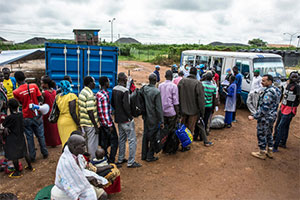 One Thousand Internally Displaced Persons (IDPs) Relocated from Tomping Camp in South Sudan. Credit: UN Photo/Isaac Billy
It took hundreds of thousands of years for the world’s human population to cross one billion in 1804. Approximately 200 years later, the population has multiplied sevenfold. In 2023, the global population crossed 8 billion, and is expected to reach 9 billion before 2050. With the planet more crowded than ever, it is essential to keep track of population trends, urbanization, migration, and reproduction across the world.
Life expectancy has seen significant strides in the past century, largely due to economic development and increased standards of living. On the contrary, trends in global fertility are shifting, with certain regions in Africa and Asia reporting higher rates, while parts of Europe and North America report stagnant or lower rates. This is in part due to differences in sexual and reproductive healthcare, as well as societal and economic conditions around the world. For example, child marriage is prevalent in certain societies, where childbearing is also considered a familial duty. Meanwhile, stagnating economies frequently experience lower marriage and childbearing rates.
The increase in migration and urban development around the world is also linked to global population trends. By 2050, it is expected that approximately 66 percent of all people will live in cities. Furthermore, global crises such as warfare and natural disasters also prompt transnational migration. Transnational migration is linked to a variety of socioeconomic issues in both host and receiving countries: migrants often leave developing countries with less access to educational and economic opportunities and arrive in developed countries where they are frequently the targets of ethnic, racial, and cultural discrimination, and economic exploitation. Recent crises in Europe and the United States demonstrate the importance of advocating for migrants worldwide. As migrants from the Global South are increasingly stripped of their legal and civic rights in unlawful deportations, or targeted in acts of identity-based violence, it is essential to keep track of population trends and protect the human rights of migrant populations. Climate-related disasters are now a major driver of displacement, with nearly half of all new internal displacements in 2025 being disaster-related.
IPS is devoted to covering issues surrounding population trends, migration, and reproduction through its compelling articles, which use both statistics and human stories to provide readers with robust and informative viewpoints.

The Week with IPS

NEXT STOP - SDGs
Tracking global progress towards a sustainable world
Tracking global progress towards a sustainable world
