Languages
Saturday, October 3, 2026



News and Views from the Global South
Population

How to Bring the Indus Delta Back to Life – Give it Water
Gulab Shah, 45, is having sleepless nights. He and his family are worried about their imminent migration from their village in Jhaloo to a major city in Pakistan, thanks to the continued ingress of sea water inland.
A ‘Cure’ for Ebola but Will it Stop the Outbreak if People Won’t Get Treatment?
While people in the Democratic Republic of Congo (DRC) are slowly being made aware that scientists have discovered two drugs that are effective in treating Ebola, letting go of the fear and anxiety that has prevailed across the country this year will require more work.
Solving the Climate Crisis is Beyond Governments
Throughout my ten years working in international development and climate policy, I’ve mostly heard colleagues talk about the private sector as if it was this intangible, multifaceted medusa with its own business lingo that is impossible for us policy experts to tackle: “the ‘private sector’ needs a return on investment in order to act on climate” or “the ‘private sector' does not have the right incentives, but we need ‘private’ capital to solve this crisis”

“The African and Asian Parliamentarians’ Meeting on Population and Development: Creating Positive Impacts for ICPD+25 and SDGs”
The Asian Population and Development Association (APDA) organized the “African and Asian Parliamentarians’ Meeting on Population and Development for ICPD+25” on August 5 - 6, 2019, in Dar es Salaam, Tanzania, to serve as a platform to gather the opinions and set of proposed actions of parliamentarians in the Asia and Africa regions.
How Tibet Doubled its Life Expectancy
 Tibet's complicated typography means that the terrain is not easy for its people. Whilst the country is breathtaking, one incredible story about Tibet is that of the dramatic socio-economic changes the region has undergone.
A Key Role for 1.8 Billion Youth in UN’s 2030 Development Agenda
The UN Population Fund (UNFPA) is convinced that the world’s 1.8 billion adolescents and youth-- a quarter of the global population—have a key role to play in helping implement the UN’s 2030 Development Agenda.
Forests, Food & Farming Next Frontier in Climate Emergency
The special report by the Intergovernmental Panel on Climate Change (IPCC) on climate and land, launched last week, makes it clear that without drastic changes in land use, agriculture and human diets, we will fall significantly short of targets to hold global temperature rise below 1.5°C.
Women Pastoralists Feel Heat of Climate Change
For many people, climate change is about shrinking glaciers, rising sea levels, longer and more intense heatwaves, and other extreme and unpredictable weather patterns. But for women pastoralists—livestock farmers in the semi-arid lands of Kenya—climate change has forced drastic changes to everyday life, including long and sometimes treacherous journeys to get water.
Mexican Women Use Sunlight Instead of Firewood or Gas to Cook Meals
Reyna Díaz cooks beans, chicken, pork and desserts in her solar cooker, which she sets up in the open courtyard of her home in a poor neighborhood on the outskirts of this town in southwestern Mexico.
Revitalizing Indigenous Languages Is Critical
Being fluent in a world language is a desirable skill in modern day society. However, some languages are suffering and in danger of extinction -- namely those of the indigenous peoples.
To Uplift a Woman is to Uplift a Village
Khadija Zuberi, 23, from Ruaha Mbuyuni village in Tanzania’s central highlands, is a single mother to her four-year-old son, Hashim.
How India’s Indigenous Female Forest Dwellers Feel about Owning Their Own Land
Kumaribai Jamkatan, 51, has been fighting for women’s land rights since 1987.
Though the constitution of India grants equal rights to men and women, women first started to stake their claim for formal ownership of land only after 2005–the year the government accorded legal rights to daughters to be co-owners of family-owned land. 
In the Midst of Conflict, India’s Indigenous Female Forest Dwellers Own their Land
Jam Bai, an Indigenous farmer from Korchi village in western India, is a woman in hurry. After two months of waiting, the rains have finally come and the rice saplings for her paddy fields must be sown this week while the land is still soft.
Burning Forests for Rain, and Other Climate Catastrophes
The villagers living on the foothills of Mount Kenya have a belief: If they burn the forest, the rains will come.
Land Degradation Jeopardizes Ability to Feed the World
We have known for over 25 years that poor land use and management are major drivers of climate change, but have never mustered the political will to act.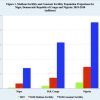
If Fertility Rates Remain Constant
What if current fertility rates of countries remain constant for the rest of the 21st century? Under this assumption, the populations of high fertility countries skyrocket while those of most low fertility countries plummet and world population nearly triples in size by the century’s close.
Extreme Floods, the Key to Climate Change Adaptation in Africa’s Drylands
Extreme rainfall and heavy flooding, often amplified by climate change, causes devastation among communities. But new research published on Aug. 7 in the scientific journal Nature reveals that these dangerous events are extremely significant in recharging groundwater aquifers in drylands across sub-Saharan Africa, making them important for climate change adaptation.
Saudi Arabia Easing Male Guardianship: But More is Needed
It comes as welcome news that authorities in Saudi Arabia have taken important steps towards dismantling the repressive male guardianship system, which treats women in the country as minors.
Tackling Inequality: A Focus on Cities can Improve Upward Economic Mobility
Tackling inequality in the 21st century requires us to understand and address barriers to upward mobility that segments of people face within countries. In a world with high and increasing levels of urbanization, the conversation on challenges to mobility must start with cities.
Using Renewable Energy and the Circular Economy to Fight Poverty in Argentina
On the outer edges of Buenos Aires proper, where the paved streets end and the narrow alleyways of one of Argentina’s largest shantytowns begin, visitors can find the En Haccore soup kitchen.
Women, Power, & Changing Face of Political Representation in Latin America & the Caribbean
Gender inequality is about power asymmetries. In the late 1970s, Robert Putnam reflected on the status of women in policy decisions in his comparative study on political elites. Quoting Elizabeth Vallance, he concluded that, “where power is, women aren’t.”.« Previous Page — Next Page »


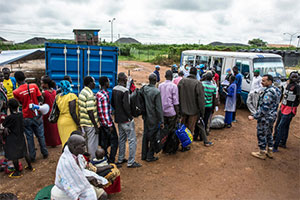 One Thousand Internally Displaced Persons (IDPs) Relocated from Tomping Camp in South Sudan. Credit: UN Photo/Isaac Billy
It took hundreds of thousands of years for the world’s human population to cross one billion in 1804. Approximately 200 years later, the population has multiplied sevenfold. In 2023, the global population crossed 8 billion, and is expected to reach 9 billion before 2050. With the planet more crowded than ever, it is essential to keep track of population trends, urbanization, migration, and reproduction across the world.
Life expectancy has seen significant strides in the past century, largely due to economic development and increased standards of living. On the contrary, trends in global fertility are shifting, with certain regions in Africa and Asia reporting higher rates, while parts of Europe and North America report stagnant or lower rates. This is in part due to differences in sexual and reproductive healthcare, as well as societal and economic conditions around the world. For example, child marriage is prevalent in certain societies, where childbearing is also considered a familial duty. Meanwhile, stagnating economies frequently experience lower marriage and childbearing rates.
The increase in migration and urban development around the world is also linked to global population trends. By 2050, it is expected that approximately 66 percent of all people will live in cities. Furthermore, global crises such as warfare and natural disasters also prompt transnational migration. Transnational migration is linked to a variety of socioeconomic issues in both host and receiving countries: migrants often leave developing countries with less access to educational and economic opportunities and arrive in developed countries where they are frequently the targets of ethnic, racial, and cultural discrimination, and economic exploitation. Recent crises in Europe and the United States demonstrate the importance of advocating for migrants worldwide. As migrants from the Global South are increasingly stripped of their legal and civic rights in unlawful deportations, or targeted in acts of identity-based violence, it is essential to keep track of population trends and protect the human rights of migrant populations. Climate-related disasters are now a major driver of displacement, with nearly half of all new internal displacements in 2025 being disaster-related.
IPS is devoted to covering issues surrounding population trends, migration, and reproduction through its compelling articles, which use both statistics and human stories to provide readers with robust and informative viewpoints.

The Week with IPS

NEXT STOP - SDGs
Tracking global progress towards a sustainable world
Tracking global progress towards a sustainable world
