Languages
Friday, November 6, 2026



News and Views from the Global South
Population

Opinion: From Inequality to Inclusion
Recent years have seen a remarkable resurgence of interest in economic inequality, thanks primarily to growing recognition of some of its economic, social, cultural and political consequences in the wake of Western economic stagnation.
Rich Gulf Nations Tight-Lipped on Growing Refugee Crisis
As Western and Central European nations seem overwhelmed by the growing refugee crisis – triggered mostly by the inflow of hundreds and thousands of displaced people largely from Syria, Libya, Afghanistan and Iraq – one lingering question remains unanswered: why aren’t some of the rich Arab Gulf nations reaching out to help these hapless refugees?
Opinion: Women’s Major Role in Culture of Peace – Part Two
Another reality that emerges very distinctly in culture of peace is that we should never forget when women – half of world’s seven billion plus people - are marginalised and their equality is not established in all spheres of human activity, there is no chance for our world to get sustainable peace in the real sense.
Women Revolutionise Waste Management on Nicaraguan Island
A group of poor women from Ometepe, a beautiful tropical island in the centre of Lake Nicaragua, decided to dedicate themselves to recycling garbage as part of an initiative that did not bring the hoped-for economic results but inspired the entire community to keep this biosphere reserve clean.
Q&A: “We Must Put Everything Aside and Just Focus on Water”
Globally, more than 748 million people do not have access to safe drinking water. That is more than double the population of the entire United States.
European Residents Offer Support, Homes to Refugees
As the migration crisis in Europe continues to grow and government response remains slow, European citizens have taken it upon themselves to act by opening up their homes to those in need.
Europe Invaded Mostly by “Regime Change” Refugees
The military conflicts and political instability driving hundreds of thousands of refugees into Europe were triggered largely by U.S. and Western military interventions for regime change – specifically in Iraq, Afghanistan, Libya and Syria (a regime change in-the-making).
Sustainable Settlements to Combat Urban Slums in Africa
Slums are a curse and blessing in fast urbanising Africa. They have challenged Africa's progress towards better living and working spaces but they also provide shelter for the swelling populations seeking a life in cities.
Two Indigenous Solar Engineers Changed Their Village in Chile
Liliana and Luisa Terán, two indigenous women from northern Chile who travelled to India for training in installing solar panels, have not only changed their own future but that of Caspana, their remote village nestled in a stunning valley in the Atacama desert.Killing of Aid Workers Threatens Humanitarian Response in Yemen
With 21 million Yemeni civilians caught in the grips of a conflict that has been escalating since March, the killing of two local aid workers Wednesday could worsen their misery, as a major humanitarian organisation considers the future of its operations in parts of the war-torn country.
CORRECTION/Who Will Pay the Price for Australia’s Climate Change Policies?
Rowan Foley has spent many years as a ranger and park manager, caring for Uluru–Kata Tjuta National Park Aboriginal lands in the spiritual heart of Australia’s Red Centre in the Northern Territory. He has been observing the effects of soaring temperatures and extreme weather events on his people, residing in some of the hottest regions of the country.
Latin American Scientists Call for More Human Climate Science
With the effects of global warming becoming more and more visible and the complicated socio-economic decisions indispensable to address this planetary crisis, science needs a new breed of experts: social scientists who specialise in climate change.
Will New Sri Lankan Government Prioritize Resettlement of War-Displaced?
The new Sri Lankan government that was voted in on Aug. 17 certainly didn’t inherit as much baggage as its predecessors did during the nearly 30 years of conflict that gripped this South Asian island nation.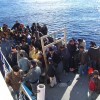
Europe Squabbles While Refugees Die
As tens of thousands of refugees continue to flee conflict-ridden countries, including Afghanistan, Iraq, Libya and Syria, Western European governments and international humanitarian organisations are struggling to cope with a snowballing humanitarian crisis threatening to explode.
Water, Climate, Energy Intertwined with Fight Against Poverty in Central America
Central America’s toolbox to pull 23 million people – almost half of the population – out of poverty must include three indispensable tools: universal access to water, a sustainable power supply, and adaptation to climate change.
Deliberate Targeting of Water Sources Worsens Misery for Millions of Syrians
Imagine having to venture out into a conflict zone in search of water because rebel groups and government forces have targeted the pipelines. Imagine walking miles in the blazing summer heat, then waiting hours at a public tap to fill up your containers. Now imagine realizing the jugs are too heavy to carry back home.
U.N. Chief Warns of Growing Humanitarian Crisis in Northeastern Nigeria
With over 1.5 million displaced, 800,000 of whom are children, and continuously escalating violence in northeastern Nigeria, United Nations Secretary-General Ban Ki-moon described the humanitarian situation as “particularly worrying” during a visit to the country.
Majority of Child Casualties in Yemen Caused by Saudi-Led Airstrikes
Of the 402 children killed in Yemen since the escalation of hostilities in March 2015, 73 percent were victims of Saudi coalition-led airstrikes, a United Nations official said Monday.
Alternative Destinations Emerge as Cuba Gets Ready for Tourism Boom
Along the road to the Viñales valley, travelled by thousands of tourists to Cuba, lies the home of self-taught artist Miguel Antonio Remedios, which he has turned into a sort of museum to show visitors a wooden home typical of this mountainous area in the west of the country.
U.N. Aid Agencies Launch Emergency Hotline for Displaced Iraqis
In the hopes of better responding to the needs of over three million displaced Iraqis, United Nations aid agencies today launched a national hotline to provide information on emergency humanitarian services like food distribution, healthcare and shelter.
UAE Wins Hearts and Minds at World Exhibition in Milan
She only turned nine last June. But Mahra Mustafa has become a celebrity at the Expo Milan. She stars as Sara in ‘The Family Tree’, a short film on the UAE’s heritage being screened at the United Arab Emirates pavilion. Sara is in fact the face of young, dynamic and innovative Emirates.« Previous Page — Next Page »





 One Thousand Internally Displaced Persons (IDPs) Relocated from Tomping Camp in South Sudan. Credit: UN Photo/Isaac Billy
It took hundreds of thousands of years for the world’s human population to cross one billion in 1804. Approximately 200 years later, the population has multiplied sevenfold. In 2023, the global population crossed 8 billion, and is expected to reach 9 billion before 2050. With the planet more crowded than ever, it is essential to keep track of population trends, urbanization, migration, and reproduction across the world.
Life expectancy has seen significant strides in the past century, largely due to economic development and increased standards of living. On the contrary, trends in global fertility are shifting, with certain regions in Africa and Asia reporting higher rates, while parts of Europe and North America report stagnant or lower rates. This is in part due to differences in sexual and reproductive healthcare, as well as societal and economic conditions around the world. For example, child marriage is prevalent in certain societies, where childbearing is also considered a familial duty. Meanwhile, stagnating economies frequently experience lower marriage and childbearing rates.
The increase in migration and urban development around the world is also linked to global population trends. By 2050, it is expected that approximately 66 percent of all people will live in cities. Furthermore, global crises such as warfare and natural disasters also prompt transnational migration. Transnational migration is linked to a variety of socioeconomic issues in both host and receiving countries: migrants often leave developing countries with less access to educational and economic opportunities and arrive in developed countries where they are frequently the targets of ethnic, racial, and cultural discrimination, and economic exploitation. Recent crises in Europe and the United States demonstrate the importance of advocating for migrants worldwide. As migrants from the Global South are increasingly stripped of their legal and civic rights in unlawful deportations, or targeted in acts of identity-based violence, it is essential to keep track of population trends and protect the human rights of migrant populations. Climate-related disasters are now a major driver of displacement, with nearly half of all new internal displacements in 2025 being disaster-related.
IPS is devoted to covering issues surrounding population trends, migration, and reproduction through its compelling articles, which use both statistics and human stories to provide readers with robust and informative viewpoints.

The Week with IPS

NEXT STOP - SDGs
Tracking global progress towards a sustainable world
Tracking global progress towards a sustainable world
