Languages
Monday, November 9, 2026



News and Views from the Global South
Poverty & SDGs

320 Million Children in Single-Parent Families
Of the world’s 2.3 billion children 14 percent - or 320 million - are living in single-parent households, most often headed by single mothers. Those children aged 0 to 17 years and their single mothers and single fathers face special challenges, including economic hardships, social stigma and personal difficulties, that require society’s attention and assistance.
Why farmers respond differently to higher food prices?
Higher food prices are supposed to induce farmers to increase production for sale. In reality, however, their supply responsiveness is influenced by many factors, including their ability to respond to price changes.
Q&A: We Won’t Go Far Until Climate Issues Are Mainstreamed in Policy
Two years ago at the 31st African Union Summit in Malabo, Equatorial Guinea, heads of state and government endorsed the New Partnership for Africa's Development (NEPAD) programme on agriculture and climate change with the bold vision of at least 25 million smallholder households practicing Climate Smart Agriculture (CSA) by 2025.
Cultivating a Different Future for Rural Women in Argentina
Her seven children have grown up, but she now takes care of a young grandson while working in her organic vegetable garden in El Pato, south of the city of Buenos Aires. Olga Campos wants for them what she wasn’t able to achieve: an education to forge a different future.
Hit by Extreme Weather, South Asia Balances Growth and Food Security
Sri Lanka is literally baking these days.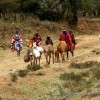
What Happens When a Small Farmer Migrates?
Now that world attention is focused on the fast growing process of urbanisation, with 2 in 3 people estimated to be living in towns and cities by the year 2030, an old “equation” jumps rapidly to mind: each time a small farmer migrates to an urban area, equals to one food producer less, and one food consumer more.
Climate Change Adaptation – Key to Reaching Zero Hunger in Latin America
Climate change is leading to major modifications in agricultural production in Latin America and the Caribbean, and if mitigation and adaptation measures of the productive system are not urgently adopted, threats to food security will be exacerbated.
The Beating Pulse of Food Security in Africa
Elizabeth Mpofu is a fighter. She is one of a select group of farmers who equate food security with the war against hunger and shun poor agricultural practices which destroy the environment and impoverish farmers, especially women.
$90tn Infrastructure Investment Could Combat Climate Change: Report
The world will need to more than double its current infrastructure stock over the next 15 years - a massive undertaking which could either contribute to or combat catastrophic climate change - according to a new report.
Resisting the Dakota Access Pipeline: “This Is Not The End”
Resistance towards the controversial Dakota Access pipeline continues after a federal court rejected requests to halt construction on Monday.
Few Families Overcome Forced Displacement by Hydropower Plants in Brazil
The construction of mega-hydropower plants in Brazil has been a tragedy for thousands of families that have been displaced, and a nightmare for the companies that have to relocate them as required by local law.
Life Goes On, Barely, After 50 Years of Occupation
Over almost five decades of Israeli occupation, the number of Palestinian refugees has grown with every generation, saturating basic services in the 19 camps that are home to about 200,000 people in the West Bank run by the United Nations.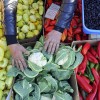
Low Food Prices: Good for Your Pocket, Bad for Small Farmers
What would be your reaction if you were told that food prices are steadily declining worldwide? Good, very good news, you may say. But do the 600 million small, family farmers, those who produce up to 80 per cent of food in some regions, think the same way? Definitely not at all.
Gang Violence Drives Internal Displacement in El Salvador
A basketball court in this small town in western El Salvador was turned overnight into a shelter for some two dozen families forced to flee their homes after a recent escalation of gang violence.
Developing Countries Share Sustainable Development Philosophies
Countries of the Global South, also known as developing countries, share many principles in common when it comes to implementing the UN’s Sustainable Development Goals.
Coffee Producers in Costa Rica Use Science to Tackle Climate Change
“Our coffee production per hectare has dropped due to early ripening of the fruit and diseases,” Maritza Cal[related_articles][related_articles] coffee farmer in the mountains in southern Costa Rica, told IPS.
Wage and Fiscal Policies for Economic Recovery
The new US census data released in late September show that 3.5 million people in the US climbed out of poverty, as the tepid economic recovery continues. Employers are finally creating more jobs and paying higher wages than seven years after the Great Recession started following the 2008 financial crisis.
Closing the Broadband Divide to Connect People in Asia and the Pacific
Advances in Information and Communication Technology (ICT) have been instrumental in shaping and leading socioeconomic transformations across Asia and the Pacific. One key to this transformation is the technology bundled around the “Internet of Things” (IoT), which enables billions of devices and appliances to connect over the Internet for more accurate, real time data collection and analysis in an unparalleled scale. For instance, through Internet-connected sensors attached to equipment, facilities and infrastructure, early-on maintenance alarms can be raised for potential problems, such as defects or wear and tear, thereby potentially saving the lives of those using them. Another example is devices on farms that remotely monitor soil conditions, weather and pesticide use for more rapid and better-informed decision making.
Amid South Africa’s Drought, Proposed Mine Raises Fears of Wetlands Impact
The dam supplying Johannesburg’s water sits less than 30 percent full. Water restrictions have been in place since November and taxes on high water use since August. Food prices across South Africa have risen about 10 percent from last year, in large part due to water shortages.
‘The Earth Is Not Flat; It Is Urban’
When the United Nations elaborated its latest report on the impact of what it calls “the dramatic shift towards urban life,” it tried to draw a balanced portrait of both the opportunities and the challenges of the fact that 1 in 2 world inhabitant already lives in urban areas and what this implies.
Making Policy out of Scientific Bricks, not Straw
Given the enormity of the challenges confronting humanity, the world’s investment in science, technology and innovation is woefully inadequate.« Previous Page — Next Page »





 Romani people in Cairo, Egypt, forage through trash. Credit: UN Photo/Armineh Johannes
In 2015, the United Nations adopted the Sustainable Development Goals (SDGs) in an effort to promote “peace and prosperity for people and the planet.” To achieve that goal, it is essential to provide equal opportunities and access to basic services to all people. The 2025 UN SDG Report found that 35% of the 169 SDG targets are on track or making moderate progress, while 18% have reversed compared to the 2025 baseline. One in ten people still live in extreme poverty, one in eleven experience food insecurity, and over 1.1 billion people live in slums without access to clean water and sanitation. It is imperative to acknowledge the societal, technological, economic, and political issues that sustain poverty in countries around the world. Eradicating poverty will require significant frameworks in policy and governance on a national and international scale to ensure that all people will have equal access to basic services and economic opportunities by 2030. Furthermore, a dramatic reduction of United States foreign aid in 2025, including the termination of 83% of USAID programmes, threatens to erode years of fragile development gains.
Throughout the world, violent conflict and natural disasters also contribute to extreme poverty. The complete destruction of infrastructure and blockage of aid has significantly impoverished Palestine since October 7th. The destructive impact of Hurricane Maria in Puerto Rico left $91 billion in damage. An inadequate US government response also revealed significant and enduring questions within the issue of mitigating poverty: how do we rebuild infrastructure after its destruction? How do we restimulate economic development and bring in financial aid after disasters? Similar questions have been raised in the realm of regional cooperation, as devastating floods have wrecked hundreds of thousands of homes across multiple Southeast Asian nations in the past few years. Furthermore, the COVID-19 pandemic has greatly exacerbated the global poverty crisis, particularly in developing countries, setting back the United Nations goal of eradicating poverty by 2030.
IPS is committed to providing comprehensive features that focus on the persisting environmental, sociopolitical, and systemic issues that sustain poverty, and the steps taken worldwide towards poverty eradication.

The Week with IPS

NEXT STOP - SDGs
Tracking global progress towards a sustainable world
Tracking global progress towards a sustainable world

