Languages
Monday, September 28, 2026



News and Views from the Global South
Green Economy

Asia-Pacific Region Aims at Hunger-Free Goal by 2030
The Asia Pacific region - home to two of the world's most populous countries - faces major food security challenges. According to the Asian Development Bank (ADB), both China and India are not only two of the world's biggest producers of food but also the world's biggest consumers.
The Idiocy of Things Requires an “Information Habeas Corpus”!
Today we are saturated with media hype about the joys of information and communication technology (ICT). We will all be connected, all the time, by the Idiocy of Things (IoT )devices and our social media, all converging in the cloud. Our lives will be monitored by smart sensors in homes with smart refrigerators, toasters, TVs, doorbells, alarm systems, garages, cars and electricity meters. We are bombarded with ads showing us how all these smart devices will improve our lives and health, bringing ever greater convenience. Driverless cars will be safer, allowing us to read, monitor our kids or enjoy the scenery. All this ICT and automation is already a multi-billion dollar industry and its producers are salivating over its growth and profits. Individual privacy rights and security concerns seem to be an afterthought.
Achieving Universal Access to Energy; Africa Caught Between a Rock and a Hard Place
“It is unacceptable that 138 years after Thomas Edison developed the light bulb, hundreds of millions of people cannot have access to electricity to simply light up the bulb in Africa,” says Africa Development Bank (AfDB) Group President, Akinwumi Adesina, mourning the gloomy statistics showing that over 645 million people in Africa lack access to electricity, while over 700 million are without clean energy for cooking.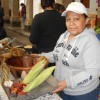
Traditional Mexican Recipes Fight the Good Fight
In a clay pot, Araceli Márquez mixes tiny Mexican freshwater fish known as charales with herbs and a sauce made of chili peppers, green tomatoes and prickly pear cactus fruit, preparing a dish called mixmole.
Natural Capital Investment Key to Africa’s Development
Plugging Africa’s funding gaps to accelerate social and economic development requires a fresh approach to using its natural capital, environment experts said on Monday.
Prickly Pears Drive Local Development in Northern Argentina
Family farmers in the northern Argentine province of Chaco are gaining a new appreciation of the common prickly pear cactus, which is now driving a new kind of local development.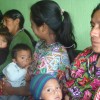
Will Canada Recognise Rights of Indigenous Peoples in Developing Countries Too?
While Canada’s long-awaited support for the UN Declaration on the Rights of Indigenous Peoples brought hope and celebration last week, it's not yet clear whether the rights of Indigenous people in developing countries harmed by Canadian mining companies will also be included.
Making Bangladesh Ready for Renewables
All his life, farmer Nasiruddin saw his poverty ridden village in complete darkness after dusk, with electricity being a distant dream. That changed last year when he installed a solar lantern system.
Justice for Berta Caceres Incomplete Without Land Rights: UN Rapporteur
The murder of Honduran Indigenous woman Berta Caceres is only too familiar to Victoria Tauli-Corpuz, the UN’s Special Rapporteur on the Rights of Indigenous Peoples.
Biomass Could Help Power Africa’s Energy Transition
As fuel, firewood remains the dominant source of energy in Uganda. It has a long history of being unsustainably harvested, leading to severe depletion of the country’s forest cover. But with new technology, biomass is now cleaning up its act.
No Farmers, No Food — True But Not Enough
Agriculture is the primary sector of all economies. It is the sector responsible for granting food and nutrition security to all human beings. Consequently it is responsible for social stability and health. And it provides work opportunities to families, men, women and youth, and largely contributes to the country Gross Domestic Product (GDP).
An Inclusive and Sustainable Approach to Rural Electrification in India: Case of Decentralized Renewable Systems
The Declaration of 2014- 2024 as the ‘Decade of Sustainable Energy for All’ by the United Nations (UN) is a clear manifestation of the importance attached to energy in the process of development. Setting ‘Universal Access to Energy’ as one of the goals of UN’s ‘SE4All’ initiative is reiteration of the fact that access to energy constitutes an essential ingredient in the process of economic development of any country. This underscores the complex and inextricable link that exists between energy and sustainable development.
Farmers Hold Keys to Ending Poverty, Hunger, FAO Says
With recent data showing that 793 million people still go to bed hungry, ending hunger and poverty in 15 years is the next development challenge that world leaders have set for themselves.
The Waves of the Pacific Are on Chile’s Energy Horizon
Chile, a country with 6,435 km of Pacific Ocean coast line, could find in wave and tidal power a solution to its need to diversify its energy mix.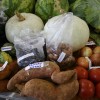
New Generation Aims to Plug Africa’s Research Deficit
The tonnes of uncollected garbage piling up on the streets of her home in Cairo was a brain wave for Sherien Elagroudy.
The Family Garden Going Out of Style in Cuban Countryside
In the past, all rural homes in Cuba had gardens for putting fresh vegetables on the dinner table. The local term for these gardens is “conuco”, a word with indigenous roots that is still used in several Caribbean nations.
G-77 Should Adopt South-South Climate Change Program of Action: Ambassador Djoghlaf
The 134 members of the Group of 77 and China (G-77) made their mark on the Paris Climate Change Agreement and should now adopt a program of action to implement it, Ambassador Ahmed Djoghlaf told IPS in a recent interview.
Mauritian Farmers Go Smart
Fifty year-old Prem Kanoosingh rages against his peers who excessively apply chemicals, mostly pesticides and fertilisers, to their crops. "They make cocktails from several products and they use them on their crops. They are criminals", he shouted at a function where the Food and Agricultural Research and Extension Institute launched a bio-farming project in early March 2016.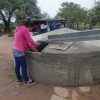
Harvesting Rainwater to Weather Drought in Northeast Argentina
In a semiarid region in the northeast Argentine province of Chaco, small farmers have adopted a simple technique to ensure a steady water supply during times of drought: they harvest the rain and store it in tanks, as part of a climate change adaptation project.
Ecosystem Conservation Gives Hope to a Vulnerable Community
42 year-old Saraswati Subedi still remembers the night she almost died in a flash flood. “I heard the cries of my neighbours and ran out of the room with my two children. There was water all around and I thought we were going to die, so I started to pray,” says the mother of the three in Karki Tahara – a village by the river Harpan Khola in Nepal’s Kaski district.
South-South Cooperation Needed to Tackle Climate Change
As countries came together at the United Nations this week to sign the Paris Climate Change Agreement, partnerships were forged between countries of the global South to support the implementation of the global treaty.« Previous Page — Next Page »


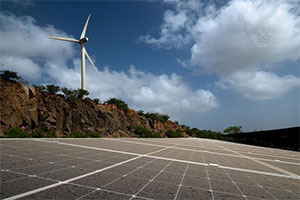 Renewable Energy in Cabo Verde. Credit: UN Photo/Mark Garten
A green economy is an economic model that aims to reduce environmental risks and build a sustainable future. Many of the UN SDGs seek to facilitate a green economy, such as ensuring access to affordable and reliable clean energy, building sustainable cities and communities, and implementing urgent action to combat climate change. Various key negotiations have strived to achieve a green economy, such as the Green New Deal and the Inflation Act of 2022. COP30, held in Belém, Brazil in 2025, agreed to mobilize $1.3 trillion annually for climate action and launched the Belém Mission to 1.5°C. However, the conference was not able to develop a fossil fuel reduction roadmap. Recent years have witnessed a sharp transformation in the geopolitical landscape of international sustainability cooperation. In March 2025, the United States stepped back from formal multilateral support for the SDGs, while China is on the rise as an international leader in renewable energy production. The actions of these global powers may shape shifting alliances on environmental governance. IPS is dedicated to sharing timely news on international developments in building a sustainable future.

The Week with IPS

NEXT STOP - SDGs
Tracking global progress towards a sustainable world
Tracking global progress towards a sustainable world
