Languages
Sunday, November 1, 2026



News and Views from the Global South
Green Economy

Organic Farming Taking Off in Poland … Slowly
Polish farmer Slawek Dobrodziej has probably the world’s strangest triathlon training regime: he swims across the lake at the back of his house, then runs across his some 11 hectares of land to check the state of the crops, and at the end of the day bikes close to 40 kilometres to and back from a nearby town for some shopping.
In Saving a Forest, Kenyans Find a Better Quality of Life
When Mercy Ngaruiya first settled in Kasigau in south eastern Kenya a decade ago, she found a depleted forest that was the result of years of tree felling and bush clearing.
A Life Reserve for Sustainable Development in Chile’s Patagonia
The people of Patagonia in southern Chile are working to make the Aysén region a “life reserve”. Neighbouring Argentina, across the border, is a historic ally in this remote wilderness area which is struggling to achieve sustainable development and boost growth by making use of its natural assets.
Island States to Rally Donors at Samoa Meet
Amid accelerating climate change and other challenges, a major international conference in the South Pacific island nation of Samoa next month represents a key chance for Small Island Developing States (SIDS) in the Caribbean to turn the tide.
Eco-Friendly Agriculture Puts Down Roots in Spain
José María Gómez squats and pulls up a bunch of carrots from the soil as well as a few leeks. This farmer from southern Spain believes organic farming is more than just not using pesticides and other chemicals – it’s a way of life, he says, which requires creativity and respect for nature.
Chile’s Patagonia Seeks Small-Scale Energy Autonomy
The southern region of Aysén in Chile’s Patagonian wilderness has the highest energy costs in the entire country. And the regional capital, Coyhaique, is the most polluted city in the nation, even though it has huge potential for hydroelectricity and wind power.
Swamped by Rising Seas, Small Islands Seek a Lifeline
The world's 52 small island developing states (SIDS), some in danger of being wiped off the face of the earth because of sea-level rise triggered by climate change, will be the focus of an international conference in the South Pacific island nation of Samoa next month.
Bringing “Smart” Building Technology to Jamaica’s Shantytowns
Buildings are among the largest consumers of earth’s natural resources. According to the Sustainable Buildings and Climate Initiative, they use about 40 percent of global energy and 25 percent of global water, while emitting about a third of greenhouse gas emissions.World Bank Board Declines to Revise Controversial Draft Policies
A key committee of the World Bank’s governing board Wednesday spurned appeals to revise a draft policy statement that, according to nearly 100 civil-society groups, risks rolling back several decades of reforms designed to protect indigenous populations, the poor and sensitive ecosystems.
Gas and Sun Light the Way for Energy Industry in El Salvador
El Salvador is making steady progress towards diversifying its energy sources, with a plan to bolster the use of cleaner sources and achieve a substantial change in its energy mix by 2018.
Antigua Weighs High Cost of Fossil Fuels
Caught between its quest to grow the economy, create jobs and cut electricity costs, and the negative impacts associated with building an oil refinery, the Antigua and Barbuda government is looking to a mix of clean energy and fossil fuels to address its energy needs.
A Carrot Is a Carrot – or Is It?
Food security is often thought of as a question of diversifying supply and being able to move food through areas plagued by local scarcity, relying on the global economic system – including trade and transport – as the basis for operations.
Forest Rights Offer Major Opportunity to Counter Climate Change
The international community is failing to take advantage of a potent opportunity to counter climate change by strengthening local land tenure rights and laws worldwide, new data suggests.
U.S. Debating “Historic” Support for Off-Grid Electricity in Africa
Pressure is building here for lawmakers to pass a bill that would funnel billions of dollars of U.S. investment into strengthening Africa’s electricity production and distribution capabilities, and could offer broad new support for off-grid opportunities.
U.S. Ranks Near Bottom Globally in Energy Efficiency
A new ranking has lauded Germany for its energy efficiency, while condemning the United States for lagging near the bottom.Do Not GM My Food!
Attempts to genetically modify food staples, such as crops and cattle, to increase their nutritional value and overall performance have prompted world-wide criticism by environmental, nutritionists and agriculture experts, who say that protecting and fomenting biodiversity is a far better solution to hunger and malnutrition.
OPINION: Why Asia-Europe Relations Matter in the 21st Century
Hopes are high that the 10th Asia-Europe Meeting – or ASEM summit – to be held in Milan on October 16-17 will confirm the credibility and relevance of Asia-Europe relations in the 21st century.
Major Companies Push for More, Easier Renewable Energy
Some of the largest companies in the United States have banded together to call for a substantial increase in the production of renewable electricity, as well as for more simplicity in purchasing large blocs of green energy.
OPINION: The Caribbean: A Clean Energy Revolution on the Front Lines of Climate Change
Lefties Food Stall, a pint-sized eatery serving Barbados’ signature flying-fish sandwiches, recently became the first snack shack on the Caribbean island to be fitted with a solar panel.
Scepticism as “Green Goods” Trade Talks Begin
Formal negotiations began this week around the increasingly significant global trade in “environmental goods”, those technologies seen as environmentally beneficial, including in combating climate change.
At the Crucial Nexus of Water and Energy
Global institutions are still in the learning phase when it comes to successfully managing water and energy in an integrated manner as part of the quest for sustainable development.« Previous Page — Next Page »





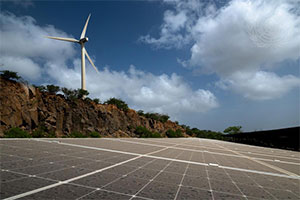 Renewable Energy in Cabo Verde. Credit: UN Photo/Mark Garten
A green economy is an economic model that aims to reduce environmental risks and build a sustainable future. Many of the UN SDGs seek to facilitate a green economy, such as ensuring access to affordable and reliable clean energy, building sustainable cities and communities, and implementing urgent action to combat climate change. Various key negotiations have strived to achieve a green economy, such as the Green New Deal and the Inflation Act of 2022. COP30, held in Belém, Brazil in 2025, agreed to mobilize $1.3 trillion annually for climate action and launched the Belém Mission to 1.5°C. However, the conference was not able to develop a fossil fuel reduction roadmap. Recent years have witnessed a sharp transformation in the geopolitical landscape of international sustainability cooperation. In March 2025, the United States stepped back from formal multilateral support for the SDGs, while China is on the rise as an international leader in renewable energy production. The actions of these global powers may shape shifting alliances on environmental governance. IPS is dedicated to sharing timely news on international developments in building a sustainable future.

The Week with IPS

NEXT STOP - SDGs
Tracking global progress towards a sustainable world
Tracking global progress towards a sustainable world
