Languages
Saturday, July 25, 2026



News and Views from the Global South
Green Economy

Germany’s New Energy Revolution Still Moving Ahead
Germany has now become the world’s first modern renewable energy economy, according to the experts. The Federal Republic of Germany already obtains 29 percent of its electricity from renewable sources, meaning photovoltaic, hydro and wind power, and power produced by burning wood or other biomass.
Mauritian Sugar Farmers Squeezed by Low Prices as Bagasse and Ethanol Become Popular By-products
While Mauritius has been forced to transform its sugar industry because of low prices for the commodity, the country’s small-scale sugarcane farmers who contribute to it say they are barely earning a living.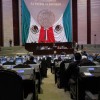
Latin America’s Forests Need Laws – and Much More
Latin America’s parliaments have failed to protect the forests and to guarantee their sustainable use, despite the fact that a number of countries have laws on forests, legislators from the region said at a global summit in the Mexican capital.
When Nature Gets a Price Tag
How much does a forest cost? What’s the true economic value of an ocean? Can you pay for an alpine forest or a glacial meadow? And – more importantly – will such calculus save the planet, or subordinate a rapidly collapsing natural world to market forces?
Nature Is Talking And Africa’s Legislators Are Listening
Africa's climate change legislative frameworks, though a step in the right direction, have come under fire for not being ambitious enough to meet the challenge of a changing climate.

Small Islands, Beacons for the Rest of the World
Facing potential extinction under rising sea levels, many small island nations are embracing renewable energy and trying to green their economies. Although the least responsible for carbon emissions, small countries like Barbados are on the front lines of climate impacts.
Indian Legislators Wake Up to Climate Change
Ramanjareyulu, a 55-year-old farmer from the southern India state of Andhra Pradesh, has been struggling to find his feet ever since inadequate rainfall dealt a blow to his harvest of groundnut and red gram (a pulse crop that grows primarily in India).
Carbon Neutral Tourism Falters in Tobago
An initiative to reduce the carbon footprint of Tobago’s tourism sector may be stymied by “bread-and-butter issues” and the failure of government authorities to vigorously pursue the initiative.
Triple Summit in Singapore Puts Urban Planning on the Map
With over 20,000 international participants, a triple summit wrapping up today in Singapore is generating an abundance of ideas on sustainable cities.
Kenya’s Climate Change Legislation Takes Shape To Save Struggling Farmers
Daniel Njau, a small-scale farmer from Nyeri County, central Kenya, is torn. He just may have to give up his six-hectare tea plantation in favour of farming climate-resilient food crops.
World Applauds Ambitious U.S. Carbon Cuts
New efforts by the U.S. to reduce its carbon emissions are being welcomed around the world. On Monday the U.S. Environmental Protection Agency (EPA) announced a plan to cut carbon emissions from power plants 25 percent from 2005 levels by 2020.
Legislation Alone Will Not Address Africa’s Climate Challenges
Despite a raft of legislation dealing with the environment, African countries are still falling short when it comes to enforcing the legal instruments that respond to challenges posed by climate change, researchers say.
Climate Legislation Up Against ‘Abenomics’ in Japan
Undaunted by Japan’s national consensus to boost the economy, which has been mired in lackluster growth for decades, environmentalists are taking baby steps towards incorporating climate change into national legislation.
Small Farmers’ Loss of Land Increases World Hunger
The world is increasingly hungry because small farmers are losing access to farmland. Small farmers produce most of the world’s food but are now squeezed onto less than 25 percent of the world’s farmland, a new report reveals. Corporate and commercial farms, big biofuel operations and land speculators are pushing millions off their land.
Offsets to Cushion South African Carbon Tax
To curb greenhouse gas emissions, South Africa wants to put a tax on carbon emissions from big polluters.
Peaceful Transitions From The Nuclear To The Solar Age
Japanese Buddhist and president of Soka Gakkai International (SGI) Daisaku Ikeda’s Peace Proposal 2014 elevated my focus from the daily news to my longer term concerns for more peaceful, equitable and sustainable human societies to assure our common future. These broader concerns are now shared by millions of humans who have transcended purely personal, local and nationalistic goals and become prototypical global citizens.
Hemp Defies Hurdles to Make a Comeback in Spain
Spain is experiencing a resurgence of hemp, one of the species of cannabis with the lowest THC content, which has been used for millennia to produce textile, medicinal and food products.
Permaculture Poised to Conquer the Caribbean
Erle Rahaman-Noronha is not a revolutionary, not in any radical sense at least. He is not even that exciting. In truth, Rahaman-Noronha is merely a man with a shovel, a small farm, and a big dream. But that dream is poised to conquer the Caribbean.
Caribbean Forced to Choose Between Climate Change Impact and MDGs
Climate change is forcing the nine-member Organisation of Eastern Caribbean States (OECS) to choose between expending scarce resources to deal with its impact or other pressing development goals.
Agroecology Movement Addresses Challenges of Food Security
Agriculture in this Caribbean island is going through its worst moment. Whereas this sector accounted for 71 percent of its gross domestic product in 1914, now it amounts to no more than one percent.« Previous Page — Next Page »


The Week with IPS

NEXT STOP - SDGs
Tracking global progress towards a sustainable world
Tracking global progress towards a sustainable world
