Languages
Saturday, July 25, 2026



News and Views from the Global South
Green Economy

Lagging Urban Transport Works Hinder World Cup Sustainability
Brazil’s efforts to promote the image of an environmentally sustainable World Cup have focused on the stadiums built for the tournament. But the 12 cities where the matches will be played are in a race against time to complete the urban transport projects.
Saving West Africa’s Last Intact Tropical Rainforest through Tourism
Jonas Sanhin Touan has big dreams. As he sits under a canopy, he greets the rare tourist to Gouleako, one of the many villages near the entrance of Côte d’Ivoire’s Taï National Park, with a meal.
Mexico’s Climate Laws Ignore Women
The rural communities of San Miguel and Santo Tomás Ajusco, to the south of Mexico City, are preserving 3,000 of their 7,619 hectares of forest in exchange for payment for environmental services. But the inequality in the communities is far from ecological.
Community Electricity Lights Up Spain
Until recently it was inconceivable for small groups of organised citizens in fully electrified industrialised countries like Spain to generate their own power from clean sources of energy, challenging the prevailing energy model.
Myanmar Wakes Up to Climate Change
Between 2008 and 2013, when Myanmar remained largely closed off to the rest of the world, it suffered a terrible toll at the hands of nature that remained largely unknown.
Petrotrin Aims to Shrink Its Carbon Footprint
Trinidad and Tobago holds the dubious distinction of being among the top 10 emitters of carbon dioxide per capita in the world, much of it due to the petrochemical industry that is the main driver of its economy.
Energy Efficiency Is an Untapped Goldmine
The U.S. could create more than 600,000 skilled jobs, cut air pollution and fight climate change while its citizens reap 17 billion dollars in energy savings by doing one simple thing: Boost energy efficiency.
Capitalism Unable to Deal with Climate Change
It is time to craft new politics and economic policies to address the sustainability crisis, according to the latest edition of a flagship report by the Worldwatch Institute, a think tank here.
Finding the Needle in the Post-2015 Haystack
How will the U.N. prioritise the goals of its Post-2015 Development Agenda? Which goals deserve more funding? And which goals will help the most people? These are the questions that the Copenhagen Consensus Centre (CCC) seeks to answer.
Governments Crushing Their Own
The global spectre of state violence against political dissent, with paramilitary law enforcement units advancing against citizens they are employed to protect in cities such as Cairo, Bangkok and Kiev is daily news. But in some developing countries, the police are being used to put down indigenous opposition to the alliance of state and corporate power over resource extraction.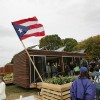
Debt and Dirty Energy Weigh Heavy on Puerto Rico’s Utility
Everyone in Puerto Rico agrees that the island's ailing Electric Power Authority (PREPA) is badly in need of an overhaul, both in engineering and economic terms.
The Opportunity of a Plastic Bag
The European Union was founded to create conditions for a lasting peace on the old continent, establishing an internal market, integrating agriculture and industry. As new generations emerge that have never experienced war or terrorism in Europe, the concept of quality of life increasingly dominates the debate. Will Europe offer its citizens the future all aspire to?
Charting a Course for Survival, or Oblivion?
Hopefully, on Earth Day today, high-level ministers from all countries are thinking about what they can bring to the table at a key set of meetings on climate change in early May.
Mexico’s Climate Change Law – More Than Just Empty Words?
When Mexico’s climate change law went into effect in October 2012, it drew international praise. But what has happened since then?
Poland Uses Ukraine to Push Coal
A European ‘energy union’ plan proposed by Polish Prime Minister Donald Tusk as an EU response to the crisis in Ukraine could be a Trojan horse for fossil fuels.
Saving Caribbean Tourism from the Sea
 Faced with the prospect of losing miles of beautiful white beaches – and the millions in tourist dollars that come with them - from erosion driven by climate change, Barbados is taking steps to protect its coastline as a matter of economic survival.
IPCC Climate Report Calls for “Major Institutional Change”
Greenhouse gas emissions rose more quickly between 2000 and 2010 than anytime during the previous three decades, the world’s top climate scientists say, despite a simultaneous strengthening of national legislation around the world aimed at reducing these emissions.
OP-ED: The World Bank’s Waste of Energy
The World Bank’s job is to fight poverty. Key to lifting people out of poverty is access to reliable modern energy. It makes sense.
As Planet Warms, Clean Energy Investments Take a Dive
Policy uncertainty and plummeting solar prices led to a 14-percent decrease in investment in renewable energy in 2013, according to a report released Monday.
Going Green Without Sinking into the Red
Most Caribbean countries are famous for their sun, sand and warm sea breezes. Far fewer are known for their wide use of solar, wind and other forms of renewable energy.
Hard-Hit CDM Carbon Market Seeks New Buyers
Since they first emerged as a result of the 1997 Kyoto Protocol, carbon offset markets have been a key part of international emissions reductions agreements, allowing rich countries in the North to invest in “emissions-saving projects” in the South while they continue to emit CO2.« Previous Page — Next Page »


The Week with IPS

NEXT STOP - SDGs
Tracking global progress towards a sustainable world
Tracking global progress towards a sustainable world
