Languages
Friday, July 31, 2026



News and Views from the Global South
Green Economy

For an Ailing Planet, the Cure Already Exists
The planet's climate recently reached a new milestone of 400 parts per million (ppm) of carbon dioxide in the Arctic.
Rio+20 – a Call to Responsibility, a Call to Action
We are all going through a period of great confusion and uncertainty.
Time for a More Sustainable Global Food System
It is vitally important that governments and civil society organisations start transitioning to a more sustainable global food system in order to achieve lasting development.
Cultivating Food Security in Their Own Backyards
Misradi, a 58-year-old farmer from the Jelok neighborhood in Pacitan, East Java, some 524 kilometres east of Jakarta, has found a way to reduce his monthly expenses by 30 percent: instead of buying produce from the local market, he and his family now harvest most of their vegetables from their own yard.
Biomass Plantations Can Power India
Valli, 50, and Sarasu, 60, have been working with Energy Plantation Projects India (EPPI) since inception in 2007, the income they earn forming an integral part of their household budgets. "We easily manage household work and a salary-paying job," they tell IPS.
A Future With Food, or No Future At All
The upcoming Rio+20 Conference on Sustainable Development will not succeed if the crises of hunger and malnutrition are not effectively addressed. The issues are so inextricably linked with sustainable development that they have to be part of the agenda, according to a report released Wednesday by the United Nations Food and Agricultural Organisation (FAO) for the upcoming Earth Summit that will take place in Rio de Janeiro from Jun. 20-22.
Climate Change and Family Planning – Twin Issues for LDCs
The reproductive rights agenda, from improving women’s access to education to systematic family planning to reducing birth rates and combating poverty, has become a cornerstone of most industrialised nations’ development policies toward the least developed countries (LDCs), comprised primarily of sub-Saharan African states.
Q&A: North-South Divide Looms Heavily Over Rio+20 Summit
The 1992 Earth Summit in Rio de Janeiro was to a large extent derailed by a North-South divide: a battle between a coalition of rich industrial nations versus the world's developing countries led by the Group of 77.
Rio+20 is Everyone’s Conference
The United Nations Conference on Sustainable Development, otherwise known as Rio+20, is a once-in-a-generation opportunity.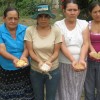
Rural Women in Peru Key to Adaptation of Seeds to Climate Change
For ages, rural women in the Peruvian highlands have been selecting and storing seeds, ensuring their preservation. But the authorities have failed to tap into this storehouse of knowledge and experience, despite the contributions it could make to the design of effective policies for adaptation to climate change, which poses a growing threat to the women’s livelihoods.
‘Green Economy’ – New Disguise for Old Tricks?
Though the current global economic and financial crises are undoubtedly devastating much of the world, they present the perfect opportunity for remodeling our economic system, according to participants at the ninth annual Terra Futura (Future Earth) exhibition of ‘good practices’ in social, economic and environmental sustainability held here from May 25-27.
Q&A: A Green Economy Without a Pricetag on Nature?
As thousands gear up for the 2012 Earth Summit, Rio+20, scheduled to kick off in Brazil on Jun. 20, questions on the viability and adequacy of a ‘green economy’ abound.
Selling Ethanol Stoves in Mozambique to Generate Carbon Credits
Along a dirt road in Mozambique’s Sofala province, a long line of men on bicycles stretches into the distance, each carrying an impossibly big bag of charcoal strapped to his bike.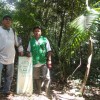
Peru – Megadiverse, and Biodiversity-Aware
One of every two Peruvians knows what "biodiversity" means, and most would stop buying products that are not socially or environmentally responsible, according to an international survey that for the first time included this megadiverse South American country.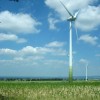
Will Rio+20 Spark a Green Revolution?
Think of Rio+20 as the hothouse to grow the green ideas and values humanity needs to thrive in the 21st century.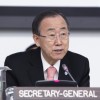
U.N. Chief Disappointed Over Deadlocked Rio+20 Negotiations
Secretary-General Ban Ki-moon, who has invested heavily in the success of the upcoming U.N. Conference on Sustainable Development (UNCSD), is publicly expressing his frustration at the lack of substantial progress on a final plan of action for a greener economy and a sustainable future worldwide.Rio+20: European Parliament Absent in Sustainability Summit
The decision by the European Parliament (EP) to renounce its participation in the Rio+20 United Nations Conference on Sustainable Development next month on the grounds that hotel costs are exorbitant has provoked sharp criticism from civil society organisations.
Q&A: The Future of Agriculture May Well Be in Cities
In the coming decades, the world's population is expected to grow by at least another two billion people, 80 percent of whom will live in cities by the year 2050.
Adding Rice Farmers to the Rio+20 Agenda
The year 2011 was one of extremes for the small Sri Lankan village of Verugal.
“We Are Living As If We Had One and a Half Planets”
The new WWF Living Planet Report warns of a significant decline in biodiversity, particularly in low-income countries, and a huge increase in the ecological footprint of high-income countries.
Brazilian Government Sets Guidelines for Success at Rio+20
As the host of Rio+20, the Brazilian government has defined guidelines for achieving success at the upcoming world summit, whose aim is to assess and strengthen what has been done since the 1992 Earth Summit, the first global meeting on sustainable development.« Previous Page — Next Page »


The Week with IPS

NEXT STOP - SDGs
Tracking global progress towards a sustainable world
Tracking global progress towards a sustainable world
