Languages
Tuesday, November 17, 2026



News and Views from the Global South
Labour
LABOUR-MALAYSIA: Recession to Hit Migrant Workers Hard
As recession looms large on the horizon, migrant workers like 27-year-old Kumar Palanisamy from Chennai in India are the first on the chopping block.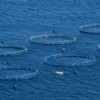
ARGENTINA: Caution and Enthusiasm for Fish Farming
Fish farming is expanding in Latin America, fuelled by the demands of a global market that is facing the stagnation of commercial fishing. But some people are warning about the limits of industrial production of fish and the environmental and social risks.ARGENTINA: New Movement to Combat Poverty
A new movement formed by a host of political, social, labour and cultural organisations of Argentina launched an action plan Friday to reduce poverty and child mortality and to promote more equal distribution of wealth.HONDURAS: President Clashes with Traditional Elites
Some sectors of Honduras’s social and leftist movement, labour unions and other popular organisations are caught up in a revolutionary reverie fruit of President Manuel Zelaya’s strong ties with his Venezuelan counterpart Hugo Chávez.RIGHTS-SRI LANKA: Migrants Deaf to Death Penalty Warnings
Foreign workers and their families continue to turn a blind eye to the risk of execution in the Middle East, particularly to the dangers of going to Saudi Arabia with its 'macabre' death penalty system.ARGENTINA: Govt Announces End of Private Pension Funds
Against the backdrop of the current global financial turmoil, Argentine President Cristina Fernández on Tuesday proposed the elimination of the privately administered retirement accounts created 14 years ago.
SRI LANKA: War May Cost Trade Benefits From EU
By refusing to allow the European Union to probe implementation of international labour and human rights covenants, on the grounds of sovereignty infringement, the Sri Lankan government may be jeopardising trade concessions and risking jobs in this country.
Q&A: “Profit Is Enemy Number One of the Environment”
The global financial debacle is evidence that capitalism "is more alive than ever" and can only be stopped by policies that extinguish all forms of profit or by the end of life on Earth, says Chilean professor and activist Marcel Claude.ROMANIA: Election Fever Sparks Labour Unrest
Just weeks before general elections, Romanian legislators have approved drastic increases in teachers' wages, causing massive protests from state employees around the country looking for similar benefits.COLOMBIA: Indigenous People Protest in Face of Threats
At the top of the list of demands of some 7,000 people mobilising in the Cauca municipality of Piendamó is the clarification of the deaths of 13 indigenous people killed over the past two weeks in different parts of Colombia.COLOMBIA: Court Workers’ Strike Continues Despite Ultimatum
Colombian President Álvaro Uribe has invoked emergency powers to break up a 42-day strike by the country’s court workers, announcing that as of Tuesday, any judge, prosecutor or other judicial employee who does not show up at work may be dismissed.LEBANON: Lucky to be Just ‘Ugly’ and Slapped
"My maid is extremely ugly, I can't fight the urge to slap her when I see her early in the morning," boasts a Lebanese trader from Ain Anoub village just outside Beirut. He laughs.
MEDIA-PAKISTAN: Sexual Harassment – Routine for Women Journos
Pakistan’s mushrooming electronic media has transformed the political landscape in this South Asian nation where illiteracy bars some 60 percent of the people from reading newspapers. It has also thrown up new challenges for young people entering media, particularly women.
ECONOMY: Nobel Honours Man Who Told Bush to "Please Go Away"
Paul Krugman, a professor at Princeton University who is best known for his New York Times columns - frequently involving scathing assaults on the policies of the George W. Bush administration - was awarded the 2008 Nobel Memorial Prize in Economic Sciences for his research on international trade and economic geography.
DEVELOPMENT: Signs of Hope for Ethiopia’s Children
Amid the hardship facing Ethiopia's children, there are signs that conditions may be improving and that children's lives are changing for the better.
ZIMBABWE: Transport Costs Ground Workers, Employers
Every evening, Barbara Taruvona, the owner of New Styles Hair salon in Harare has to face a queue of her employees at the entrance to her office for their daily cash allowance for transport.COLOMBIA: Sugar Workers Strike for Basic Rights
"We sugar cane cutters are neither delinquents nor terrorists; we are honest workers demanding respect for our rights," say Colombia’s cane harvesters, who have been on strike since Sept. 15, demanding basic rights.MALAYSIA: Emerging Trend in Trafficking Tribal Women
An emerging trend in the trafficking of tribal people, mostly young girls, is raising concern among government officials, rights organisations, migration experts and human rights lawyers.DEVELOPMENT-SIERRA LEONE: Living Off Scraps
Each morning, Mariama Kamara and her two teenaged sons walk to Freetown’s main rubbish dump. Their mission: to dig through the mounds of garbage in search of scrap metal.CARIBBEAN: Brain Drain – No Solution in Sight
Like other developing regions, the Caribbean is no stranger to brain drain. Besides the impact on local economies, the exodus of university graduates has profound social implications, and there is no solution in sight.PERU: Mobilising to Hold President to His Promises
Social movements, trade unions, peasant farmer and indigenous organisations are holding strikes and demonstrations to demand that Peruvian President Alan García fulfil the social commitments he has made, in writing and at negotiating tables.« Previous Page — Next Page »


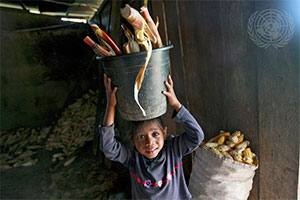 Timorese Girl with Fresh-Picked Corn. Credit: UN Photo/Martine Perret
A global common denominator is the need for a decent job. The economic realities of each country determine just how difficult it is to find one. Despite the labour movement's achievements, serious challenges persist: gender discrimination, child labour, worker migration, the digital divide and AI automation, evaporating pensions, unsafe workplaces, corporate pressure against union organising, negative impacts of trade agreements, and the precariousness of informal employment. The 2025 UN SDG Report identifies jobs and social protections as one of the six priority areas requiring urgent action, with progress either stalled or reversing in many developing nations.
In recent years, the fight to protect labour equality has taken on new dimensions with the rise of Environmental, Social and Governance standards. With the Social aspect aiming to promote equality and human rights, ESG principles have strengthened labour advocacy within corporate and governmental regulatory landscapes. In particular, ESG has become much more institutionalized in emerging economies such as Brazil and China. IPS follows the world’s workers as they confront these challenges - their setbacks and their successes.

The Week with IPS

NEXT STOP - SDGs
Tracking global progress towards a sustainable world
Tracking global progress towards a sustainable world
