Languages
Wednesday, November 18, 2026



News and Views from the Global South
Economy & Trade

Kenya and Ethiopia Cross-Border Initiative: A Move Towards Sustainable Peace
Many years of internecine conflict is being replaced by a new narrative of peace along the Kenya-Ethiopia border. Communities that once fought each other are now dreaming of a joint journey towards a better future.
Renewables to Become the Norm for the Caribbean
Jamaica and other Small Island Developing States (SIDS) are embracing renewable energy as part of their plans to become decarbonised in the coming decades.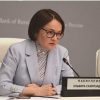
Russia’s First Female Central Bank Governor in a Challenging Job
Within a few short months after taking up her post as governor of the Central Bank of Russia in 2013, Elvira Nabiullina faced a growing economic crisis brought on by plunging oil prices, geopolitical tensions, and sanctions.
Against All Odds, Indigenous Villages Generate Their Own Energy in Guatemala
In the stifling heat, Diego Matom takes the bread trays out of the oven and carefully places them on wooden shelves, happy that his business has prospered since his village in northwest Guatemala began to generate its own electricity.
Why Climate Action Plans are not Good Enough to Deliver a Low-Carbon Future in Cities
Though climate policies aim to reduce GHG emissions, they miss out on emphasizing the importance of urban planning policies Cities that have ratified the Paris Agreement and pledged to reduce carbon emissions are adopting climate action plans aimed at reducing greenhouse gas (GHG) emissions.
Privatization Promotes Collusion and Corruption
At the risk of reiterating what should be obvious, the question of private or public ownership is distinct from the issue of competition or market forces. Despite the misleading claim that privatization promotes competition, it is competition policy, not privatization, that promotes competition.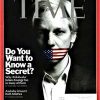
Lost in the Cyberworld? The Enigmatic Mr Assange
Trump´s electoral success was preceded by a rise of chauvinistic politics in most of Europe, paired with electoral triumphs of far-right candidates in several other countries. A development accompanied by revelations of corrupt leaders laundering and transferring illegally obtained money, aided by financial institutions finding the means to do so. The world seems to move away from a rule-based order to a state of affairs dominated by might and wealth. World leaders´ private business dealings thrive within a global environment where laws intended to protect human rights are becoming increasingly ineffective. Foreign policies appear to be adapted to private gains and personal vendettas. Global financial systems seem to be crafted to facilitate kleptocracy and money laundering, while repression and violence smite whistle-blowers and daring journalists. Endeavours supported by propaganda and smear campaigns orchestrated by political/financial consultants and private investigation firms. All this is made possible through complicated schemes using the internet.
Global Energy Consumption is Up — So Are Emissions
Our acceptance of climate change doesn’t keep pace with our energy consumption reduction. However, the latest International Energy Agency’s (IEA’S) Global Energy and CO2 Status Report for 2018 has some good news.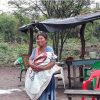
CORRECTED VERSION: World Bank Dispossessing Rural Poor
The World Bank’s Enabling the Business of Agriculture (EBA) project, launched in 2013, has sought agricultural reforms favouring the corporate sector. EBA was initially established to support the New Alliance for Food Security and Nutrition, initiated by the G8 to promote private agricultural development in Africa.
“A Question of Life or Death”
The mining industry is one of the world's most dangerous industries. Globally, the death toll is at least 14,000 workers per year. But how many lives are actually lost is something that neither trade unions, national governments or the United Nations know.
Climbing the Coconut Value Chain in the Pacific
In the Pacific, coconut is king. Known as the ‘tree of life’, locals make use of every part of the tree to survive – the fruit for eating, husks for fuelling fires, fronds for making multiuse baskets, and the trunk for building houses.
Lessons From China: Fostering Agricultural Growth and Poverty Reduction
As China has moved from a poor isolated country to a major player in the world economic and political sphere, developing countries need to learn how to engage.
Pakistan’s Battle Against Climate Change
Pakistan, which has been listed as the 7th most vulnerable country affected by climate change, is now seriously tackling the vagaries of weather, both at the official as well as non-official level. Pursuant to an initiative launched by the Pakistan Parliament’s Upper House, the Senate, which specially entrusted a sub-Committee of the Standing Committee on Climate Change to focus on “Green and Clean” Islamabad, media, civil society and students have taken up the cudgels on combating climate change.
U.S. Needs to Shift to More Sustainable Agriculture—As Do All Countries
Water supply has long been a key issue in California. Today it is no less critical, especially given the years of drought that California is experiencing, lending additional impetus to assessing the impact of agriculture on water.
Global Governance and Information
The past seventy years since the end of the second world war have been marked by profound changes in our international system. Relations between states have become more horizontally structured interactions with a rising significance of the common good articulated and pursued by newly-created international programmes and organisations.
From Empowerment During War, Eritrean Women Must Fight Gender Discrimination in a New Peace
As the first anniversary of the swearing on Ethiopia’s Prime Minster Abiy Ahmed rolled around last week, Ethiopians – and observers worldwide – marvelled at the pace and scale of radical reform he has brought to the formerly repressed country in the past year.
Revealed — A Roadmap to Defeat Tobacco Tax & Keep Indonesians Addicted
The image of a smoking toddler from Indonesia horrified the world but did little to motivate local policy makers to enact measures to protect children and youth from the harms of tobacco use. Indonesia has one of the world’s highest smoking rates where two out of three men and about 40 percent of adolescent boys smoke.
Fridays for Future – Following Greta Thunberg!
What happens worldwide on Fridays, a regular working day and consequently, a school day? We are all witnessing that students do not attend their classes: during the week of March 15, 2019, according to fridaysforfuture, there were at least 1.6 million striking students in more than 125 countries on all continents.
World Bank Financialization Strategy Serves Big Finance
The World Bank has successfully built a coalition to effectively advance its ‘Maximizing Finance for Development’ (MFD) agenda. The October 2018 G20 Eminent Persons Group’s (EPG) report includes proposals to better coordinate various international financial institutions (IFIs) in promoting financialization.
The Amazon Seeks Alternatives that Could Revolutionise Energy Production
A large steel wheel, 14 meters in diameter and 1.3 meters wide, could be the energy solution of the near future, generating 3.5 megawatts - enough to supply a city of 30,000 people, according to a company in the capital city of the state of Amazonas in northwest Brazil.
All What Your Jeans Can (and Do) Hide!
Paris, Milan, New York, Tokyo… These are just some of the world’s most prestigious fashion catwalks. There, and elsewhere, perfectly – and often unrealistically – silhouetted young women and men graciously parade to impress elite guests and TV watchers with surprising, fabulous creativity of the most renowned fashion designers and dressmakers.« Previous Page — Next Page »


 UN Commission on International Trade Law Holds Colloquium on Harmonizing Law in Age of Digital Trade and Finance. Credit: UN Photo/Manuel Elías
Trade has historically been a geopolitical tool that can both be used to propel development as well as entrench inequalities. In various nations in East Asia and Latin America, increased trade, as often seen in export booms, has allowed them to achieve influential standings within the global economy. On the other hand, many low-income countries in Sub-Saharan Africa, Asia, and Latin America struggle to maintain a robust trade performance, and oftentimes are subjugated to exploitative trade dynamics through intense extraction of their natural resources. In recent decades, international trade has reached a new era as emerging economies across the world are rising in economic preeminence. Stable international trade is crucial to world peace as global interconnectedness facilitates reliable diplomacy. Nevertheless, significant challenges are on the rise. Notably, a major wave of United States tariff escalations in January 2025 lifted US import taxes to their highest level since the 1930s, changing market dynamics and forcing renegotiations with global trading partners.These articles are aimed at informing readers about the complexities of trade and its varying effects on development, with a special focus on the consequences of the global economic crisis, the potential of fair trade and the gender implications of trade policies.
Updated by Yilan Batista and Shuli Wong August 2026

The Week with IPS

NEXT STOP - SDGs
Tracking global progress towards a sustainable world
Tracking global progress towards a sustainable world
