Languages
Sunday, November 22, 2026



News and Views from the Global South
Economy & Trade

A Billion Tons of Food Wasted Yearly While Millions Still Go Hungry
In his parody of the Michael Jackson hit “Beat It”, the American satirist and singer Weird Al Yankovic has a parent urging his son to eat the food on his plate, warning that “other kids are starving in Japan”.
Acid Oceans Could Deal Heavy Blow to Fishing-Dependant Nations
Scientists here are warning Caribbean countries, where the fisheries sector is an important source of livelihoods and sustenance, that they should pay close attention to a new international report released Wednesday on ocean acidification.
Youth Employment Critical to Sustainable Development in Pacific Islands
The size of the youth population in the Pacific Islands is double the global average with 54 percent aged below 24 years, creating enormous challenges for slow-growing small island economies unable to create jobs fast enough.
Fracking Fractures Argentina’s Energy Development
Unconventional oil and gas reserves in Vaca Muerta in southwest Argentina hold out the promise of energy self-sufficiency and development for the country. But the fracking technique used to extract this treasure from underground rocks could be used at a huge cost.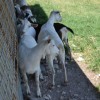
Hotter Caribbean Poses Challenges for Livestock Farmers
Livestock farmers in the Caribbean are finding it increasingly difficult and expensive to rear healthy animals because of climate change, a situation that poses a significant threat to a region that is already too dependent on imports to feed its population.
Most Nations Reducing Worst Forms of Child Labour
Most of the world’s governments are taking measures to reduce the worst and most hazardous forms of child labour, according to a major report released here Tuesday by the U.S. Labour Department.
Thirsty Land, Hungry People
 Gazing out over the parched earth of Sri Lanka’s Northern Province, one might think these farmlands have not seen water in years. In fact, this is not too far from the truth.
Floods Wash Away India’s MDG Progress
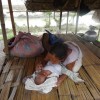
The northeastern Indian state of Assam is no stranger to devastating floods. Located just south of the eastern Himalayas, the lush, 30,000-square-km region comprises the Brahmaputra and Barak river valleys, and is accustomed to annual bouts of rain that swell the mighty rivers and spill over into villages and towns, inundating agricultural lands and washing homes, possessions and livestock away.

Synthetic Biology Could Open a Whole New Can of Worms
Haiti, the poorest country in the Western Hemisphere, is the world’s leading producer of vetiver. In the southwest of the country, vetiver production is hard to ignore.
Brazil’s Two-Party System Leaves Amazon Activist Behind
The dream of electing Brazil’s first black president, an environmental activist from the Amazon jungle, lasted only 40 days and was frustrated in Sunday’s elections. In the end, it is the two parties that have dominated Brazilian politics for the last 20 years that will face off in the second round of voting on Oct. 26.
Financing for Biodiversity: A Simple Matter of Keeping Promises
With governments, activists and scientists tearing their hair out over the world’s impending crisis in biodiversity, the outgoing president of the Convention on Biological Diversity (CBD) delivered a simple message to participants at the 12th Conference of the Parties to the CBD (COP12) currently underway in the Republic of Korea’s northern Pyeongchang county: honour the promises you made last year.
U.S. Investigation into Illegal Timber Imports a “Sea Change”
A year after a U.S. company was accused of engaging in the systematic importing of flooring made from illegally harvested timber, pressure is mounting on federal agencies currently investigating the allegations.
Harper Playing Defence in Canada’s Pipeline Politics
Canada’s tar sands oil boom may be in jeopardy and it appears the ruling Conservative government of Prime Minister Stephen Harper does not have any plan B in its ambition to remake this resource-rich country into “an energy superpower.”
Antigua Faces Climate Risks with Ambitious Renewables Target
Ruth Spencer is a pioneer in the field of solar energy. She promotes renewable technologies to communities throughout her homeland of Antigua and Barbuda, playing a small but important part in helping the country achieve its goal of a 20-percent reduction in the use of fossil fuels by 2020.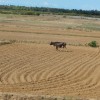
Humanity Failing the Earth’s Ecosystems
In pure numbers, the past few decades have been marked by destruction: over the last 40 years, Earth has lost 52 percent of its wild animals; nearly 17 percent of the world’s forests have been felled in the last half-century; freshwater ecosystems have witnessed a 75-percent decline in animal populations since 1970; and nearly 95 percent of coral reefs are today threatened by pollution, coastal development and overfishing.Azerbaijan Pursues Drones, New Security Options
Heightened tensions with longtime foe Armenia over breakaway Nagorno Karabakh and mediator Russia’s Ukrainian adventure appear to be pushing Caspian-Sea energy power Azerbaijan ever more strongly toward a military strategy of self-reliance.
Panama, a Country and a Canal with Development at Two Speeds
With the expansion of the canal, Panama hopes to see its share of global maritime trade rise threefold. And many Panamanians hope the mega-engineering project will reduce social inequalities in a country where development is moving ahead at two different speeds.
Thirsty Land, Hungry People
Gazing out over the parched earth of Sri Lanka’s Northern Province, one might think these farmlands have not seen water in years. In fact, this is not too far from the truth.
New Global Declaration “Insufficient” to Tackle Deforestation
Heads of state, civil society groups and the leaders of some of the world’s largest companies this week urged their peers to sign on to a landmark new global agreement aimed at halting deforestation by 2030, even as others are warning the accord is too lax.
Documents Detail Secret Talks Between Washington and Havana
In a new book cataloguing the recent history of clandestine exchanges between the U.S. and Cuba, the reliance on secret intermediaries belies the common perception that the two governments rarely communicated during the decades that followed the Cuban revolution in 1959.
OPINION: From Elephants to Blue Whales, Sri Lanka Leads the Way on Biodiversity
Sri Lanka will host the World Biodiversity Congress (WBC) Nov. 24-27. Given its long and active history of preserving biodiversity, it would be most appropriate for Sri Lanka to be the next host of this global event, which also marks the U.N.'s Decade on Biodiversity.« Previous Page — Next Page »


 UN Commission on International Trade Law Holds Colloquium on Harmonizing Law in Age of Digital Trade and Finance. Credit: UN Photo/Manuel Elías
Trade has historically been a geopolitical tool that can both be used to propel development as well as entrench inequalities. In various nations in East Asia and Latin America, increased trade, as often seen in export booms, has allowed them to achieve influential standings within the global economy. On the other hand, many low-income countries in Sub-Saharan Africa, Asia, and Latin America struggle to maintain a robust trade performance, and oftentimes are subjugated to exploitative trade dynamics through intense extraction of their natural resources. In recent decades, international trade has reached a new era as emerging economies across the world are rising in economic preeminence. Stable international trade is crucial to world peace as global interconnectedness facilitates reliable diplomacy. Nevertheless, significant challenges are on the rise. Notably, a major wave of United States tariff escalations in January 2025 lifted US import taxes to their highest level since the 1930s, changing market dynamics and forcing renegotiations with global trading partners.These articles are aimed at informing readers about the complexities of trade and its varying effects on development, with a special focus on the consequences of the global economic crisis, the potential of fair trade and the gender implications of trade policies.
Updated by Yilan Batista and Shuli Wong August 2026

The Week with IPS

NEXT STOP - SDGs
Tracking global progress towards a sustainable world
Tracking global progress towards a sustainable world
