Languages
Thursday, November 26, 2026



News and Views from the Global South
Economy & Trade
Despite Tsunami, Japan Resumes Aid to Myanmar
Japan’s plan to resume official development assistance (ODA) to Myanmar, announced this week, is problematic for a country faced with a dauntingly large disaster recovery budget for areas hit by the earthquake and tsunami last year.
Clinton Announces “Targeted Easing” of Sanctions on Myanmar
Two days after hailing Sunday's parliamentary by-elections in Myanmar, U.S. Secretary of State Hillary Clinton announced that Washington would begin a process of "targeted easing" of longstanding economic sanctions against the Southeast Asian nation.European NGOs Put IFIs Under Microscope
European civil society organisations continue to demand that international financial institutions (IFIs) such as the World Bank and the International Monetary Fund apply the same standards of transparency and accountability to their internal affairs that they demand for governments across the world.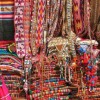
Native Andean Women Weave a Future in Bolivia
Their skill and dexterity in weaving textiles, to be worn on festive occasions or displayed in windows for sale to tourists, have become the mainstay of indigenous women and their families in Cochabamba, Bolivia.
OP-ED: The United States as Number Two
Politicians in the United States must ritualistically assert that the U.S. is and always will be the world's leading economic, military and political power. This chant may help win elections in a country where respectable people deny global warming and evolution, but it has nothing to do with the real world.
Tourism Goes Indigenous
As today’s conscientious travellers seek authentic experiences with the people of the lands they visit, tourism can be a vehicle for preserving ancient cultures, while socially and economically empowering marginalised or remote indigenous communities.
After Ten Years of Peace, “Angola’s Future is Dark”
Angola is celebrating 10 years of peace on Apr. 4. Since the end of its 27-year- long civil war in 2002, the country’s economy has prospered thanks to oil. But experts fear that parliamentary elections later this year could return the country to violence and instability.
Measure Progress in Happiness, Not Money, Bhutan Urges
Which is more important in human life: money or happiness? Can money buy happiness? According to the tiny Himalayan nation of Bhutan, the time has come for the world to pay closer attention to this age-old question.
U.S. Boosts Sudan Aid as Humanitarian Crisis Deepens
In a memorandum released Tuesday, President Barack Obama ordered the State Department to allocate additional humanitarian assistance funds for Sudan as famine looms for thousands of civilians caught between intensified levels of armed conflict along the borders of Sudan and South Sudan.Europe’s Austerity Programme Spawns ‘Lost Generation’
The recent dramatic rise of youth unemployment across Europe – particularly in the Mediterranean member countries of the Eurozone most affected by the sovereign debt crisis and so-called ‘remedial’ austerity programmes – indicates that the continent is sacrificing its future on the altar of short-term budget consolidation.South Africa Looking to Make the Most of BRICS Membership
South Africa needs to stop agonising over whether it deserves to be in BRICS and start focusing on making the most of its membership to leverage better trade deals.
Q&A: “We Need to Change the Economics of Development”
After Latin America and the Caribbean's "lost decade" of the 1980s, the region has experienced a period of "light and shadow", says Alicia Bárcena, executive secretary of the U.N. Economic Commission for Latin America and the Caribbean (ECLAC).U.S. Praises Myanmar Poll
The administration of U.S. President Barack Obama Monday hailed Sunday's parliamentary by-election in Myanmar, also known as Burma, which the opposition National League for Democracy (NLD) led by Nobel Peace Laureate Aung San Suu Kyi won in a landslide.
BRICS Ministers Say New Trade Narrative Sinks Development
Trade ministers of the BRICS countries - Brazil, Russia, China, India and South Africa – say that at the G20 trade ministerial summit later this month in Mexico they will try to ensure that attempts by industrialised countries to frame a new trade agenda do not drown development-led trade liberalisation and the World Trade Organization talks.
Amid Global Uncertainties, Barbados Plots a Greener Future
When it comes to developing a "green economy", Barbados is leading its English-speaking Caribbean neighbours.
Jamaica to Galvanise Public on Climate Adaptation
A public awareness project that aims to foster wider understanding among locals about the linkages between the global climate and their social and economic wellbeing is Jamaica's newest adaptation strategy.Caribbean Private Sector Lags in Exploiting EU Trade Pact
When Europe signed an Economic Partnership Agreement (EPA) with the Caribbean Forum countries in 2008, the intention was to boost trade and services between the two regions.
Displaced Guatemalan Peasants Demand Answers
"We want land where we can live and grow food to feed ourselves," said Pedro Ichich, one of several thousand indigenous farmers who marched to the Guatemalan capital to demand solutions to the ageold conflict over land.
Could Coffee Eliminate Borders?
A diverse blend of coffee is going to pervade the city of Milan in 2015. World producers will come together to show, exchange and market their coffee in a global alliance without geographical-based membership.
The Downside of China’s Lifeline to Brazil
Over the last decade, China has become Brazil’s main trading partner and source of foreign investment. But this apparent lifeline at a time of global crisis could actually aggravate longstanding problems faced by Latin America’s biggest economy.Could Mining Threaten Mongolia’s Tourism Potential?
Twenty years ago, when a Dutch cyclist named Rik Idema first passed through Mongolia on a round-the-world biking trip, the country struck him as the most pristine place he'd ever seen.« Previous Page — Next Page »


 UN Commission on International Trade Law Holds Colloquium on Harmonizing Law in Age of Digital Trade and Finance. Credit: UN Photo/Manuel Elías
Trade has historically been a geopolitical tool that can both be used to propel development as well as entrench inequalities. In various nations in East Asia and Latin America, increased trade, as often seen in export booms, has allowed them to achieve influential standings within the global economy. On the other hand, many low-income countries in Sub-Saharan Africa, Asia, and Latin America struggle to maintain a robust trade performance, and oftentimes are subjugated to exploitative trade dynamics through intense extraction of their natural resources. In recent decades, international trade has reached a new era as emerging economies across the world are rising in economic preeminence. Stable international trade is crucial to world peace as global interconnectedness facilitates reliable diplomacy. Nevertheless, significant challenges are on the rise. Notably, a major wave of United States tariff escalations in January 2025 lifted US import taxes to their highest level since the 1930s, changing market dynamics and forcing renegotiations with global trading partners.These articles are aimed at informing readers about the complexities of trade and its varying effects on development, with a special focus on the consequences of the global economic crisis, the potential of fair trade and the gender implications of trade policies.
Updated by Yilan Batista and Shuli Wong August 2026

The Week with IPS

NEXT STOP - SDGs
Tracking global progress towards a sustainable world
