Languages
Friday, November 27, 2026



News and Views from the Global South
Economy & Trade

SOUTH SUDAN: Women Aim to Protect Their Rights in a Young State
As South Sudan maps out its economic future at the South Sudan International Engagement Conference (IEC) this week in Washington, women from the new country called on donors to invest in projects that ensure women benefit equally from development plans.
NIGERIA: Fearing the Floods – Sleeping with One Eye Open
The women of Makoko, a low-lying slum close to the Lagos Lagoon along Nigeria’s Atlantic coast, always sleep with one eye open. Many live in fear that when they go to sleep at night they will wake to flooded homes and business.In Unprecedented Move, Canada Withdraws from Kyoto Protocol
Barely 24 hours after it signed a new global climate change agreement in Durban, South Africa, Canada became on Monday the first country to formally withdraw from the Kyoto Protocol, the only legally binding treaty to reduce emissions causing climate change.
Soviet-Armed Iraq Switches Allegiance to U.S. Weapons Systems
As the United States withdraws the last of its 50,000 troops after a nearly nine-year military occupation of Iraq, visiting Iraqi President Nuri al-Maliki had one final request: billions of dollars worth of U.S. weapons for his ragtag armed forces.West Papuan Conflict Begs Political Solution
The Indonesian government’s offer of development for West Papua, following the crackdown by security forces on a pro-independence meeting in Jayapura in October, is unlikely to succeed in the absence of political dialogue and calls for self-determination are expected to continue.RIGHTS: West Turns Blind Eye to Torture in Uzbekistan
Despite its formal adoption of due-process reforms in 2008, the government of Uzbekistan under President Islam Karimov continues to practice torture routinely, and the situation may be worsening, according to a major new report released here and in Berlin Tuesday.PERU: Humala Surrounds Himself with Uniforms
Peruvian President Ollanta Humala is taking an increasingly hard-line stance against protests, and is losing important allies less than five months into his term.Op-Ed: Facing Peak Oil and Peak Gas: In Search of the Lesser Evil
The U.S. oil geologist Marion King Hubbert predicted, already in 1956, that the global production of oil will reach its all-time high roughly when we have used one half of the world's oil reserves. This is because geologists tend to find the biggest fields first, and because oil wells become tired during the production phase. The more is taken out, the more difficult it gets to bring the remaining oil to the surface.
U.S.: Protestors Occupy Ports in Oakland and Beyond
Occupy movements in Oakland, California; Portland, Oregon; and Longview, Washington claimed victory Monday when they prevented workers from loading or unloading ships at the three ports.
SOUTH SUDAN: Refugees Reluctant to Move to Safety as War Looms
In the sprawling settlement of Yida, just south of the Sudan border, more than 20,000 people have gathered after fleeing battles in the country's Southern Kordofan state. But they now find themselves caught up in a new conflict, as recent clashes along the frontier have some warning of the possibility of war.
Forging Bond Will Be Test for Co-ops and Occupy Movement
Canadian cooperatives may grow as the global Occupy movement raises the profile of their business model through boosting interest in credit unions over traditional banks, but uncertainty remains about the degree to which the two camps will join forces from here on.U.S.: Homeless Play Key Role in Occupy Movement
Homeless people make up a significant proportion of participants in the Occupy Movement in cities across the United States, from Los Angeles to Atlanta, where at times they comprise an estimated third of the occupiers.
Agreement for New Global Treaty To Reduce Emissions
The world is increasingly committed to dangerous levels of global warming with yet another failure by nations of the world to agree to needed reductions in carbon emissions here in Durban. However, as the 17th Conference of Parties ended early Sunday morning, members did agree to talk about a new global treaty to reduce emissions.
TUNISIA: Neo-Liberalism the Issue, Not Islam
On the verge of officially forming a coalition government to run the country and rewrite the nation's pre-revolution constitution, Tunisia's dominant, Islamist political party Ennahda has come under fire for its economic neo-liberalism, both from opponents and from coalition partners.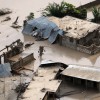
CUBA-CARIBBEAN: Forging an Alliance to Fight for Climate Action
When the U.N. Conference on Sustainable Development dubbed Rio+20 convenes in Brazil next year, Caribbean leaders want to ensure that the concerns of vulnerable low-lying coastal and Small Island Developing States (SIDS) will be heard.Decent Work Key to Food Security
Basic income security and access to social services can improve food production and consumption in the developing world, which can be boosted by South-South cooperation.Brussels Summit Rejects EU-Wide Treaty Change
A bid to change the EU treaty to resolve the eurozone debt crisis has foundered at a crunch summit in Brussels, after Britain refused to sign up without major concessions in return.
CARIBBEAN: Castro Comes Calling as U.S. Tries to Pull the Plug
Even the rains seemed to have joined forces against Cuban President Raul Castro.
HONDURAS: Indigenous Cooperatives Cultivate Success
Thanks to the quality and freshness of their produce, indigenous Lenca farmers in western Honduras are regular suppliers of seven supermarket chains. This year they won the National Environmental Prize, in the community initiatives category.
Kyoto Protocol – Hopes for Tangible Results Remain Slim
The last hours of the 17th United Nations climate change summit in Durban have begun. Since the arrival of almost 150 ministers and heads of state on Tuesday, negotiations have moved to the political level. They are expected to debate the way forward until late Friday night, or even Saturday morning.
Failure to Bridge the “Emissions Gap” Brings Economic Crisis
Countries at the United Nations climate change negotiations have publicly acknowledged their current pledges to reduce carbon emissions will not result in limiting global warming to less than two degrees Celsius.« Previous Page — Next Page »


 UN Commission on International Trade Law Holds Colloquium on Harmonizing Law in Age of Digital Trade and Finance. Credit: UN Photo/Manuel Elías
Trade has historically been a geopolitical tool that can both be used to propel development as well as entrench inequalities. In various nations in East Asia and Latin America, increased trade, as often seen in export booms, has allowed them to achieve influential standings within the global economy. On the other hand, many low-income countries in Sub-Saharan Africa, Asia, and Latin America struggle to maintain a robust trade performance, and oftentimes are subjugated to exploitative trade dynamics through intense extraction of their natural resources. In recent decades, international trade has reached a new era as emerging economies across the world are rising in economic preeminence. Stable international trade is crucial to world peace as global interconnectedness facilitates reliable diplomacy. Nevertheless, significant challenges are on the rise. Notably, a major wave of United States tariff escalations in January 2025 lifted US import taxes to their highest level since the 1930s, changing market dynamics and forcing renegotiations with global trading partners.These articles are aimed at informing readers about the complexities of trade and its varying effects on development, with a special focus on the consequences of the global economic crisis, the potential of fair trade and the gender implications of trade policies.
Updated by Yilan Batista and Shuli Wong August 2026

The Week with IPS

NEXT STOP - SDGs
Tracking global progress towards a sustainable world
