Languages
Friday, November 27, 2026



News and Views from the Global South
Economy & Trade
HUNGARY: ‘Unorthodoxy’ Fails, IMF Returns
A year after slamming the door on the International Monetary Fund and announcing that a small country like Hungary could pursue an independent economic policy, conservative Prime Minister Viktor Orban has been forced to kneel to the IMF and ask for help. Was there ever an alternative?
ENVIRONMENT-INDIA: Women Turn Waste Into Wealth
Standing on the shimmering white beach and gazing out at the turquoise blue waters of the Arabian sea, it is hard to believe that a decade ago this international tourist destination was under siege by mounting heaps of garbage.
U.S.: Occupy Targets Foreclosures
Five months ago, Gayla Newsome was at work when she got the call. A sheriff had come to her home of 15 years and put her two pajama-clad daughters out on the curb of her West Oakland street. Newsome knew the bank was about to foreclose, but thought she still had time to fight it.
Carbon Pricing to Save Green Climate Fund
Carbon pricing will be the core mechanism to finance the Green Climate Fund and with it climate change adaptation projects in developing countries.
UGANDA: Deforestation Robbing Communities of their Income
From a distance, Bugala Island in Lake Victoria is a patchwork of green and brown. The pattern is a result of dense forest retreating in the wake of recently planted palm tree plantations.DEVELOPMENT: In Crisis, The Rich Get Richer
Mansions on one side of the road, and slums on the other. People queuing for food rations, while others drive by in shiny Land Rovers with tinted windows.
At the Nexus of Agrofuels, Land Grabs and Hunger – Part 1
While the United Nations climate talks in Durban enter their ninth day of political feet-dragging, researchers and peasants around the world are busy connecting the dots between so- called "green climate solutions", industrialised agriculture and chronic hunger.
False Perceptions Underpin Anti-Migrant Sentiments
The rising tide of anti-migrant sentiment worldwide is caused primarily by the biased, polarised and negative debate on migration, according to a new study released here.
PERU: Protest Against Mine Continues Despite State of Emergency
Local residents and authorities in the northern Peruvian region of Cajamarca say they will continue to protest the Conga gold mine, despite the state of emergency declared by President Ollanta Humala.
Q&A: South-South Cooperation Complements North-South Cooperation
South-South cooperation can play a key role in boosting the economies of developing countries, but it is not going to replace North-South cooperation, says Nassir Abdulaziz Al-Nasser, president of the 66th session of the U.N. General Assembly.
SOUTH AMERICA: To Beijing with Love
South America has managed to withstand the knock-on effects of recession in the EU and U.S. thanks to the protection offered by the soaring Asian demand for commodities. But many things could change in the medium term.NEPAL: Protests Fail to Stop Climate Loans
Nepal will implement five projects with 110 million dollars sanctioned by the controversial Climate Investment Funds (CIFs), ignoring protestors who say this least developed country merits grants rather than climate loans.
TRADE: Small Steps towards Emission Reduction Deal
Emerging economies China, South Africa and Brazil have indicated their openness to legally-binding carbon emission reduction targets from 2020 during the United Nations climate change summit in Durban, South Africa.
OP-ED: Occupy Foreign Affairs
It's not the topic of George Packer's latest essay that's particularly surprising. Inequality, he writes, is undermining democracy. Progressives have been hammering home this message for years if not decades.
“Fracking” for Shale Gas: Neither Clean nor Green
Hydraulic fracturing or "fracking" is being used to tap the last remaining natural gas deposits across large areas of the United States and western Canada, fueling continued dependence on hydrocarbons instead of a shift to genuinely clean energy sources to cool the planet.Shale Gas May Be a Mexican Mirage
In spite of mounting scientific evidence about its negative aspects, Mexico is getting ready to intensify exploration for shale gas, natural gas found trapped in shale, a sedimentary rock.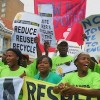
CLIMATE CHANGE: Marching for 100 Percent Change
Chanting loudly, thousands of demonstrators marched through the streets to the venue of the 17th United Nations Climate Change Conference to demand that their voices be heard for "immediate and drastic" carbon emission reductions to save the planet.
A Recipe for Carbon Farming
Civil society has warned of the danger of turning Africa's food-producing lands into "carbon farms" so that rich countries can avoid making cuts in their carbon emissions.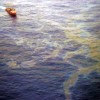
BRAZIL: “Flying Blind” in Pre-Salt Oil Fields
Nearly a month after the start of the offshore oil spill, authorities in Brazil have not yet been able to determine the causes of the accident, how much oil was leaked at a Chevron platform, the size of the oil slick, or the extent of the environmental damage.
Q&A: ‘For Fragile States Aid is Life, Not Money’
The new deal for the ‘fragile states,’ from the g7+ – a group of 19 countries that struggle with poverty, instability and violent conflict - has been hailed as a major breakthrough at the Fourth High Level Forum on Aid Effectiveness here, earlier this week.
PERU: Government Expands Scope of Military Activity
The armed forces in Peru, which already have an active role in fighting drug trafficking, are being given greater responsibility for maintaining public order under the government of President Ollanta Humala. They will now also be expected to crack down on illegal mining, and to intervene in social protests.« Previous Page — Next Page »


 UN Commission on International Trade Law Holds Colloquium on Harmonizing Law in Age of Digital Trade and Finance. Credit: UN Photo/Manuel Elías
Trade has historically been a geopolitical tool that can both be used to propel development as well as entrench inequalities. In various nations in East Asia and Latin America, increased trade, as often seen in export booms, has allowed them to achieve influential standings within the global economy. On the other hand, many low-income countries in Sub-Saharan Africa, Asia, and Latin America struggle to maintain a robust trade performance, and oftentimes are subjugated to exploitative trade dynamics through intense extraction of their natural resources. In recent decades, international trade has reached a new era as emerging economies across the world are rising in economic preeminence. Stable international trade is crucial to world peace as global interconnectedness facilitates reliable diplomacy. Nevertheless, significant challenges are on the rise. Notably, a major wave of United States tariff escalations in January 2025 lifted US import taxes to their highest level since the 1930s, changing market dynamics and forcing renegotiations with global trading partners.These articles are aimed at informing readers about the complexities of trade and its varying effects on development, with a special focus on the consequences of the global economic crisis, the potential of fair trade and the gender implications of trade policies.
Updated by Yilan Batista and Shuli Wong August 2026

The Week with IPS

NEXT STOP - SDGs
Tracking global progress towards a sustainable world
