Languages
Friday, November 27, 2026



News and Views from the Global South
Economy & Trade
Listening to ‘Appalled Economists’
A paper written by a handful of French economists criticising the economic policies applied in the European Union to deal with the sovereign debt crisis that followed government bailouts of banks and other financial institutions in 2007 has become a manifesto supported by many worldwide.
Workers Send More Money Home, Surpassing Development Aid
Despite a global economic crisis, worsening employment prospects for immigrants and hardening views on immigration in the U.S. and Europe, migrant workers are sending more money home, according to a World Bank report on global remittances released Wednesday.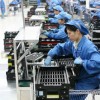
US-EU: Economic Crisis Threatens Global Recession, U.N. Warns
The United Nations Thursday reaffirmed a lingering fear haunting Western capitals: the world economy is teetering on the brink of another major downturn and heading towards a global economic recession.
OP-ED: Can Finance Provide the Crown Jewels of a Durban Climate Accord?
As climate talks get underway in Durban, South Africa this week, progress on a Green Climate Fund is one of the hottest, most contentious tickets in town. It is also one of the great prizes to be won.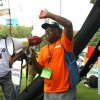
Kyoto Protocol and Climate Fund on Shaky Ground
Just a few days into the United Nations climate change negotiations, deep divides on the conference’s key issues have arisen. Serious doubts about the adoption of the Green Climate Fund have cropped up, while a second period of the Kyoto- Protocol looks more and more unlikely.
Andean Migrant Women Create Opportunities
Women make up a majority of migrants from South America's Andean region and they send more money home to their families than men, according to a study carried out in Bolivia, Colombia, Ecuador and Peru.Inclusiveness Wins at Busan Aid Forum
Inclusiveness was the winner as donors, recipient governments, emerging economies, multilateral lenders and civil society representatives hammered out a consensual document at the close of a major meeting in this South Korean city to boost development aid effectiveness.
EUROPE: Co-ops Off to a Promising Start
A small wave of consumer cooperatives is rising in Central and Eastern Europe, attempting to provide food that is locally produced and healthy, and to build conviviality.For Big Financial Institutions, Profit Trumps Women’s Rights
This year, for the first time, the World Bank dedicated its 2012 annual flagship World Development Report to women as indispensable players in the global economy and launched a media campaign to "think equal".To Women’s Rights, Financial Institutions Pay Lip Service Only
On day seven of "the 16 days of activism to end violence against women" campaign, women's rights organisations around the world are asking what the biggest international financial institutions (IFIs) are really doing to protect women's rights, which are under daily assault.U.S.: States Seek Drug Tests for Welfare Recipients
At least 36 states across the U.S. are proposing laws that would require applicants for and recipients of a variety of public aid programs to undergo drug testing in which they would have to provide a urine sample. Several states, including Arizona, Florida, Indiana and Missouri, have already passed such laws.
Not Everyone on Board with Mesoamerica Development Plan
Ten years after its launch under a different name, the Mesoamerica Project, which involves major investments in energy, telecommunications, housing, health and other areas, is moving ahead slowly and continues to face scepticism that it will have a real impact against poverty.TAJIKISTAN: President Taking a Press Beating in Dushanbe
Following a diplomatic faux pas that enraged Russia, the knives seem to be out for Tajikistan's long-time president, Imomali Rahmon.
Lessons for Africa at Busan Aid Forum
There are many inspiring stories that delegates from Africa attending the ongoing Fourth High Level Forum on Aid Effectiveness can take home to provide insights to their respective countries on making the transformation to middle-income economies.Business as Development Tool
The idea of business as an effective development tool is gaining ground at Busan where hundreds of experts are gathered to charter a new chapter in global aid amidst growing political and economic uncertainty among donors.SPAIN: Self-Financed Communities “A Tool for Building Trust”
On the first Sunday of every month, Abdoulaye Fall, from Senegal, meets a group of people in Barcelona, to contribute money to a common fund or to take out a loan. This is one of 60 self-financed communities in Spain, an alternative to traditional banking systems that is having a powerful social effect.
Sweden Runs Into South Sudanese Oilgate
Civil society leaders in South Sudan are closely watching a legal battle unfolding in Sweden, as prosecutors investigate an oil company accused of involvement in massive human rights abuses here.
Q&A: “Gender Budgets Help You Think About People”
Gender responsive budgeting (GRB), a U.N. Women tool to curb inequality, "helps you think about people...and to use resources in a more effective manner," says Lorena Barba.Iranians Resolutely Ignore Sanctions’ Pinch
As the Iranian economy struggles under international sanctions intended to halt its nuclear programme, one unofficial indicator that has yet to be rattled is the Islamic Republic's robust consumer confidence.
EUROPE: Developing Nations Lose Billions to Multinational Tax Dodging
Not corruption but multinational tax dodging is the main reason why developing nations stay aid-dependent, says a new report. And while new proposals by the European Commission try to tackle the problem, they turn a blind eye towards tax havens.New Deal for Donors and Recipients at Busan?
The Fourth High Level Forum on Aid Effectiveness (HLF4), starting in this port city on Tuesday, will examine why international donor assistance worth trillions of dollars spent over decades has failed to eradicate poverty.« Previous Page — Next Page »


 UN Commission on International Trade Law Holds Colloquium on Harmonizing Law in Age of Digital Trade and Finance. Credit: UN Photo/Manuel Elías
Trade has historically been a geopolitical tool that can both be used to propel development as well as entrench inequalities. In various nations in East Asia and Latin America, increased trade, as often seen in export booms, has allowed them to achieve influential standings within the global economy. On the other hand, many low-income countries in Sub-Saharan Africa, Asia, and Latin America struggle to maintain a robust trade performance, and oftentimes are subjugated to exploitative trade dynamics through intense extraction of their natural resources. In recent decades, international trade has reached a new era as emerging economies across the world are rising in economic preeminence. Stable international trade is crucial to world peace as global interconnectedness facilitates reliable diplomacy. Nevertheless, significant challenges are on the rise. Notably, a major wave of United States tariff escalations in January 2025 lifted US import taxes to their highest level since the 1930s, changing market dynamics and forcing renegotiations with global trading partners.These articles are aimed at informing readers about the complexities of trade and its varying effects on development, with a special focus on the consequences of the global economic crisis, the potential of fair trade and the gender implications of trade policies.
Updated by Yilan Batista and Shuli Wong August 2026

The Week with IPS

NEXT STOP - SDGs
Tracking global progress towards a sustainable world
