Languages
Saturday, November 28, 2026



News and Views from the Global South
Economy & Trade
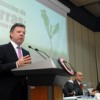
Uribe and Other Hurdles for Colombia’s Land Law
Although it was to be expected, former president Álvaro Uribe's return to politics in Colombia has caused a stir and has a clear aim: to block two of his successor Juan Manuel Santos's pet projects -- reparations to victims of the armed conflict and the restoration of land to displaced peasant farmers.
BRAZIL: Environment Meets Development en Route to the Pacific
Acre, the small Brazilian state that is a symbol of the struggle to preserve the Amazon rainforest, is facing the challenge of ensuring that the development ushered in by two paved roads that will link the state to both the Atlantic and the Pacific oceans will be sustainable.Hard to Put a Price-tag on Healthy Rivers
Damming a river may bring electric power, but it often comes at the price of high-quality food fisheries, experts say. When dams are proposed for power, flood control or irrigation, the often devastating impacts on fisheries in rivers and lakes are ignored or discounted.For Women, Dry Statistics Can Be Power
While women have made strides forward in areas like job market participation over the last two decades, in 2009 only 14 women in the world held the position of head of state or government, and of the 500 largest corporations, just 13 had a female CEO.Migrant Workers in Mexico Left to Hoe Their Own Row
Every year since 1975, Castro Solano has left his home in the town of Tlapa de Comonfort, in the southern Mexican state of Guerrero, to work in other parts of the country as a seasonal farm labourer.U.S.: Think Tank Calls for “Bold Leap Forward” in India Ties
On the eve of U.S. President Barack Obama's maiden voyage to India early next month, an influential think tank is calling for "a bold leap forward" in ties between the two nations.World Bank Extends Food Crisis Fund
Amidst fears of a recurring food crisis, the World Bank has reactivated its Global Food Crisis Response Programme (GFRP), dedicating up to 760 million dollars to countries at risk of food price volatility.ZIMBABWE: Woman Metal Worker Breaking the Mould
At a time when more and more women around the world are taking up jobs in male-dominated domains, 41-year-old Sithabile Ruswa is also making her mark, albeit far from the air-conditioned boardrooms usually reported on.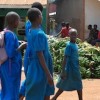
Outcry as Rwandan Govt Shifts Money to Primary Education
In an attempt to meet the development goal of universal access to primary education by 2015, Rwanda’s government has decided to reallocate a large part of its tertiary education budget to the primary education sector.Proposed Pension Bill Outrages Malawi Workers
A draft pension bill has created great concern among workers in Malawi, with some hurriedly seeking early retirement before it will be passed. The bone of contention is a section pegging the retirement age for women at 55 and men at 60.
ZAMBIA: Widespread Poverty Threatens to Reverse MDG Gains
Civil society organisations warn that unless Zambia addresses its high poverty levels, the strides the country already made in achieving some of the Millennium Development Goals (MDGs) may be reversed.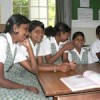
MAURITIUS: Social Ills Prevail Despite Meeting MDGs
The small island state of Mauritius is the only African country likely to meet all eight of the United Nations’ Millennium Development Goals (MDGs) by 2015 - at least on paper. But its citizens say government could do more to improve livelihoods, gender equality and environmental sustainability.EUROPE: For Women, East Is Backward East
Women's rights organisations in Eastern Europe say they are struggling to overcome centuries-old gender stereotypes.
DEVELOPMENT-KENYA: Micro-Credit Helping Farmers to Plough Ahead
Seventeen years ago it seemed like an impossible dream to provide thousands of low-income farmers with a way to borrow small amounts of money. But people working in the tea sector in the rural areas of central Kenya were determined to address farmers’ lack of access to credit. They started the Muramati Savings and Credit Cooperative Society.
LABOUR: Garment Workers of the South Unite
They left behind months or years of slaving away -- in some cases, literally -- in garment sweatshops, working long hours for little to no pay. But breaking free from modern-day slavery or forced labour wasn't enough for a group of textile workers from Argentina and Thailand, who have gone on to forge a new kind of cooperation reaching halfway across the globe.
LATIN AMERICA: Radioactive Attack on Flesh-Eating Screw-Worm
A biological control method used to eradicate screw-worm, a livestock parasite, in the United States, Mexico and Central America, has just been tested successfully in South America, where its adoption is being considered in the countries of the Southern Common Market (Mercosur): Argentina, Brazil, Paraguay and Uruguay.
ZIMBABWE: Debt Crowds Out Essential Spending on Health
Zimbabwe’s debt burden of about 8.3 billion dollars, owed to internal and external institutions, is crowding out essential national budget items such as health and basic services, with detrimental effects for particularly women.‘Food Empires Creating Agricultural Crisis’
Forget speculators, forget biofuel farmers. The real cause behind the permanent food and agricultural crisis is the imperial food regime, squeezing money out of agriculture, a Dutch professor says.
Chile Measures Its “Water Footprints”
How many litres of water are needed to produce one kilogram of table grapes? The current effort to measure the "water footprint" of this and other Chilean exports could give us some answers by year's end.
SOUTHERN AFRICA: Strengthen Cooperation to Secure Power
Southern African nations need to agree on a common operational system to manage energy in the region, environmental experts advise. If they don’t, the region could experience power shortages and resulting economic deficits.
SIERRA LEONE: Unfulfilled Promise of Free Maternal Health Care for Mothers
Marie Musa, 37, is devastated. After the mother of four gave premature birth, her baby boy died a few hours later – because the hospital did not have enough incubators to rescue the infant.« Previous Page — Next Page »


 UN Commission on International Trade Law Holds Colloquium on Harmonizing Law in Age of Digital Trade and Finance. Credit: UN Photo/Manuel Elías
Trade has historically been a geopolitical tool that can both be used to propel development as well as entrench inequalities. In various nations in East Asia and Latin America, increased trade, as often seen in export booms, has allowed them to achieve influential standings within the global economy. On the other hand, many low-income countries in Sub-Saharan Africa, Asia, and Latin America struggle to maintain a robust trade performance, and oftentimes are subjugated to exploitative trade dynamics through intense extraction of their natural resources. In recent decades, international trade has reached a new era as emerging economies across the world are rising in economic preeminence. Stable international trade is crucial to world peace as global interconnectedness facilitates reliable diplomacy. Nevertheless, significant challenges are on the rise. Notably, a major wave of United States tariff escalations in January 2025 lifted US import taxes to their highest level since the 1930s, changing market dynamics and forcing renegotiations with global trading partners.These articles are aimed at informing readers about the complexities of trade and its varying effects on development, with a special focus on the consequences of the global economic crisis, the potential of fair trade and the gender implications of trade policies.
Updated by Yilan Batista and Shuli Wong August 2026

The Week with IPS

NEXT STOP - SDGs
Tracking global progress towards a sustainable world
