Languages
Wednesday, November 11, 2026



News and Views from the Global South
Economy & Trade
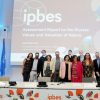
Narrow Valuation of Nature is Widening Biodiversity Loss
Nature has diverse values for different people, but it is poorly evaluated, and this is driving the global biodiversity crisis, top scientists say in a new report.
Wild Species Central to Human Survival, New IPBES Report Offers Options for their Sustainable Use
Fifty thousand wild species meet the needs of billions of people worldwide, providing food, cosmetics, shelter, clothing, medicine and inspiration. But now, a million species of plants and animals face extinction with far-reaching consequences, including endangering economies, food security and livelihoods.
Migrant Workers from Mexico, Caught Up in Trafficking, Forced Labor and Exploitation
Eduardo Reyes, originally from Puebla in central Mexico, was offered a 40-hour workweek contract by his recruiter and his employer in the United States, but ended up performing hundreds of hours of unpaid work that was not authorized because his visa had expired, unbeknownst to him.
Intersecting Crises are Impeding the UN’s Sustainable Development Goals, Threatening Peace & Security
This week marks the mid-way point to the 2030 Agenda on Sustainable Development and with it the release of the UN’s Sustainable Development Goals Report 2022.
Sanctions Are a Boomerang
Economic sanctions against countries whose behavior is reproached by the West operate as punishment although they fail in their declared political objectives, and in cases such as Venezuela the contrast is clearly on display in the windows of high-end stores that sell imported goods.
Tap Into Indigenous Knowledge To Preserve Our Forests
A few years ago, I found myself in the Baka indigenous sacred forest in Assok, in Cameroon in the course of my work in supporting them to preserve their forest against land grabbers. We were building a forest hut using only leaves and the knowledge of our indigenous partners.
Recovering Edible Food from Waste Provides Environmental and Social Solutions in Argentina
For 30 years, Tomasa Chávez visited the Central Market of Buenos Aires and rummaged through the tons of fruits and vegetables that the stallholders discarded, in search of food. Today she continues to do so, but there is a difference: since 2021 she has been one of the workers hired to recover food as part of a formal program launched by the Central Market.
The Rape of the Indian Ocean
The Story of the Yellow Fin Tuna
Over the last past several decades marine fish stocks worldwide have been under intense threat. There have been many high sounding declarations and agreements to reduce catch effort, to use more environmentally friendly fishing gear, to prevent illegal fishing and to impose “closed seasons” to allow stocks to recover.

Animals are Core to Pandemic Prevention – We Must Strengthen Their Defences
The ongoing discussions at the World Health Organization (WHO) around a new, landmark ‘pandemic prevention treaty’ shows that the world is starting to act on the lessons it learned from the COVID-19 pandemic.
Weaponizing Free Trade Agreements
Long seen as means to seek advantage on the pretext of providing mutual benefit, free trade agreements (FTAs) may increasingly be used as economic weapons in the emerging new Cold War. Pivot to Asia, containing China In November 2009, President Obama observed, “in an inter-connected world, power does not need to be a zero-sum game… the United States does not seek to contain China”.
Androids in Human Populations
It is time for countries, especially those with slow growing and ageing human populations, to welcome androids, i.e., humanoid robots with human-like appearance and behavior, including speech, sight, hearing, mobility, and artificial intelligence.
Nature-Positive Ventures Crucial for Africa’s future, say experts at Africa Green Economy Conference
Africa’s unique natural capital assets were the center of conversation at the 2022 Africa Green Economy Conference. Held in a hybrid format from June 27 to 30, participants gathered to discuss the value of nature in Africa’s economy and call for more nature-positive ventures in development.
The World Is Melting Down and the Cause is Corruption- The G20 Needs to Take Action
The G20 is meeting again next week in Indonesia for the second time this year- at a moment when the world is facing the most difficult economic, political and social challenges for decades.
Addressing the Global Biodiversity Crisis Requires Understanding and Prioritizing the Many Values of Nature
Nature has many values. A forest can be a cool and quiet place to retreat to when you need relaxation on a hot summer day. It is a habitat for many species. Trees also sequester and store carbon, reducing future impacts of climate change. But of course, the trees also have a monetary value if they are felled and turned into furniture or put to other uses. These are just four examples of the many values of nature, which are vital parts of our cultures, identities, economies and ways of life.
Mexico Makes Risky Bet on Liquefied Gas in New Global Scenario
Liquefied gas does not occupy a prominent position in Mexico's energy mix, but the government wants to change that scenario, to take advantage of the crisis unleashed by Russia's invasion of Ukraine and the need for new sources of the fuel due to the sanctions against Russia.
A Voice for African Wildlife: A Conversation with Kaddu Sebunya
The CEO of the Nairobi-based African Wildlife Foundation, Kaddu Sebunya – in London to mark AWF’s 60th anniversary while fundraising and lobbying – shares his thoughts with IPS on the climate and food crises, how Africans have their voice, why western countries need a ‘reset’ with Africa, what Prince Charles should say to the Commonwealth, how China is eating western ‘cake’, and what worries him more than anything else.
The Urgency to Ban All Wars
On Sunday 19 June, we gathered in Sezano, municipality of Verona (VR), at the Monastery of the Common Good to affirm the need and urgency to ban war, all wars, and build peace without yes or no buts.
Reimagining Ageing: Older Persons as Agents of Development
Older persons are highly visible across Asia and the Pacific: they work in agricultural fields producing our food supplies, peddle their wares as street vendors, drive tuk-tuks and buses, exercise in our parks, lead some of the region’s most successful companies and form an integral part of our families.
Climate Hypocrisy Ensures Global Warming
Rich country governments claim the high moral ground on climate action. But many deny their far greater responsibility for both historic and contemporary greenhouse gas (GHG) emissions, once acknowledged by the Kyoto Protocol. Climate injustice Worse, responsibility has not been matched by commensurate efforts, especially by the largest rich economies in the G7, which dominates the G20. Its continued control of international economic resources and policymaking blocks progress on climate justice.
Healthy Planet Needs ‘Ocean Action’ from Asian and Pacific Countries
As the Second Global Ocean Conference opens today in Lisbon, governments in Asia and the Pacific must seize the opportunity to enhance cooperation and solidarity to address a host of challenges that endanger what is a lifeline for millions of people in the region.
‘When it Comes to Gender Equality, Our Best is Not Good Enough’: says Dr Phumzile Mlambo-Ngcuka
 The Covid-19 pandemic has impacted lives all over the world. According to this report, gender is emerging as a significant factor in the social, economic and health effects of Covid-19. Women have been hit much harder socially and economically than men. The greatest and most persistent gender gap was seen in employment and uncompensated labour, with 26% of women reporting loss of work compared with 20% of men globally in September 2021.
« Previous Page — Next Page »





 UN Commission on International Trade Law Holds Colloquium on Harmonizing Law in Age of Digital Trade and Finance. Credit: UN Photo/Manuel Elías
Trade has historically been a geopolitical tool that can both be used to propel development as well as entrench inequalities. In various nations in East Asia and Latin America, increased trade, as often seen in export booms, has allowed them to achieve influential standings within the global economy. On the other hand, many low-income countries in Sub-Saharan Africa, Asia, and Latin America struggle to maintain a robust trade performance, and oftentimes are subjugated to exploitative trade dynamics through intense extraction of their natural resources. In recent decades, international trade has reached a new era as emerging economies across the world are rising in economic preeminence. Stable international trade is crucial to world peace as global interconnectedness facilitates reliable diplomacy. Nevertheless, significant challenges are on the rise. Notably, a major wave of United States tariff escalations in January 2025 lifted US import taxes to their highest level since the 1930s, changing market dynamics and forcing renegotiations with global trading partners.These articles are aimed at informing readers about the complexities of trade and its varying effects on development, with a special focus on the consequences of the global economic crisis, the potential of fair trade and the gender implications of trade policies.
Updated by Yilan Batista and Shuli Wong August 2026

The Week with IPS

NEXT STOP - SDGs
Tracking global progress towards a sustainable world
Tracking global progress towards a sustainable world
