Languages
Friday, October 2, 2026



News and Views from the Global South
Editors' Choice

Energy Efficiency Is Law in Chile but Concrete Progress Is Slow in Coming
The Energy Efficiency Law began to gradually be implemented in Chile after the approval of its regulations, but more efforts and institutions are still lacking before it can produce results.
Climate Change Meets Conflict Pushing Millions of Children in Ethiopia Out of School
A silent catastrophe is unfolding in Ethiopia on the backdrop of years of inter-communal conflict and the most prolonged and severe drought in recent years. High inflation and food insecurity in the drought-ravaged country is among the worst in the world.
COP15: Shift in Societal Values Needed to Address Biodiversity Loss
Policymakers were encouraged to look at the economic and social aspects with the environmental elements of biodiversity losses to meet the Global Biodiversity Framework (GBF) targets.
A Little Land Helps Indigenous Venezuelans Integrate in Brazil
A group of Warao families are, through their own efforts, paving the way for the integration of indigenous Venezuelans in Brazil, five years after the start of the wave of their migration to the border state of Roraima.
COP15: We are Losing Nature – Biodiversity – at the Fastest Rate in Human History
While climate change dominates the environmental headlines, quieter, startling changes are taking place in nature across the planet – whether in forests, oceans, deserts, rural landscapes, cities and other places where nature is found.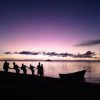
COP15: Biodiversity Conservation in the Face of Growing Economies
Dating back to the 16th Century, the face of biodiversity conservation has taken several tolls and twists- evolving from an era of preservation to conservation- down to conservation and sustainable utilisation of natural resources.
Battling the Twin Challenge of HIV and Cervical Cancer
Damaris Anyango* was recently discharged from Kenyatta National Hospital, battling the twin challenge of cervical cancer and HIV. She is 50 years old and was diagnosed with HIV nearly ten years ago.
Iconic Atlantic Bluefin Tuna in Less Troubled Waters
The Atlantic bluefin tuna is among the largest, fastest, and most beautifully colored of all the world’s fish species. They can measure more than 10 feet in length, weigh over 700 kilograms, and can live longer than 30 years. With their metallic blue coloring on top and shimmering silver-white on the bottom, the giant bony fish is a sight to behold.
IMF Led Privatization, Land and Resource Grab in Sri Lanka
On September 1, 2022, debt-trapped Sri Lanka reached a preliminary agreement with the International Monetary Fund (IMF) for a 48-month Extended Fund Facility of $2.9 billion, which hardly covers the country’s outstanding debt, nor its immediate survival needs.
Excessive & Unfair Criticism of Human Rights Violations in Qatar
Peter Zimmermann owns a bar located in the German city of Cologne, which for thirty years has been a favorite for those who want to watch a soccer game.
India’s Extensive Railways Often Conduit for Child Trafficking
Deeepti Rani (13) lives with her mother in a dilapidated dwelling near a railway track in India’s southern state of Karnataka. The mother-daughter duo sells paperbacks on trains for a living.
Global Risks in 2022: The Year of Colliding Consequences
As 2022 draws to a close, we are confronted with an unprecedented collision of global risks, interacting and reinforcing each other in dangerous new ways.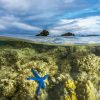
Putting Nature on a Quantifiable, Ambitious Path to Recovery
Up to 1 million species are threatened with extinction – many within decades – this includes nearly one-third of reef-forming corals, shark relatives, and marine mammals. Half of agricultural expansion occurs at the expense of forests, and 85% of wetlands that were present at the beginning of the 18th century had been lost by the year 2000, with the loss of wetlands considered to be happening three times faster, in percentage terms, than forest loss.
Cattle Turn Into New Currency Amid Inflation in Zimbabwe
In 2007 as inflation walloped the Zimbabwean currency, rendering it valueless, then 54-year-old Langton Musaigwa of Mataruse village west of Zimbabwe in Mberengwa district switched to cattle as his currency.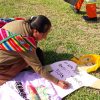
Pandemic Aggravated Violence against Women in Latin America
Violence against women has failed to decline in the Latin American region after the sharp rise recorded during the COVID-19 pandemic, while preventing the causes of such violence remains a major challenge.
Ugandan Women Tackle Domestic Violence with Green Solutions
Constance Okollet Achom, a Ugandan woman from Tororo, a rural village located in Eastern Uganda, has helped several dozens of her peers affected by domestic violence to address the issue by equipping victims with skillsets to manufacture eco-friendly biofuels from agro-forestry waste.
Pan-African Approach Needed to Tackle Food Insecurity Arising from Conflict and Climate Shocks
Upheaval on the global stage, the war in Ukraine, conflict in the Horn of Africa, severe climatic shocks, high international inflation, increasing global commodity prices, high prices of agricultural inputs and low intra-continental trade are fuelling food insecurity across Africa.
COP27: Landmark Win on Loss and Damage Fund
COP 27 delivered on what was the ‘litmus test’ for its success – consensus on the establishment of a fund on loss and damage. What seemed impossible was made possible, largely due to the unity of the G77 and China and the role of the Egyptian Presidency. Also important were efforts by civil society groups who put pressure on the United States, the main blocker to having the fund.
Arbitrary Arrests in El Salvador Hit the LGBTI Community
Police raids against gang members in El Salvador, under a state of emergency in which some civil rights have been suspended, have also affected members of the LGBTI community, and everything points to arrests motivated by hatred of their sexual identity.
Loss and Damage Fund Saves COP27 from the Abyss
They were on the brink of shipwreck and did not leave happy, but did feel satisfied that they got the best they could. The countries of the global South achieved something decisive at COP27: the creation of a special fund to address the damage and loss caused by climate change in the most vulnerable nations.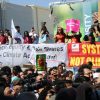
COP27: Historic Loss and Damage Fund Takes COP27 to the Edge
After a tense impasse and many hours of negotiations, almost 200 countries struck a deal to set up a loss and damage fund to assist nations worst hit by climate change – a demand considered not-negotiable by the developing countries.« Previous Page — Next Page »


The Week with IPS

NEXT STOP - SDGs
Tracking global progress towards a sustainable world
Tracking global progress towards a sustainable world
