
Tuesday, October 27, 2026



News and Views from the Global South
Combating Desertification and Drought

Biotechnology Part of the Solution to Africa’s Food Insecurity, Scientists Say
A growing number of African countries are increasingly becoming food insecure as delayed and insufficient rainfall, as well as crop damaging pests such as the ongoing outbreak of the fall armyworm, cause the most severe maize crisis in the last decade.
The Urbanization of Malnutrition
Rapid urbanization is increasingly shifting the impacts of malnutrition from rural to urban areas. One in three stunted under-five children out of 155 million across the world now lives in cities and towns.
Alert: Nature, on the Verge of Bankruptcy
Pressures on global land resources are now greater than ever, as a rapidly increasing population coupled with rising levels of consumption is placing ever-larger demands on the world’s land-based natural capital, warns a new United Nations report.
Floods, Hurricanes, Droughts… When Climate Sets the Agenda
When officials and experts from all over the world started the first-ever environmental summit hosted by China, they were already aware that climate and weather-related disasters were already seriously beginning to set the international agenda – unprecedented floods in South Asia, strongest ever hurricanes Harvey and Irma, and catastrophic droughts striking the Horn of Africa, among the most impacting recent events.
How Aid in Cash, Not Goods, Averted a Famine in Somalia
In February, when the government of Somalia sounded an alarm to the UN about risks of a famine in the country, the UN’s Office of Coordination of Humanitarian Affairs (OCHA), besides quickly shuffling a response team, was acting from a steep sense of history. The Office, instead of sending out massive aid packages, distributed cash vouchers to families who could spend it to buy goods according to their needs.
Ethiopia’s Internally Displaced Overlooked Amid Refugee Crises
Grasping its limp leg, a woman drags the carcass of one of her few remaining black-headed sheep away from her family’s domed shelter fashioned out of sticks and fabric that stands alone amid the desiccated scrubland a few kilometers from the town of Dolo Odo in the southeast of Ethiopia near the border with Somalia.
Europe, New Border of Africa’s ‘Great Desert’ – The Sahara
 With the highest temperatures on record and unprecedented heat waves hitting Europe this year, Africa’s ‘Great Desert’, the Sahara, is set continue its relentless march on the Southern European countries until it occupies more than 30 per cent of Spain just three decades from now.

Climate-Smart Agriculture Urgently Needed in Africa
Africa contributes only 4 per cent of global greenhouse gas emissions, while six of the 10 most affected countries by climate change are in Africa, warns a major agricultural research for development partnership, while stressing the urgent need to scale up climate-smart agriculture, improve forestry and transform the productivity of water use.
Protecting Africa’s Drylands Key to the Continent’s Future
Africa’s population continues to grow, putting intense pressure on available land for agricultural purposes and life-supporting ecosystem services even as the scenario is compounded by the adverse impacts of climate change.
Climate Migrants Might Reach One Billion by 2050
Imagine a world with as many as one billion people facing harsh climate change impacts resulting in devastating droughts and/or floods, extreme weather, destruction of natural resources, in particular lands, soils and water, and the consequence of severe livelihoods conditions, famine and starvation.
What Does “Climate-Smart Agriculture” Really Mean? New Tool Breaks It Down
A Trinidadian scientist has developed a mechanism for determining the degree of climate-smart agriculture (CSA) compliance with respect to projects, processes and products.
Jordan Makes Strides Toward Inclusive Green Economy
Jordan may be one of the smallest economies in the Middle East, but it has high ambitions for inclusive green growth and sustainable development despite the fact that it lies in the heart of a region that has been long plagued with wars and other troubles, says the Director-General of the Global Green Growth Institute (GGGI) Dr. Frank Rijsberman.
Can the Gender Gap Be Measured in Dollars Only?
Until a decade or so ago, experts and world organisations measured the impact of natural and man-made disasters in terms of human losses. For instance, they would inform about the number –and suffering—of human beings falling victims of extraordinary floods, droughts, heat or cold waves, and armed conflicts. This is not the case anymore.
Climate Scientists Use Forecasting Tools to Protect Caribbean Ways of Life
Since 2013, Jamaica’s Met Office has been using its Climate Predictability Tool (CPT) to forecast ‘below average’ rainfall or drought across the island. The tool has allowed this northern Caribbean island to accurately predict several dry periods and droughts, including its most destructive episode in 2014 when an estimated one billion dollars in agricultural losses were incurred due to crop failures and wild fires caused by the exceptionally dry conditions.
Collectively Managing South Asia’s Stressed Water Resources
Experts and policymakers here say regional cooperation is a must to resolve long-standing water problems in South Asian countries like Bangladesh, Bhutan, China, India and Nepal, and to harness the full value of water.
Value of Water Is on the Rise
In the wake of recent water-related disasters in Bangladesh, including water-logging and floods that displaced thousands of families, a high-level consultation in the capital Dhaka on valuing water will look at ways to optimize water use and solutions to water-related problems facing South Asia.
Pope Francis Donates to FAO for Drought, Conflict-Stricken East Africa
As an unprecedented gesture, Pope Francis has donated 25,000 euro to the UN Food and Agriculture Organisation's efforts supporting people facing food insecurity and famine in East Africa.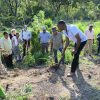
Farming Beyond Drought
The Caribbean accounts for seven of the world’s top 36 water-stressed countries and Barbados is in the top ten. The Food and Agriculture Organisation (FAO) defines countries like Barbados, Antigua and Barbuda, and St. Kitts and Nevis as water-scarce with less than 1000 m3 freshwater resources per capita.
East Africa’s Poor Rains: Hunger Worsened, Crops Scorched, Livestock Dead
Poor rains across East Africa have worsened hunger and left crops scorched, pastures dry and thousands of livestock dead, the United Nations food and agriculture agency has warned in a new alert.
Communities Step Up to Help Save Jamaica’s Forests
According to the United Nations Food and Agriculture Organization (FAO), 31.1 percent or about 337,000 hectares of Jamaica is forested. Of this, 26.1 percent or 88,000 is classified as primary forest, the most biodiverse and carbon-dense form of forest.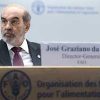
Progress on World Hunger Has Reversed
World hunger has increased, reversing years of progress, said a UN specialised agency. During its biennial conference held in Rome, Italy from 3-8 July, the Food and Agriculture Organisation (FAO) noted that the world is facing it’s worst food crisis since World War II.« Previous Page — Next Page »





Today, some two billion people depend on ecosystems in dryland areas, with 90 percent of them living in developing countries. But the pace of arable land degradation is accelerating – now estimated at 35 times the historical rate -- impacting biodiversity, availability of clean water and food security, as well as exposing vulnerable communities to the harsh impacts of climate change. As the only legally binding international agreement linking environment and development to sustainable land management, the United Nations Convention to Combat Desertification (UNCCD) works to improve the living conditions of people in the drylands. IPS looks at local solutions being implemented around the world, from restoring soil productivity and mitigating the effects of drought, to projects that empower communities to manage their dryland resources more effectively.

The Week with IPS

Tracking global progress towards a sustainable world
