
Sunday, October 11, 2026



News and Views from the Global South
Combating Desertification and Drought

Opinion: Let’s End Chronic Hunger
At the 1996 World Food Summit (WFS), heads of government and the international community committed to reducing the number of hungry people in the world by half. Five years later, the Millennium Development Goals (MDGs) lowered this level of ambition by only seeking to halve the proportion of the hungry.
Poor Land Use Worsens Climate Change in St. Vincent
For 32 years, Joel Poyer, a forest technician, has been tending to the forest of St. Vincent and the Grenadines.
NGOs Urge Post-2015 Declaration Include Water, Sanitation as Basic Human Rights
Virtually every major international conference concludes with a “programme of action” (PoA) – described in U.N. jargon as “an outcome document” – preceded by a political declaration where 193 member states religiously pledge to honour their commitments.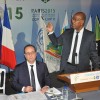
Caribbean Looks to Paris Climate Summit for Its Very Survival
Caribbean leaders on Saturday further advanced their policy position on climate change ahead of the 21st Conference of Parties, also known as COP 21, scheduled for Paris during November and December of this year.
Caribbean Stakes Out “Red Lines” for Paris Climate Talks
When the international climate change talks ended in Peru last December, the 15-member Caribbean Community (CARICOM), a political and economic union comprising small, developing, climate-vulnerable islands and low-lying nations, left with “the bare minimum necessary to continue the process to address climate change”.
In Belize, Climate Change Drives Coastal Management
A five-year project launched here in Belize City in March seeks to cement a shift in view of climate change and its impact on Belize’s national development.
Opinion: A Major Push Forward for Gender and Environment
Experts from around the world gathered in New York recently to launch work on the Global Gender Environment Outlook (GGEO), the first comprehensive, integrated and global assessment of gender issues in relation to the environment and sustainability.
Q&A: “Protect Your Biodiversity”
Richard Huber is chief of the Sustainable Communities, Hazard Risk, and Climate Change Section of the Department of Sustainable Development of the Organisation of American States (OAS). Its objective? Foster resilient, more sustainable cities – reducing, for example, consumption of water and energy – while simultaneously improving the quality of life and the participation of the community.
Four Fast Facts to Debunk Myths About Rural Women
We are lucky to live in a country that has long since abandoned the image of the damsel in distress. Even Disney princesses now save themselves and send unsuitable “saviours” packing. But despite the great strides being made in gender equality, we are still failing rural women, particularly women farmers.
Opinion: Sustainable Development Goals Could Be a Game-Changer for Water
Suppose money was being deposited and withdrawn from your bank account, but you didn’t know how much. And suppose you knew you had bills coming due, but you didn’t know when or what amount would be required to cover them.
In Thrall to the Mall Crawl and Urban Sprawl
There's little argument about the basic facts: It's ugly (think strip malls and big box stores). It's not very convenient (hours spent behind the wheel to get to work). And it wreaks havoc on the natural environment (lost farmland and compromised watersheds).
Key to Preventing Disasters Lies in Understanding Them
The Third World Conference on Disaster Risk Reduction concluded on Wednesday after a long drawn-out round of final negotiations, with representatives of 187 U.N. member states finally agreeing on what is being described as a far-reaching new framework for the next 15 years: 2015-2030.
Middle Income Nations Home to Half the World’s Hungry
Nearly half of the world’s hungry, amounting to about 363 million people, live in some of the rising middle income countries, including Brazil, China, India, Indonesia and Mexico, according to a new report released Wednesday by the Washington-based International Food Policy Research Institute (IFPRI).
Sendai Conference to Move From Managing Disasters to Risk Prevention
As the world inched towards a crucial United Nations Conference in Sendai, Japan, Margareta Wahlström, head of the U.N. Office for Disaster Risk Reduction (UNISDR), assured that there was “general agreement” on the need to “move from managing disasters to managing disaster risk”.
Feeding a Warmer, Riskier World
Artificial meat. Indoor aquaculture. Vertical farms. Irrigation drones. Once the realm of science fiction, these things are now fact. Food production is going high tech – at least, in some places.
Brazil – from the Droughts of the Northeast to São Paulo’s Thirst
Six million people in Brazil’s biggest city, São Paulo, may at some point find themselves without water. The February rains did not ward off the risk and could even aggravate it by postponing rationing measures which hydrologists have been demanding for the last six months.
Opinion: Eco-efficient Crop and Livestock Production for Nicaraguan Farmers
For Roberto Pineda, a smallholder farmer in the Somotillo municipality of Nicaragua, his traditional practice after each harvest was to cut down and burn all crop residues on his land, a practice known as “slash-and-burn” agriculture.
Opinion: Let’s Grant Women Land Rights and Power Our Future
Women are not only the world’s primary food producers. They are hardworking and innovative and, they invest far more of their earnings in their families than men. But most lack the single most important asset for accessing investment resources – land rights.
Syrian Conflict Has Underlying Links to Climate Change, Says Study
Was the four-year-old military conflict in Syria, which has claimed the lives of over 200,000 people, mostly civilians, triggered at least in part by climate change?
Bamboo – An Answer to Deforestation or Not in Africa?
Deforestation is haunting the African continent as industrial growth paves over public commons and puts more hectares into private hands.
Opinion: Water and the World We Want
We have entered a watershed year, a moment critical for humanity.« Previous Page — Next Page »





Today, some two billion people depend on ecosystems in dryland areas, with 90 percent of them living in developing countries. But the pace of arable land degradation is accelerating – now estimated at 35 times the historical rate -- impacting biodiversity, availability of clean water and food security, as well as exposing vulnerable communities to the harsh impacts of climate change. As the only legally binding international agreement linking environment and development to sustainable land management, the United Nations Convention to Combat Desertification (UNCCD) works to improve the living conditions of people in the drylands. IPS looks at local solutions being implemented around the world, from restoring soil productivity and mitigating the effects of drought, to projects that empower communities to manage their dryland resources more effectively.

The Week with IPS

Tracking global progress towards a sustainable world
