
Tuesday, November 17, 2026



News and Views from the Global South
Climate Change
U.N. Calls for Tax on Ultrarich to Boost Development
What if billionaires the world over are asked to shell out at least one percent of their wealth as an international tax for development?
Green Bricks Pave Future for Female Workers
At first glance the smart young women in white overcoats, black rubber boots and protective face masks seem out of place in impoverished Bangladesh’s dirtiest industry – brick making.Youth-Friendly Apps Visualise Carbon Footprint
Following what many regard as a disappointment at the recent Rio+20 Earth Summit, the World Bank and several groups have begun implementing new initiatives to "personalise" climate change, in hopes of revitalising the issue among the younger generation.Poland Clings On to Coal
Coal has brought its own compulsions for Poland, as it has for many other countries in the call to move to more renewable and cleaner sources of energy.
Going It Alone After the Rio Circus
The works starts now, UN Secretary-General Ban Ki-Moon said at the conclusion of the summit on sustainable development in Rio last week. This was about the only UN statement that civil society groups seem to agree with. It is on the precise task at hand that they differ.U.S. Sees Greatest Reduction in CO2 Emissions
According to a recent report by the International Energy Agency, the U.S. has seen the greatest reduction in carbon dioxide pollution within the past six years in comparison to any other country, even as global carbon dioxide pollution has reached record highs.
Bolivia in Need of Coordinated Climate Change Policies*
The effects of climate change are causing hundreds of millions of dollars a year in losses of crops, livestock and housing in Bolivia. But the few climate change adaptation and prevention policies adopted by the authorities are piecemeal and fragmented, experts say.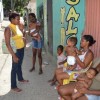
CLIMATE CHANGE: Caribbean Women Caught in the Storm
Incorporating a gender focus in public policies for confronting and adapting to the impacts of climate change is still a pending task in the Caribbean, despite women’s proven skills in risk and disaster management.Melting Permafrost Threatens Swiss Villages
Melting glaciers are the most visible effect of global warming in the Swiss Alps. Meanwhile, permafrost is invisible and melting too, often causing rockfall and massive debris flows, ultimately threatening mountain villages.
Mapping out Climate Change Adaptation Plans on Kenya’s Airwaves
On a Wednesday morning in Mutitu-Andei township in Makueni County, one of Kenya’s driest areas, smallholder farmer Josephine Mutiso tunes into Radio Mang’elete 89.1 FM and listens as meteorological experts discuss the changes in rainfall patterns in the county.
OP-ED: Expanding Oil Production Poses Environmental Risks
With oil prices on the rise again and geopolitical upheaval in some major oil producing regions, many countries are turning to new and often environmentally damaging sources of oil, including oil sands, deepwater offshore oil, and heavy oil.
Micro Hydels Power Indonesia’s Green Energy Plans
The nighttime glitter of Indonesia’s cities and urban centres contrasts sharply with darkness of the hinterland where some 90 million people live without the benefit of electricity.
Cuba Develops Crops Adapted to Climate Change
Cabbage, broccoli, carrots, onions and other resistant vegetables are being grown by researchers in Cuba, who for decades have been working to design plants adapted to the tropical conditions in the Caribbean region.No Strategy for Civilisation in Crisis
The Second United Nations Conference on Human Settlements (Habitat II) in Istanbul in 1996 was one of the international meetings most open to civil society participation.
Cuba Seeks to Guarantee Food Supplies in Changing Climate*
In the face of the challenge of producing more food in a changing climate, farmers in Cuba are coming up with alternatives like planting drought-resistant crops and digging ponds to guarantee water supplies, in order to keep food on the table during times of drought, heavy rains or hurricanes.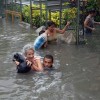
Climate Change: Waiting for a Catastrophic Wake-Up Call *
Disasters are the new midwives of history. But in order to play this role, they need to be catastrophic, like the accidents in Chernobyl in 1986 and Fukushima in 2011 that led governments to suspend and even abolish their nuclear energy programs.
Climate-Smart Agriculture to Reduce Vulnerability*
Agroforestry is gaining ground as a tool for climate change adaptation and mitigation in Central America, a region where global warming could generate losses equivalent to 19 percent of gross domestic product.
Weak Rio+20 Agreement Anticipates New Noah’s Ark
The downpour that fell Friday in this Brazilian city was nature’s warning to the heads of state meeting at the Rio+20 summit. The generation of Noe (Noah), an environmentalist’s son who will be born a month from now, will have to save biodiversity that is more complex than that of his Biblical namesake.
Amazon Countries Want Concrete Sustainable Development Goals*
The countries of the Amazon river basin are pursuing definite goals for the region, such as zero deforestation by 2020, even though the Rio+20 conference's outcome document does not include "sustainable development goals".
Climate Refugees – Today’s New Reality*
The continued exodus of Somalis to Kenya and Ethiopia has fuelled the debate on a new issue of global concern: climate refugees, driven from their homes and across borders by extreme weather events.
Increased Investment in Zambia’s Resources Means Displacement of Rural Poor
As social movements blasted the "new green economy" proposed at Rio+20 this week, environmental activists in Zambia worried about the role that poor people, especially those in rural areas, are going to play in it.« Previous Page — Next Page »


As unsustainable human consumption and production systems are driving changes in average temperatures and weather patterns, "abnormal" is increasingly becoming the norm. So far, a lack of financing has been standing in the way of a comprehensive global plan for climate adaptation, and a global financial crisis has contributed to an increasing reliance on public-private partnerships. Our Climate Change page provides you with the latest news about international and local efforts to address what's frequently been called "the challenge of our time", the forces behind the climate change and the impact it has on the world's most vulnerable populations. Along the way, we bring you stories on growing citizen awareness, new scientific data, and emerging climate policies towards sustainable development.

The Week with IPS

Tracking global progress towards a sustainable world

