
Tuesday, November 17, 2026



News and Views from the Global South
Climate Change

Biomass Plantations Can Power India
Valli, 50, and Sarasu, 60, have been working with Energy Plantation Projects India (EPPI) since inception in 2007, the income they earn forming an integral part of their household budgets. "We easily manage household work and a salary-paying job," they tell IPS.Energy Agency Looks to Natural Gas “Golden Age”
If a series of "golden rules" can be followed, a new report from the International Energy Agency (IEA) suggests, global natural gas usage could grow by more than 50 percent by 2035.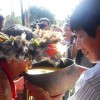
Brazilian Indigenous Community Seeks Survival Through Carbon Credits
Less than 45 years ago, the Paiter-Suruí, an indigenous people living deep inside the Amazon rainforest in Brazil, had never been in contact with the outside world. Today they hope to ensure their survival through the complex mechanisms of the carbon market.
Abrupt Shift from Drought to Flooding in Central Cuba
The sudden shift from drought to heavy rainfall that caused severe flooding in central Cuba drove home to the authorities the need to redesign preparedness and prevention plans for climate-related emergencies.
Climate Change and Family Planning – Twin Issues for LDCs
The reproductive rights agenda, from improving women’s access to education to systematic family planning to reducing birth rates and combating poverty, has become a cornerstone of most industrialised nations’ development policies toward the least developed countries (LDCs), comprised primarily of sub-Saharan African states.
Q&A: North-South Divide Looms Heavily Over Rio+20 Summit
The 1992 Earth Summit in Rio de Janeiro was to a large extent derailed by a North-South divide: a battle between a coalition of rich industrial nations versus the world's developing countries led by the Group of 77.
Rio+20 is Everyone’s Conference
The United Nations Conference on Sustainable Development, otherwise known as Rio+20, is a once-in-a-generation opportunity.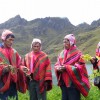
Elders in Peruvian Andes Help Interpret Climate Changes
A unique response to the challenge of global warming is happening in rural areas of Peru, where a network of indigenous elders is working out how to adjust weather forecasts in the light of climate change, while taking measures to safeguard their crops.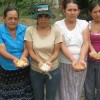
Rural Women in Peru Key to Adaptation of Seeds to Climate Change
For ages, rural women in the Peruvian highlands have been selecting and storing seeds, ensuring their preservation. But the authorities have failed to tap into this storehouse of knowledge and experience, despite the contributions it could make to the design of effective policies for adaptation to climate change, which poses a growing threat to the women’s livelihoods.
‘Green Economy’ – New Disguise for Old Tricks?
Though the current global economic and financial crises are undoubtedly devastating much of the world, they present the perfect opportunity for remodeling our economic system, according to participants at the ninth annual Terra Futura (Future Earth) exhibition of ‘good practices’ in social, economic and environmental sustainability held here from May 25-27.Global Temperatures Rising on a Devastating Trajectory
Climate-heating carbon emissions set a record high in 2011, in a 3.2 percent increase over the previous year, the International Energy Agency reported this week. The main reason for this dangerous increase is that governments are failing to implement policies to prevent catastrophic increases of global temperatures.
Living in the Heart of Hurricane Alley in Cuba
In Los Palacios, a farming community in the western Cuban province of Pinar del Río, local residents are still working hard to rebuild after the damage caused by two of the three hurricanes that hit this country in 2008. "It was just horrible," people here say when asked about what happened.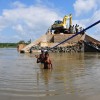
Awareness of Climate Change Must Go Mainstream
Addressing a group of journalists during a workshop in Bangkok, Ali Raza Rizvi, Asia head of the International Union for the Conservation of Nature (IUCN)’s regional climate change and resilience programme, noted that many Asian countries have become ‘disaster friendly’.Targeting Right-Wing Extremism, Citizens Challenge Corporate Ties
A coalition of advocacy groups is targeting corporate support for the right-wing Heartland Institute after the organisation took out a controversial billboard in Chicago comparing people who believe in global warming to a serial killer and mass murderer.
Indonesia Is Wilting
Unless the rapid deforestation in one of the world’s most richly-forested countries is controlled, Indonesians may one day wonder, "where are all the flowers gone." To those lyrics by legendary U.S. singer Joan Baez they might also have to add, and where are all the tigers, elephants, orangutans, birds and ancient forest communities gone.
Community Drills Part of Cuba’s Top-Notch Disaster Response System
A well-oiled prevention system that involves the entire country, from the highest spheres of government to the most isolated rural community, makes Cuba one of the best-prepared countries in the world when it comes to preventing deaths and mitigating risks in case of disasters.
Mangroves Lead Battle Against Rising Seas
Sea level rise near Papua New Guinea, a Small Island Developing State (SIDS) in the southwest Pacific, is estimated at seven millimetres per year, double the global annual average of 2.8-3.6 mm.
Nothing to Show for Hard Work but Burnt Fields of Maize
Gertrude Mkoloi earns a living harvesting maize on a small piece of land in rural Zimbabwe. Or at least she used to.
Q&A: No Single Country Can Forecast Climate Change Alone
Cuban climate change scientists have been sharing their research findings and experience over the past few years with the rest of the Caribbean islands, using PRECIS, a regional climate modelling system, to help design adaptation policies.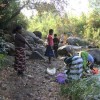
While Men Go Drinking, Women Go Fishing
Climate change may have led to declining water levels in Genda Village in Zambia’s Eastern Province, but Mercy Mwanza and the women here discovered there was a positive side to it and found a new way to earn a living.
Can ‘Blue Forests’ Mitigate Climate Change?
Fifty-five percent of global atmospheric carbon captured by living organisms happens in the ocean.« Previous Page — Next Page »


As unsustainable human consumption and production systems are driving changes in average temperatures and weather patterns, "abnormal" is increasingly becoming the norm. So far, a lack of financing has been standing in the way of a comprehensive global plan for climate adaptation, and a global financial crisis has contributed to an increasing reliance on public-private partnerships. Our Climate Change page provides you with the latest news about international and local efforts to address what's frequently been called "the challenge of our time", the forces behind the climate change and the impact it has on the world's most vulnerable populations. Along the way, we bring you stories on growing citizen awareness, new scientific data, and emerging climate policies towards sustainable development.

The Week with IPS

Tracking global progress towards a sustainable world

