
Wednesday, November 18, 2026



News and Views from the Global South
Climate Change

CLIMATE CHANGE: Following the Carbon Footprint to the ‘Emissions Reduction’ Fallacy
According to official figures, the European Union member countries have successfully reduced their emissions of greenhouse gases (GHG), especially of carbon dioxide (CO2), by more than 15 percent since 1990, thus more than fulfilling their commitments under the Kyoto protocol.
Kyoto Protocol – Hopes for Tangible Results Remain Slim
The last hours of the 17th United Nations climate change summit in Durban have begun. Since the arrival of almost 150 ministers and heads of state on Tuesday, negotiations have moved to the political level. They are expected to debate the way forward until late Friday night, or even Saturday morning.
Failure to Bridge the “Emissions Gap” Brings Economic Crisis
Countries at the United Nations climate change negotiations have publicly acknowledged their current pledges to reduce carbon emissions will not result in limiting global warming to less than two degrees Celsius.
ENVIRONMENT-INDIA: Women Turn Waste Into Wealth
Standing on the shimmering white beach and gazing out at the turquoise blue waters of the Arabian sea, it is hard to believe that a decade ago this international tourist destination was under siege by mounting heaps of garbage.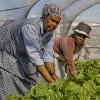
At the Nexus of Agrofuels, Land Grabs and Hunger – Part 2
The forests in Africa absorb over 1.2 billion tonnes of carbon annually. With these diverse and natural forests, grasslands and prairie lands disappearing under investment schemes and the development of monoculture plantations for supposed "green" energy alternatives like agrofuels, not much else remains to absorb the shocks of hunger and climate change.
Thousands march to protest against climate change
 Thousands of protesters marched in Durban on Saturday in an effort to make the need for the fight against climate change known to the world. Zukiswa Zimela of IPS followed the protest and compiled this sound-slide.

Carbon Pricing to Save Green Climate Fund
Carbon pricing will be the core mechanism to finance the Green Climate Fund and with it climate change adaptation projects in developing countries.
UGANDA: Deforestation Robbing Communities of their Income
From a distance, Bugala Island in Lake Victoria is a patchwork of green and brown. The pattern is a result of dense forest retreating in the wake of recently planted palm tree plantations.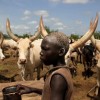
At the Nexus of Agrofuels, Land Grabs and Hunger – Part 1
While the United Nations climate talks in Durban enter their ninth day of political feet-dragging, researchers and peasants around the world are busy connecting the dots between so- called "green climate solutions", industrialised agriculture and chronic hunger.
CLIMATE CHANGE: Comprehensive Agreement Beyond Reach
The goal of a comprehensive and binding agreement may be beyond the reach of the 17th United Nations climate change negotiations, says the organisation's secretary-general Ban Ki-moon.
Sweden, UK and Germany Top Climate Protectors
Sweden, the United Kingdom and Germany are the top countries to fight climate change, according to the 2012 Climate Change Performance Index, whose results were published at the United Nations climate change summit today.
Global Warming Threatens Future of Amazon Turtles
The more data she gathered for her Master's thesis, the more alarmed the young Brazilian biologist became. The Amazon turtles born in the dozens of nests examined in 2008 and 2010 were all female. And only eight percent of the hatchlings studied in 2007 had been male.
CLIMATE CHANGE: Kyoto Protocol on Life Support
The United States has become the major stumbling block to progress at the mid point of negotiations over a new international climate regime say civil society and many of the 193 nations attending the United Nations climate change conference here in Durban.
South Africa Moves Towards Low Carbon Footprint Travel
Counting on responsible travellers who increasingly seek environmentally friendly alternatives for their holidays, South Africa's tourism sector wants to conserve its biggest asset – nature – while fighting climate change at the same time.NEPAL: Protests Fail to Stop Climate Loans
Nepal will implement five projects with 110 million dollars sanctioned by the controversial Climate Investment Funds (CIFs), ignoring protestors who say this least developed country merits grants rather than climate loans.
Growing Calls for Water to be Prioritised
Efforts to establish water as an agenda item in its own right in climate change negotiations are gaining momentum in Durban, South Africa. Water experts say doing this will lead to a greater focus on developing policy, and attract more resources into the water sector through adaptation programmes.
TRADE: Small Steps towards Emission Reduction Deal
Emerging economies China, South Africa and Brazil have indicated their openness to legally-binding carbon emission reduction targets from 2020 during the United Nations climate change summit in Durban, South Africa.
CLIMATE CHANGE: Biofuels Are Not the Solution
Science tells us that we are heading for a climate crisis, yet it is within our means to change course.
Mountain magic turning tragic
A mountainous country that boasts of eight of the 14 highest peaks in the world, including Mt Everest, Nepal is threatened by both deluge and drought with climate change shrinking its glaciers by 21 percent in 30 years. As rising temperature disturbs the balance of snow, ice and water in the Hindu Kush Himalayan region where it is located, millions of mountain people and 1.3 billion people living downstream in Asia's major river basins face the loss of livelihood, homes and lives due to flash floods and droughts.
“Fracking” for Shale Gas: Neither Clean nor Green
Hydraulic fracturing or "fracking" is being used to tap the last remaining natural gas deposits across large areas of the United States and western Canada, fueling continued dependence on hydrocarbons instead of a shift to genuinely clean energy sources to cool the planet.Shale Gas May Be a Mexican Mirage
In spite of mounting scientific evidence about its negative aspects, Mexico is getting ready to intensify exploration for shale gas, natural gas found trapped in shale, a sedimentary rock.« Previous Page — Next Page »


As unsustainable human consumption and production systems are driving changes in average temperatures and weather patterns, "abnormal" is increasingly becoming the norm. So far, a lack of financing has been standing in the way of a comprehensive global plan for climate adaptation, and a global financial crisis has contributed to an increasing reliance on public-private partnerships. Our Climate Change page provides you with the latest news about international and local efforts to address what's frequently been called "the challenge of our time", the forces behind the climate change and the impact it has on the world's most vulnerable populations. Along the way, we bring you stories on growing citizen awareness, new scientific data, and emerging climate policies towards sustainable development.

The Week with IPS

Tracking global progress towards a sustainable world

