
Wednesday, November 18, 2026



News and Views from the Global South
Climate Change

NIGERIA: Fearing the Floods – Sleeping with One Eye Open
The women of Makoko, a low-lying slum close to the Lagos Lagoon along Nigeria’s Atlantic coast, always sleep with one eye open. Many live in fear that when they go to sleep at night they will wake to flooded homes and business.
CLIMATE CHANGE: ‘High Glaciers Safe From Warming’
Global warming will melt far less of the glaciers of Central Asia than of those in other mountain ranges, shielding the people who depend on them for water from the effects of climate change for several decades at least, scientists say.In Unprecedented Move, Canada Withdraws from Kyoto Protocol
Barely 24 hours after it signed a new global climate change agreement in Durban, South Africa, Canada became on Monday the first country to formally withdraw from the Kyoto Protocol, the only legally binding treaty to reduce emissions causing climate change.
CLIMATE CHANGE: City Apartheid Built Turns Green
Something unusual is happening in Atlantis. Created in the 1970s to fulfill the apartheid government's agenda to evict "coloured" South Africans from Cape Town, Atlantis has always been best known as the city that apartheid built.
Civil Society organisations are sticking to their guns: Women will be hardest hit by the climate change
 Civil Society organisations are sticking to their guns: Women will be hardest hit by the climate change. Zuki Zimela reports from COP 17 in Durban.
Op-Ed: Facing Peak Oil and Peak Gas: In Search of the Lesser Evil
The U.S. oil geologist Marion King Hubbert predicted, already in 1956, that the global production of oil will reach its all-time high roughly when we have used one half of the world's oil reserves. This is because geologists tend to find the biggest fields first, and because oil wells become tired during the production phase. The more is taken out, the more difficult it gets to bring the remaining oil to the surface.
Q&A: “‘Sustainable Development’ Is Often Used Gratuitously”
People are disillusioned with global conferences "that mobilise thousands of people and fail to achieve real global progress" in reducing greenhouse gas emissions, says Boris Graizbord, head of the sustainable development studies programme at one of Mexico's leading research universities in the social sciences
EUROPE: Cranes Overstay Their Welcome as Weather Grows Warmer
Migrating flocks of cranes flying overhead are normally a harbinger of spring and autumn in Europe. But due to rising temperatures, the birds are sticking around increasingly longer in the fall before heading south.
SOUTH AFRICA: Climate Change Affecting Fisherwomen’s Livelihoods
Having observed changes in the sea and the life cycles of the rock lobsters that their livelihoods depend on, a group of fisherwomen from the Western Cape, South Africa are calling on government to adjust fishing seasons to adapt to what they claim are climate change-related alterations.
The Green Climate Fund
 The Green Climate Fund is meant to help developing countries with 100 billion dollars a year by 2020 to adapt to the effects of climate change. The creation of the GCF was approved during the COP16 in Cancun. Civil society and some developing nations noted that governments have made trillions of dollars available for the bank and financial sector and that the world's military budget is more than 10 times what is needed for the GFC. Up until now, countries have not been able to agree on a single mechanism to draw public funds.

Durban Platform
After two weeks and an additional 29 hours of intense and even bitter negotiations, the 193 nations participating in the United Nations climate talks agreed to a complex and technical set of documents called the "Durban Platform." The biggest development reached at dawn Sunday is an agreement to negotiate a new global treaty to reduce emissions by 2015. 
Global emissions from burning fossil fuels
Documents under negotiation in Durban, South Africa acknowledge the science-based emissions reduction target of 25 to 40 percent by 2020. Those reductions and that timeline are what is needed to stay below two degrees Celsius. The draft text says this would be the target to be agreed on at COP 18. The science shows that global emissions need to fall to 44 Gt by 2020 and continue to decline by two percent per year.
CLIMATE CHANGE-BRAZIL: Contradictory Goals in Agriculture
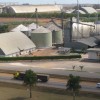
Brazil aims to meet its climate change targets in agriculture by stimulating techniques that have been proven to reduce greenhouse gas emissions – but which may increase the use of toxic agrochemicals, activists say.
KENYA: Thirsty Eucalyptus Good for Absorbing Carbon
On a steep slope of land in Thangathi village in Central Province, Kenya, Peter Nyaga surveys his four-year-old eucalyptus woodlot. He calculates the value of every tree on his two-hectare piece of land at maturity in three years.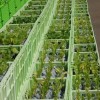
Agreement for New Global Treaty To Reduce Emissions
The world is increasingly committed to dangerous levels of global warming with yet another failure by nations of the world to agree to needed reductions in carbon emissions here in Durban. However, as the 17th Conference of Parties ended early Sunday morning, members did agree to talk about a new global treaty to reduce emissions.INDIA: Seeking Aid For Low Carbon Growth
After pushing for financing adaptation at the just-concluded United Nations climate talks at Durban, India is hitting every button for aid in executing its low-carbon growth plans.
JAMAICA: Waking Up to Urgency of a National Climate Policy
As increasingly extreme and erratic weather driven by the earth's changing climate exacts a heavy toll on Jamaica's population, economy and infrastructure, a consensus has emerged among scientists and policy makers here that adaptation measures must include hazard mitigation.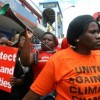
Draft Climate Deal Dubbed a “Death Sentence for Africa”
No one is happy late Friday at the very contentious U.N. climate talks that went into extra time on Saturday. As the lights flicker on a rainy night here, the partial power failure echoes the failure of the multilateral process, according to civil society and some countries.
Q&A: “By 2020 it Will be Too Late”
Despite the high risk, it remains difficult to convince politicians to take immediate action to prevent further climate change and make available the necessary funds to do so. Scientists have warned repeatedly of the effects of climate change - if governments do not act fast, they will cause an irreversible catastrophe.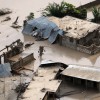
CUBA-CARIBBEAN: Forging an Alliance to Fight for Climate Action
When the U.N. Conference on Sustainable Development dubbed Rio+20 convenes in Brazil next year, Caribbean leaders want to ensure that the concerns of vulnerable low-lying coastal and Small Island Developing States (SIDS) will be heard.
Saving the Forests with Indigenous Knowledge
For the Laibon community, a sub-tribe of Kenya's Maasai ethnic group, the 33,000-hectare Loita Forest in the country's Rift Valley Province is more than just a forest. It is a shrine.« Previous Page — Next Page »


As unsustainable human consumption and production systems are driving changes in average temperatures and weather patterns, "abnormal" is increasingly becoming the norm. So far, a lack of financing has been standing in the way of a comprehensive global plan for climate adaptation, and a global financial crisis has contributed to an increasing reliance on public-private partnerships. Our Climate Change page provides you with the latest news about international and local efforts to address what's frequently been called "the challenge of our time", the forces behind the climate change and the impact it has on the world's most vulnerable populations. Along the way, we bring you stories on growing citizen awareness, new scientific data, and emerging climate policies towards sustainable development.

The Week with IPS

Tracking global progress towards a sustainable world

