
Wednesday, November 18, 2026



News and Views from the Global South
Climate Change
Britain Boosts Economic Ties with the Caribbean
As China sees its influence continue to grow in this part of the world, a delegation from the United Kingdom arrived in Grenada last weekend with a proverbial carrot for its former colonies, vowing to create new opportunities for trade, investment and innovation "in our respective economies".The Green Economy, Boon or Menace?
The development of the green economy is the subject of pitched debate among specialists. While some believe it will deepen social inequalities and increase corporate control over natural and biological resources, others highlight its potential role in protecting the environment and creating employment.Money Is All That’s Green in Biodiesel
The only green in biodiesel fuel is the money producers make from it, new research has revealed.BALKANS: The Dark Side of Serbia’s Oil Shale Fairy Tale
According to an old Serbian fairy tale, God tells a poor man who enters a gold mine that no matter what he chooses to do inside, he'll be sorry when he leaves. If he takes some gold, he'll be sorry for not taking more; if he doesn't, he'll be sorry for not taking any at all.U.S.: Obama Rejects Giant Keystone Pipeline Scheme
In a decision fraught with political risk, U.S. President Barack Obama Wednesday rejected the permit for the proposed giant Keystone XL pipeline project, insisting that his administration needed more time to determine whether it served the national interest.Montevideo Tackles Gas Emissions from Solid Waste
The government of the Uruguayan capital plans to reduce greenhouse gas emissions from the solid waste produced by its 1.3 million inhabitants, through a project set to enter into operation in March. The carbon credits generated will be purchased by the World Bank.CANADA: Opposition Builds to New “Tar Sands” Pipeline
As public hearings began earlier this month into a controversial pipeline that would transport crude oil from the Alberta tar sands to tankers along the coast of British Columbia, environmental groups and First Nations communities have raised staunch opposition to the project, which they say puts both the environment and their traditional way of life at risk.Melting Ice Makes Arctic Access a Hot Commodity
China, Brazil and India want seats on the Arctic Council as global warming creates new opportunities for shipping and resource extraction in the vast Arctic region.Rio+20: The Moment When Everything Changed?
Humanity is driving Earth's climate and ecosystems towards dangerous tipping points, requiring radical new forms of international cooperation and governance, experts say.BOLIVIA: Artificial ‘Islands’ to Protect Cattle from Annual Floods
Small-scale dairy farmers in this remote area of Bolivia's northeastern Amazon region of Beni have a new hope for protecting their livestock from the fierce annual floods that start in December.BANGLADESH: Farmers Bet on Climate-Proof Crops
With floods, droughts and other calamities battering deltaic Bangladesh regularly, farmers need little prompting in switching to climate-resistant varieties of rice, wheat, pulses and other staples.Shale Gas Turns the Tables on Petroleum Powers
Countries that have always depended on imported oil and gas, like Chile, Paraguay, Poland or Ukraine, and especially heavy consumers such as the United States and China, could become self-sufficient in natural gas in the near future and even start exporting it.JAMAICA: Hazard Mitigation Funds to Rescue Tourist Mecca
In the latest efforts to mitigate the hazards associated with climate change, the Jamaican authorities are turning their attention to Negril, where decades of unplanned development is destroying the local ecosystem and eroding the famous beach.
BANGLADESH: Lighting up on Solar Power
The sun never shone brighter on rural Bangladesh with low power solar systems transforming the lives of tens of millions of marginalised rural people who are unconnected to the national grid.The Unsustainable Political Deficiencies of Environmentalism
The environmental movement won the ideological battle with the growth of awareness on climate change. Environmentalists are no longer seen as "loonies" or granola-eating hippies: the people seen as on the fringe" now are the climate sceptics who deny that global warming is caused by human activity.U.S. Limits Mercury Pollution as Big Coal Retreats
Environmental advocates praised a recent new rule limiting pollution of mercury and other air toxins announced by the U.S. Environmental Protection Agency, one of several new air pollution standards set under the Barack Obama administration.EL SALVADOR: Women Demand to Be Included in Climate Solutions
Some 100 rural women in El Salvador demanded that the government halt mining and hydroelectric projects that are harming their communities and establish specific programmes with a gender perspective for combating climate change.
Moving Towards a Food-Secure Ghana
In Dundo village in Nyankpala district, Northern Ghana, 10 women are busy weeding a rice field on a piece of land donated to them by the village chief.
AGRICULTURE-BOLIVIA: Adapting to the Floods
Margarita Amabeja holds out her hands full of golden rice grains and rough brown manioc roots - the first results of a strategy to adjust the agricultural cycles to the seasonal floods and droughts in the vast plains of Beni, in northeastern Bolivia.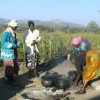
CLIMATE CHANGE: Waiting for the “Heavens to Weep”
Duduzile Sibanda takes a break from preparing her long stretch of land for her maize crop in rural Mberengwa, in Zimbabwe’s Midlands province. She wipes her brow under the scorching sun and looks upwards. The sparse clouds are a cause of concern as she studies the sky and wonders aloud when the "heavens will weep."
NIGERIA: Fearing the Floods – Sleeping with One Eye Open
The women of Makoko, a low-lying slum close to the Lagos Lagoon along Nigeria’s Atlantic coast, always sleep with one eye open. Many live in fear that when they go to sleep at night they will wake to flooded homes and business.« Previous Page — Next Page »


As unsustainable human consumption and production systems are driving changes in average temperatures and weather patterns, "abnormal" is increasingly becoming the norm. So far, a lack of financing has been standing in the way of a comprehensive global plan for climate adaptation, and a global financial crisis has contributed to an increasing reliance on public-private partnerships. Our Climate Change page provides you with the latest news about international and local efforts to address what's frequently been called "the challenge of our time", the forces behind the climate change and the impact it has on the world's most vulnerable populations. Along the way, we bring you stories on growing citizen awareness, new scientific data, and emerging climate policies towards sustainable development.

The Week with IPS

Tracking global progress towards a sustainable world

