
Thursday, November 12, 2026



News and Views from the Global South
Environment
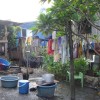
Water Shortage Hits Pacific Women
The Solomon Islands, a developing island nation in the south-west Pacific Islands, has one of the highest urbanisation rates in the region, and the basic service infrastructure is struggling to cater for the influx of people from the provinces to the capital, Honiara. Thirty-five percent of the city’s population, who live in informal settlements, are facing the health consequences of a dire shortage of clean water and sanitation.
Incomplete Justice in Killings of Amazon Activists
Peasants and human rights defenders in Brazil are indignant over the acquittal of the man accused of ordering the May 2011 murders of two prominent Amazon activists, José Cláudio Ribeiro da Silva and his wife Maria do Espírito Santo.
Investing in Renewable Energy Means Investing in Lives
Residents of Albion, a small village in Pointe-aux-Caves, western Mauritius, say that by opposing the construction of a new coal power plant near their homes, they are defending their constitutional right to live.
Solar Energy and Briquettes Make Headway in Haiti
While Jean Reniteau mulls over the idea of using solar panels to light his house, Frantz Fanfan is wondering how to expand production of biomass briquettes to replace the use of charcoal in the cooking stoves of most of the Haitian people, who lack electricity.
For Climate Action, 2013 “Good as It’ll Get”: Nicholas Stern
A confluence of factors could make 2013 the most fruitful opportunity in years – and for years – for potentially major action on climate change, according to a leading voice on climate change policy, the British economist Nicholas Stern.
Leaking Pipeline Offers Warning on Keystone XL Proposal
Environmental groups are sounding alarms about conflicting reports on the size and seriousness of an oil spill that took place late last week in the southern U.S. state of Arkansas.
Falcons Love the Taliban
While the Taliban’s military activities continue to plague Pakistan’s northern Federally Administered Tribal Areas (FATA), the incessant violence has been a blessing in disguise for one creature: the falcon.
World Bank Aims to End Extreme Poverty by 2030
World Bank President Jim Kim has unveiled a series of new institutional goals aimed at ending extreme poverty by 2030 and focusing on the promotion of “shared prosperity” – increasing the incomes of the poorest 40 percent in each country while placing increased focus on dealing with climate change.
Mining Investment Won’t Switch from Chile to Peru
The Chilean government has warned of the potential flight of mining and energy investments to Peru because of court rulings that have paralysed large-scale mining projects in the north of the country. But this fear is unfounded, at least in the short term.
When a Tsunami Comes, Tweet
Soon after the deadly tsunami struck Kesennuma city in the Miyagi Prefecture in Northern Japan on Mar. 11, 2011, 59-year-old Naoko Utsumi found herself on the rooftop of a community centre with only one line of communication to the outside world – the email option on her mobile phone.
Tegucigalpa Learns to Live with Climate Challenges
In slums lining several hillsides in the Honduran capital, mitigation works are under way to protect the neighbourhoods from flooding and landslides, which completely obliterated several areas when Hurricane Mitch hit the country fifteen years ago.
The Siege Is Rubbish
“For the past five years we’ve collected garbage by traditional means: donkey and cart,” says Abdel Rahem Abulkumboz, director of health and environment at the Municipality of Gaza. The municipality of Gaza alone produces 700 tons of waste daily, Kumboz says. More than half of this waste is collected daily by 250 donkey carts.U.S. Eyes Pension Funds to Renew Crumbling Infrastructure
President Barack Obama doubled down on a new push for infrastructure investment in a major speech Friday, highlighting roads, ports and bridges that many say have suffered from decades of insufficient upkeep.
U.S. Unveils Major New Proposal to Cut Vehicle Emissions
Environmentalists and public health advocates are lauding a key, long-awaited proposal put forward by President Barack Obama’s administration that would require cleaner gasoline and more effective technologies on vehicles, cutting various harmful emissions by 40 to 80 percent.
OP-ED: Falling Gasoline Use Means U.S. Can Just Say No to New Pipelines and Food-to-Fuel
Freeing America from its dependence on oil from unstable parts of the world is an admirable goal, but many of the proposed solutions - including the push for more home-grown biofuels and for the construction of the new Keystone XL pipeline to transport Canadian tar sands oil to refineries on the U.S. Gulf Coast - are harmful and simply unnecessary.
“Crowdfunding” Gives Boost to Renewables in U.S.
A U.S. company called Mosaic has unveiled a new way for citizens to use the Internet to invest in specific solar energy projects around the country.
Putting Food Security on the Calendar
Last October, at the beginning of Indonesia’s rainy season, a 37-year-old farmer named Herinurdin took a leap of faith. Instead of planting corn in his entire 1.3-hectare rainfed farm in the Sukabumi town of West Java, as his family had done for generations, he sowed 1,600 square metres worth of rice instead.
Inhospitable Flows the Nile
A 4,200-year-old relief in the Tomb of Mereruka in Sakkara depicts the staggering array of fish that once inhabited the Nile River and its wetlands. Ancient Egyptian fishermen with linen nets haul in their bounty, including the sacred Oxyrhynchus, a snub-nosed fish that was captured and nurtured but never eaten.
U.S. Pesticide Approval Process “Grievously Flawed”
An environment group here is warning that the U.S. Environmental Protection Agency (EPA), a key government regulator, may have been haphazardly approving thousands of pesticides for decades, some of which pose risks to both human and environmental health.
Canada Pulls Out of U.N. Body to Fight Desertification
Canada is pulling out of the United Nations convention that fights droughts in Africa next year, making it the only country in the world not participating in the United Nations Convention to Combat Desertification (UNCCD).
Subsidies Play “Significant Role” in Climate Change, IMF Says
The International Monetary Fund (IMF) is urging national governments around the world to roll back or eliminate subsidies on petroleum-based energy sources, estimating that this alone could result in a 13-percent decline in global carbon dioxide emissions.« Previous Page — Next Page »





Through our global network of local writers, we are continuing our award-winning coverage of global and local environmental challenges, with a focus on the people for whom the ecosphere matters in a direct way: rural dwellers who have little means to protect themselves against adverse conditions; communities that need to switch to sustainable development in order to survive; poor women and children, who are the most vulnerable in natural disasters. Sponsored by the United Nations Environment Program (UNEP), the United Nations Development Program (UNDP) and The World Bank (WB), IPS also maintains the award-winning Tierramérica, a specialised information service on environment and development.

The Week with IPS

Tracking global progress towards a sustainable world


